
For three seasons of House of the Dragon, viewers have been led to believe that Otto Hightower was the chief architect of the Targaryen civil war. After all, he was the one who placed Alicent beside Viserys, worked tirelessly to remove Daemon from the line of succession, and built the political foundation that ultimately allowed Aegon II to be crowned. But Ormund Hightower’s arrival suggests something even more unsettling: Otto may never have been the most dangerous member of his own family.
The introduction of Ormund, played by James Norton, finally expands a dimension of House Hightower that the series had only hinted at since its first season. Until now, audiences have largely understood the family through Otto and Alicent. Gradually, however, House of the Dragon reveals that both of them were merely representatives of a much larger, older, and perhaps far more ambitious political structure than we originally imagined.
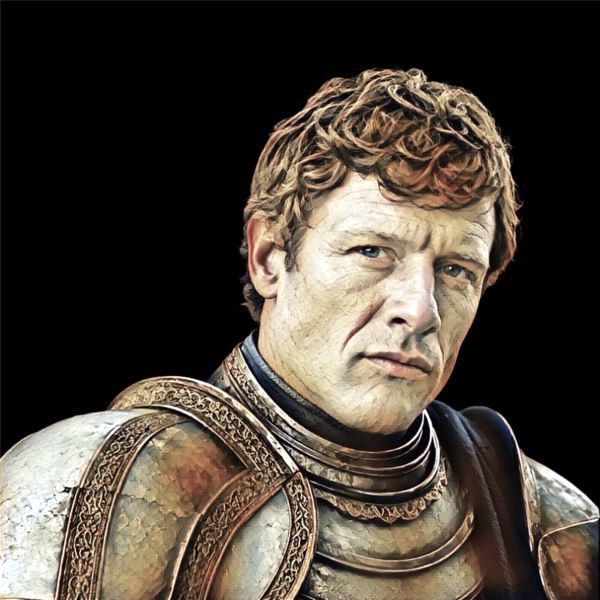
Who is Ormund Hightower in House of the Dragon?
In George R. R. Martin‘s Fire & Blood, Ormund Hightower is the Lord of Oldtown, the head of House Hightower during the Dance of the Dragons, and Otto Hightower’s nephew. The son of Lord Hobert Hightower, Otto’s older brother, Ormund, inherits not only the political leadership of the family but also command of the largest army fielded by the Greens during the civil war. He wields the Valyrian steel sword Vigilance and becomes one of the most important military figures of the entire conflict.
But House of the Dragon appears interested in turning Ormund into something even more significant: definitive proof that Otto may never have fully controlled the Hightowers at all.
The series hinted at this possibility years ago, although few viewers recognized it at the time. In the first season, Lord Hobert Hightower briefly appears, pressuring Otto and demanding tangible results after Alicent’s marriage to Viserys. At first glance, the scene seemed to reinforce only the family’s ambition. In retrospect, however, it acquires an entirely different meaning. Otto was not simply attempting to control the Targaryens. He was also trying to prove his worth within his own family.
Otto Hightower was never the true master of House Hightower
This reinterpretation makes Otto an even more fascinating character.
He remains one of the principal architects of the war. He remains manipulative, ambitious, and willing to sacrifice his own daughter in pursuit of power. But we begin to understand that his obsession with the Iron Throne may also have been fueled by a more personal struggle: the struggle for relevance within House Hightower itself.
Otto was never Lord of Oldtown. He was never the head of House Hightower. He was the younger son, sent to court and expected to produce political results while his older brother maintained the family’s traditional authority. Placing Alicent beside Viserys and securing the throne for her descendants did not merely elevate House Hightower. It also offered Otto the possibility of elevating himself beyond the subordinate position he had always occupied within his own family.
The irony is extraordinary. Otto achieved precisely what he set out to accomplish. Alicent gave Viserys not one son, but three sons and a daughter. According to the traditional rules of Westerosi succession, his mission had been fulfilled. The problem was that Viserys refused to follow the very rules everyone expected him to uphold.
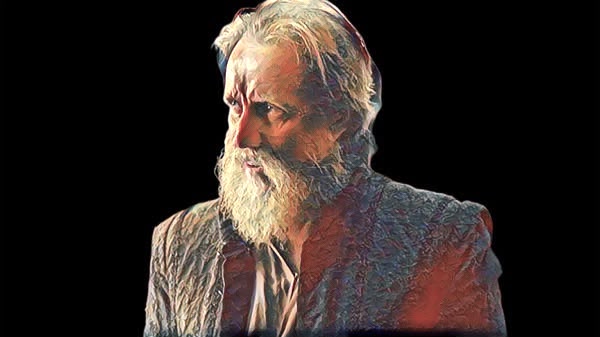
Daeron reveals Alicent’s greatest mistake
Daeron Targaryen’s story exposes another fascinating dimension of House Hightower.
For years, House of the Dragon practically ignored the existence of Alicent and Viserys’ fourth child. When the series finally addresses him through the conversation between Alicent and Gwayne Hightower, the queen mother displays genuine relief. Her youngest son, raised far from King’s Landing, has supposedly remained honorable, untouched by the corruption of court politics and perhaps even protected from Otto’s manipulations.
But Alicent, as so often happens throughout the series, is profoundly mistaken.
Gwayne, Alicent’s brother and Otto’s son, also spent most of his life in Oldtown. He represents an older, more traditional form of Westerosi knighthood: religious, loyal, proud, and, at least by Green standards, relatively honorable. When he praises Daeron, he appears to genuinely believe that his nephew escaped the worst aspects of political life.
The tragedy is that Daeron was never removed from politics; he was simply subjected to a different kind of politics.
While Alicent believed she had protected her youngest son, the Hightowers of Oldtown possessed something far more valuable: time. Time to educate him. Time to shape him. Time to transform him not into a prince raised by Targaryens, but into a prince molded by the Hightowers themselves, and perhaps this represents the greatest political coup of the entire story.
Otto produced the heirs. But the family branch he never truly controlled ultimately gained influence over one of the most important heirs of all.

Ormund’s plans for Daeron may reshape the entire war
The situation becomes even more dangerous when we consider Daeron’s current position in the succession.
Aegon has disappeared. The king lost the son who would have guaranteed his direct line of succession. Aemond remains without heirs. And Daeron, precisely the son Alicent believed she had protected from the war, suddenly becomes one of the strongest remaining candidates to carry the Green claim forward.
It is in this context that Ormund’s statement about placing the “true heir” upon the throne acquires potentially devastating significance. Ormund is not truly fighting for Aegon, nor for Aemondm but for Daeron, who, for Ormund, was always the ideal candidate: young, popular, disciplined, and, above all, entirely shaped by Hightower influence.
How Ormund humiliates both Daemon and Rhaenyra
This week’s episode demonstrates exactly why Ormund may become one of the most dangerous characters in the entire series.
Until now, Rhaenyra has already been betrayed, sabotaged, and humiliated multiple times. But there is something particularly cruel about being deceived at the very moment when one finally believes power has been secured.
Daemon’s arrival atop Caraxes, backed by Targaryen military prestige and his own fearsome reputation, represents precisely the kind of intimidation that has always worked in Westeros. Daemon believes that his dragon, his violence, and his reputation are enough to force any lord into submission.
Ormund immediately recognizes the weakness in that logic.
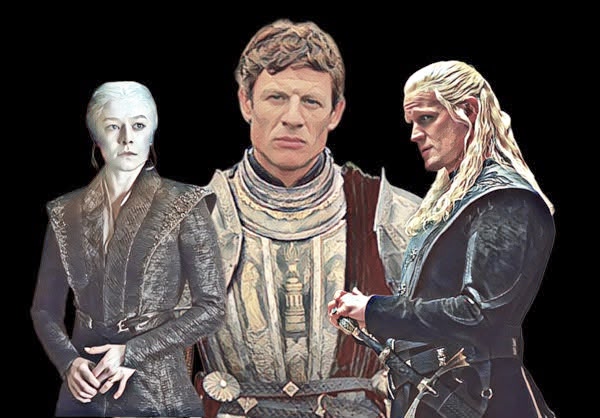
He knows that Daemon has never actually met Daeron. He understands that the prince’s arrogance can be exploited. And he transforms that arrogance into a remarkable political trap by delivering a blond child to stand in for the real prince.
For much of the episode, Daemon, Rhaenyra, and even the audience believe that the deception has succeeded. The real Daeron remains hidden while the Targaryens celebrate a victory they never actually achieved.
The humiliation becomes even greater when Alicent, attempting to say goodbye to her son, discovers in front of Rhaenyra that both women have been deceived.
The moment once again destroys the queen’s political authority. She has already inherited a kingdom without money, stability, or popular support. Now she discovers that she cannot even identify her own enemies.
More impressively still, Ormund has not merely deceived Rhaenyra but also Daemon Targaryen. That is the ultimate demonstration that the Hightowers’ true power never rested solely in wealth, religion, or military strength.
It has always rested in their ability to understand the weaknesses of others.
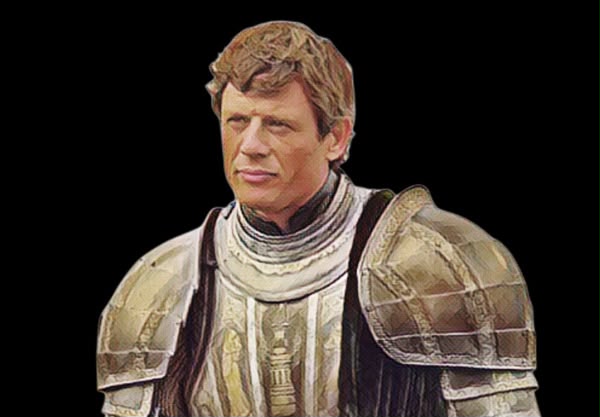
How does Ormund Hightower die in Fire & Blood?
In George R. R. Martin‘s Fire & Blood, Ormund Hightower becomes one of the principal commanders of the Green cause during the civil war. His greatest military success occurs during the Battle of the Honeywine, where he receives decisive support from Daeron Targaryen and his dragon, Tessarion. Later, Ormund leads the Green forces during the First Battle of Tumbleton, one of the bloodiest confrontations of the entire Dance of the Dragons.
His death occurs at Tumbleton itself, where he is killed in battle by Lord Roderick Dustin, the legendary “Roddy the Ruin,” leader of the Winter Wolves sent south by the North. Ormund’s death triggers the collapse of Green military leadership and helps pave the way for one of the greatest atrocities of the war: the sack and destruction of Tumbleton by the victors themselves.
But House of the Dragon appears determined to give Ormund a much larger role than the one described in Fire & Blood, which makes perfect sense.
Because while the Targaryens continue destroying one another, Ormund Hightower appears to understand something that very few of them ever did: to defeat dragons, it is not always necessary to fight them.
Sometimes, all you need to do is convince them to destroy themselves.
Descubra mais sobre
Assine para receber nossas notícias mais recentes por e-mail.


4 comentários Adicione o seu