
Rhaenyra is queen. But sitting on the Iron Throne has never been comfortable, and it certainly isn’t easy. Alicent surrendered King’s Landing far too quickly, and the red flags should have been waving for everyone to see, even if the former queen acted without malice. The Queen of the Blacks is about to discover, in the harshest possible way, that wearing the crown does not automatically earn respect, loyalty, or authority.

The third episode of House of the Dragon had been described by those who watched it in advance as the true beginning of the season and yet another showcase for Emma D’Arcy. In part, that’s true. But it also reinforces what the series has been doing from the very beginning: presenting a Rhaenyra who rules while crying, hesitating, distrusting everyone around her, and frequently stumbling. As Alicent observes when confronted with the fact that she, too, has once again been deceived by Larys Strong, perhaps the women in this story continue paying the price for the decisions made by the men around them. But that is a debate for another day.
We open with Daemon, surrounded by dragons, confronting Ormund Hightower. If he recognizes Rhaenyra as queen, his life will be spared. Ormund agrees far too quickly. And Daemon, convinced of his own superiority, goes even further and demands that Daeron be handed over as well. Once again, Ormund yields with suspicious ease. We, the audience, know that something is wrong. Daemon, however, does not know Ormund as well as he believes he does. And Ormund ultimately manages to deceive almost everyone.
The inevitable question is: if Daemon truly believed he had captured Daeron, why didn’t he insist that the young prince mount Tessarion? One flight would have exposed the deception immediately.
At least the opening credits remain spectacular. The Game of Thrones theme with percussion that seems inspired by Olodum remains one of the season’s strongest aesthetic choices.

Rhaenyra speaks about ghosts. Literally and metaphorically. In her conversation with Daemon, we hear his characteristic pragmatism: he admits he would rather simply burn all of their enemies alive, but because she insists on ruling as Viserys would have wanted, he does what his wife asks. And despite the increasingly chaotic situation around her, Rhaenyra remains determined to hold her formal coronation.
Upon meeting the supposed Daeron, she questions how she never knew her half-brother and concludes that he seems far too young to represent a real threat. Daemon, pragmatic as ever, reminds her that eventually she will have to kill him. Soon afterward, Rhaenyra discovers that the treasury is empty. Nevertheless, she insists on the ceremony. Mysaria and Corlys advise her to reconsider. She ignores them both.
The problems only continue to grow. Rhaenyra confronts Alicent over the surprises she left behind. Helaena asks whether she feels any better after ordering Otto’s death. Rhaenyra refuses to believe that Alicent knew nothing and, as a result, decides not to fully honor the agreement they made. Both women walk away disappointed.

Curiously, Rhaenyra shows little immediate concern for her sons, Aegon and Viserys, yet orders that Joffrey, her direct heir, be brought to her side. It is worth remembering that, in the book, Viserys is presumed dead, and Rhaenyra becomes even more obsessed with protecting her children because she believes she has only Joffrey and Aegon left. If this detail were not important to the end of the story, its absence would not stand out so much.
Haunted and unable to trust anyone, Rhaenyra discovers that the High Septon refuses to crown her. Aegon was anointed before the Seven and, according to him, only definitive proof of his death could legitimize another coronation. The refusal comes with a thinly veiled threat.
Already isolated, though unable to recognize it, Rhaenyra continues making questionable decisions. During dinner with Corlys and his sons, the Lord of the Tides asks that Alyn and Addam be officially recognized. Rhaenyra hesitates. We never fully understand the reason for her refusal at that moment. Nor do we understand why she virtually ignores Baela. Rhaenyra is clearly not well and unable to sleep in the room that once belonged to Viserys; she seeks out Daemon.
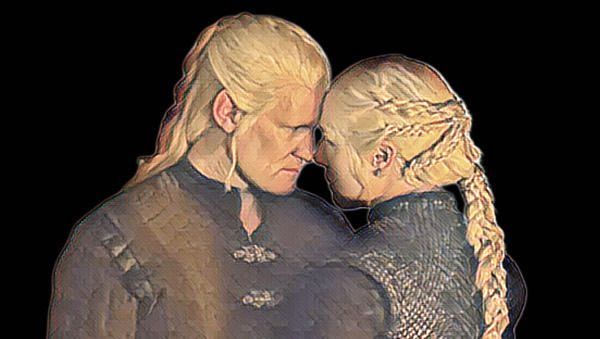
Seated on the Iron Throne, Rhaenyra watches the complaints multiply around her. There is not enough food. There is not enough money. Rats are everywhere. The queen’s anxiety becomes almost suffocating. The lack of news about Aemond only worsens matters. In the council chamber, Daemon and Mysaria clash constantly.
Rhaenyra elevates the three dragonseeds to lordship but continues refusing to recognize Addam as a Velaryon. Hugh asks about the estate that was promised to them and reveals that his wife has returned to Tumbleton. Pay attention: the city is central to the season’s main conflict, and more than once we have seen the seeds of betrayal being planted among the dragonseeds. Hugh, who lost his daughter, has now lost his wife to the city standing directly in Ormund’s path. Daemon has already made it clear that Ulf is desperate for a castle. Ormund is not an inattentive man.
Alicent asks permission to take Otto’s remains and bury him beside his wife in Oldtown. Rhaenyra agrees. Taking advantage of a rare moment alone together, she asks Alicent how she endured ruling while married to Viserys. The answer is bitter: keeping a throne requires doing terrible things. Rhaenyra disagrees. She believes she can rule as well and as kindly as her father did. Alicent reminds her that, as a man, Viserys lived in a reality very different from the one the two of them have known.
In a scene taken directly from the book, during the banquet held for the nobles who betrayed her, Rhaenyra stages her own demonstration of power. The meal served is made of rats — the food left to the common people after the aristocracy had hoarded all available resources. She announces the confiscation of their property. It is exactly the strategy Daemon warned her against, one that will make her deeply unpopular among the very nobles who might still support her.
When they are finally alone, Daemon reminds her that she continues to think too small. Those who possess dragons, he argues, do not need to govern by consensus. And sooner or later, Daeron will still have to die.
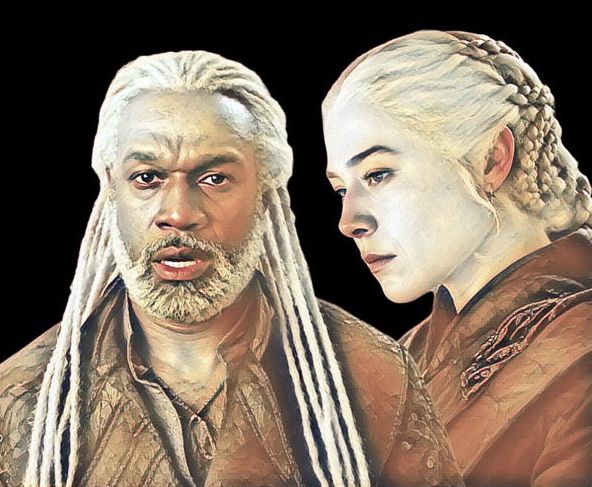
Exhausted and unable to sleep, Rhaenyra admits to Mysaria that she is still driven by anger. Perhaps that is why she decides to leave the castle and speak directly to the people. She distributes food, promises mercy, and, for the first time in the episode, appears to find genuine support.
But even that does not last. Corlys once again demands that his sons be recognized as Velaryons. Rhaenyra refuses, arguing that legitimizing Alyn and Addam would call the legitimacy of her own children into question. Corlys, understandably, finally loses patience and raises his voice to his queen. He is asking of her nothing that he himself did not do for her children: bastards whom he accepted as Velaryons. We never see how the conversation ends, but there is no denying that Corlys will carry resentment and doubt when it comes to Rhaenyra from this point forward.
Then comes the final revelation. Rhaenyra reassures Alicent that she does not intend to kill Daeron, but to send him to the Wall. Alicent, despite her distant relationship with her son, insists that he is innocent and asks to see him. The moment she enters the room, she immediately shatters Ormund’s deception: that young man is not Daeron. Rhaenyra realizes, far too late, that she has been deceived.
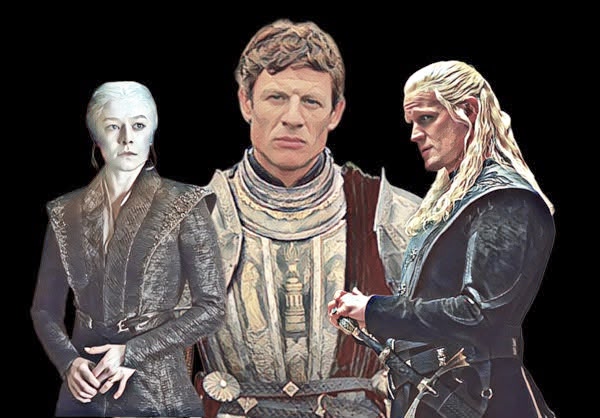
And the next piece of news is even worse: the Hightowers have taken Tumbleton with the help of the real Daeron. To retake the city, she will have to burn innocent people.
The question that ends the episode is no longer whether Rhaenyra is prepared to rule. It is what, exactly, Ormund Hightower is planning.
Descubra mais sobre
Assine para receber nossas notícias mais recentes por e-mail.


2 comentários Adicione o seu