
In episode eight, Max Cady destroys the Bowdens, but the endless surprises have already become exhausting
While I complain that Silo and Sugar desperately need a twist capable of reorganizing their stories, Cape Fear keeps moving in the opposite direction. The series is a stormy sea of revelations, betrayals, corpses, relapses, paternity secrets, arrests and characters making increasingly absurd decisions. Everything is presented as a surprise. Very little, however, is still capable of actually surprising us.
I have already spoken about my dislike of this new version, which is excessively dramatic and completely submerged in tackiness. Not even the excellent performances by Amy Adams, Patrick Wilson, Javier Bardem and the rest of the cast can rescue a narrative that mistakes intensity for excess. Cape Fear never simply enters a dangerous situation when it can also add drugs, hallucinations, secret children, mutilated bodies, abusive fathers and yet another form of emotional blackmail.
The series’ greatest merit may be making it increasingly clear — which is to say, increasingly confusing — just how far Anna and Tom Bowden are from any kind of moral integrity. Nick Antosca said that he wanted to create a more ambiguous version in which even Max Cady would not be presented as simply as he was in the previous films. The intention was to remove the Bowdens from the comfortable position of blameless victims and explore guilt, shame and responsibility.
The problem is that the series has gone so far in that direction that it has also removed almost any emotional connection we might have had with its characters. This is no longer merely a story about a family threatened by a criminal. It is a story populated by criminals, manipulators, liars and people willing to violate every possible boundary to preserve the version of themselves they have constructed.
There is no one to root for. All that remains is to anticipate the next bloodbath, the next surprise and the next defeat.
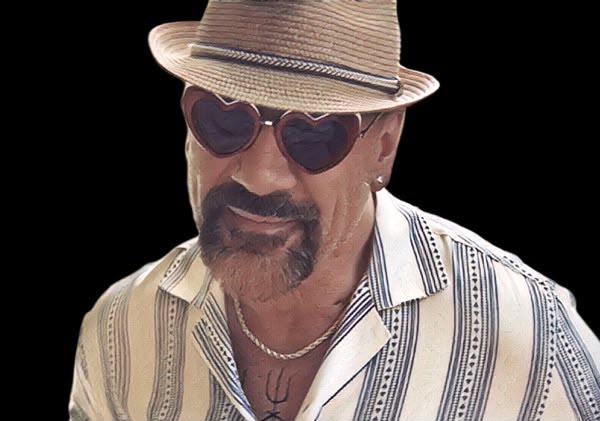
Max Cady’s Revenge Has Reached Its Peak. In Theory
In the eighth episode, titled “Los tiempos de Dios son Perfectos,” Max Cady gets practically everything he has wanted since leaving prison. Tom is arrested. Anna starts drinking again. Zack remains involuntarily hospitalized after his breakdown. Natalie discovers that Max may be her biological father, shoots him and also ends up in custody. By the end of the episode, three members of the family are either arrested or institutionalized, while Anna remains alone and armed.
The Bowdens’ brief victory lasts only a few minutes. After using Brandon, Anna’s father, to plant drugs inside Max’s home, Tom and Anna celebrate as he is taken away by the police. The scene appears to announce that the couple has finally decided to confront Cady on his own ground. In reality, it merely confirms that they have learned nothing.
Natalie finds Ray’s dismembered body inside a cooler at the bottom of the family swimming pool. The bullets removed from the body point to a nine-millimeter weapon, and Tom realizes that his Glock has been tampered with. Instead of immediately telling the police, he hides the compromised weapon and hands investigators another one, making yet another decision that appears to have been designed specifically to help get him arrested.
Tom is correct when he argues that it would be particularly stupid to murder Ray, dismember him and leave the body in his own swimming pool. Unfortunately, the entire season has been built around supposedly intelligent characters making such unbelievably poor decisions that this defense no longer feels sufficient.
The situation becomes even worse when Brandon appears on television beside Max and reveals that he was paid to plant the drugs. Tom is not arrested only for Ray’s murder. His attempt to frame Cady also gives the police the motive they need to believe that he eliminated the investigator. Max does not need to invent the Bowdens’ guilt. He only needs to arrange their choices so that they appear even more criminal than they already were.
This remains Cady’s most effective method. He does not force the family to destroy itself. He merely creates the conditions and watches as each member chooses the worst possible path.
Natalie’s Paternity Destroys What Remained of the Marriage
The photographs recovered from Ray’s material include an image of Anna kissing Max. Tom finally demands an explanation for what Cady has been insinuating since the beginning of the season: the possibility that Natalie is not his daughter.
Anna cannot provide a definitive answer because she does not know what happened. When she met Max, she was going through a severe period of alcoholism, experienced blackouts, and frequently could not remember what she had done. She reveals that she went drinking with Cady while she still believed in his innocence, but she does not know whether the two had sex. If Anna were unable to consent, then naturally, we would not be talking only about an affair, but about a possible sexual assault.
The series introduces that important distinction, but surrounds it with so many simultaneous revelations that even a possible sexual assault risks becoming just another piece of melodrama. Something that could completely reorganize our understanding of Anna and Max’s relationship is thrown together with the uncertainty over Natalie’s paternity, Tom’s arrest, Anna’s relapse and the collapse of the marriage.
Tom can no longer trust his wife. Anna cannot safely reconstruct her own memories. Natalie realizes that her identity was built on a silence her parents decided to preserve for 17 years. The secret that was supposed to protect the family becomes exactly what allows Max to destroy it.
The episode’s best moment comes when Anna finally speaks to her daughter. Natalie does not absolve her of every decision, but she understands that an unconscious woman could not consent to sex. It is a rare attempt to turn a revelation into something emotionally meaningful instead of using it merely to prepare the next arrest.
Naturally, Cape Fear cannot remain in that register for very long.
Anna starts drinking again and tells her daughter that the persecution will end only when Max is dead or when all of them are. Natalie interprets the statement almost literally, takes a gun and goes to his house.
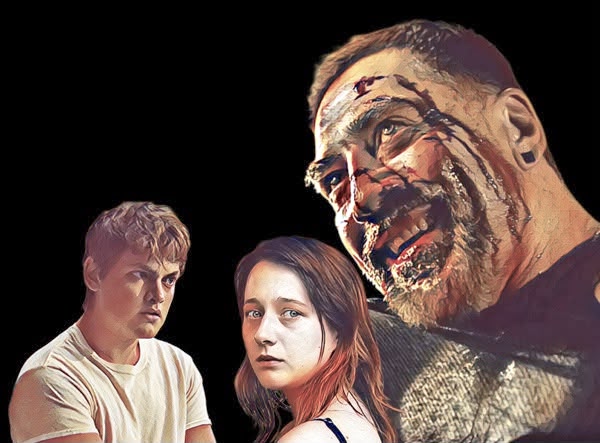
Natalie Shoots Max but Gives Him Exactly What He Wanted
Natalie finally appears to understand that Cady has manipulated her. She already knows that he killed Ray, realizes that she was used during the trip to Cape Fear and begins to see the man behind his stories about destiny, family and justice.
Even so, she decides to confront him alone.
Max provokes her until she shoots him in the abdomen. The wound is serious enough to turn Natalie into the aggressor and Cady into the victim, but not serious enough to prevent him from continuing his revenge. Surrounded by police officers and quickly treated, he once again manages to use violence against him as public proof that the Bowdens are exactly the people he has always claimed they were.
Natalie is arrested. When Anna asks what happened, her daughter says only that she missed.
The problem is that we never believe Max will die in that scene. The series has repeated the same structure so many times — Cady provokes, a Bowden loses control, Max turns the attack to his advantage — that even its biggest twists have become predictable. An excess of events does not necessarily create movement. Sometimes, it simply repeats a formula at a higher volume.
It is exactly the opposite of what is happening in Silo and Sugar. In those series, the story appears afraid of the twist capable of breaking the impasse. In Cape Fear, the writers seem afraid of any minute in which nothing is exploding.
In all three cases, the problem ultimately becomes similar. A twist matters only when it changes our understanding of the story. Making the characters’ situation worse is not enough.
When Everyone Is Morally Condemned
Max believes he has won. At the hospital, he explains to Anna that his goal was never simply to kill her. He wanted to destroy her family, take away their freedom, separate the couple and force them to experience the same powerlessness he felt during the 17 years he spent in prison.
Anna nearly strangles him there, once again confirming how easily he can drive each member of the family toward the behavior he wants to expose. Afterwards, she locates Crystal’s boat in Cape Fear, takes a revolver and leaves alone.
The series is finally preparing its return to the place that gives the story its name. There are still two episodes left: “The Scar,” on July 24, and “The Executioners,” on July 31. The title of the final episode directly recalls the John D. MacDonald novel that inspired the previous adaptations.
That suggests the final episodes will discuss not only who survives, but who assumes the right to carry out a sentence. Max believes he is imposing his own version of justice. Anna appears ready to abandon the law completely. Tom tried to fabricate evidence. Natalie attempted to kill Cady. Nevaeh helped her father invade and terrorize the Bowdens. Even the teenagers have been pulled into the adults’ logic of revenge.
The final confrontation on the Cape Fear River still appears inevitable, although the series may completely alter the structure we know from the films. Anna is following Crystal’s location, a character who knows Max’s childhood, has watched him for years and may be his enemy, protector or both at once. For now, that possible alliance is the only concrete clue about what comes next.
Natalie’s true paternity, Max’s responsibility for the original murder, Zack’s fate, Tom’s situation and Nevaeh’s final purpose also remain unresolved. With only two episodes left, Cape Fear still needs to resolve all of that, move the characters toward the river and find room for one more revelation that will probably attempt to surpass everything that came before.
I have no patience left.
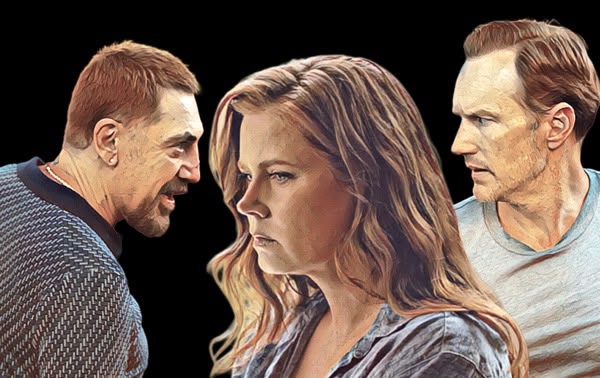
Perhaps Max Has Already Won
The most interesting aspect of the episode is that Cady’s victory does not depend on whether he survives the ending. If Anna kills him, he can die having turned a lawyer into a murderer, destroyed her marriage and placed her children inside the criminal system she claimed to fight. If he survives, he will continue controlling a story in which he appears as a man who was unjustly convicted and later attacked by the family responsible for his imprisonment.
That is an intelligent construction. It is also a trap for the series itself, because it turns any further suffering inflicted on the Bowdens into nothing more than confirmation of what Max has already announced.
The moral ambiguity intended by Cape Fear should make the story more complex. Instead, it often leaves an emotional vacuum. Max is a murderer, manipulator and torturer. Anna and Tom lied, manipulated evidence and concealed fundamental parts of the past. Natalie and Zack were emotionally abandoned by adults too busy protecting their secrets. Nevaeh was turned by her father into an instrument of revenge.
When everyone is morally condemned, there is no real struggle between good and evil. There are only people trying to decide who will have the opportunity to cause the final damage.
Perhaps that is why the excess of twists no longer holds my attention. I am not waiting for the Bowdens to win. Nor do I want to watch Max secure another victory with that satisfied smile. I am simply waiting for the series to fulfill the destiny promised by its own title and take everyone to the river.
This time, honestly, I hope they all perish in the waterfall.
Assuming there even is one.
Descubra mais sobre
Assine para receber nossas notícias mais recentes por e-mail.

