
I know I am practically alone in this, but every time Silo returns to the population of Silo 18, I start to feel bored. For a long time, Juliette was the exception. Even when the series slowed down to follow internal disputes, bureaucracy, and secrets buried across its 144 levels, she remained a character capable of pushing the story forward. Now, not even Juliette is managing to keep me engaged.
This is not happening because the third season has become more confusing. We have already done a long Silo for Dummies here, with recaps, spoilers, and explanations about the 51 silos, the Safeguard, the Algorithm, the rebellions, and everything that has been revealed so far. It is no longer a matter of understanding who knows what, who is hiding Lukas, or why Camille is trying to control Juliette. The problem is precisely that we understand enough to realize that the narrative is moving in circles while postponing its next major turn.

The idea of dividing the season between Silo 18 and life before the cataclysm is excellent. Officially, the present-day storyline follows Juliette after she returns without her memories, while Helen Drew and Daniel Keene investigate, centuries earlier, the conspiracy that would eventually lead to the creation of the silos. The season will have ten episodes, and we already know that the fourth will be the last, which makes every detour feel even more significant.
In practice, however, the two timelines do not complement one another. They are competing for our attention, and the past is winning with uncomfortable ease.
Before the cataclysm, there is an open world, new characters, a political conspiracy in motion, and the promise that we will finally discover how a society similar to ours accepted — or was forced to accept — such a monstrous project. Graham Yost has acknowledged that he turned this part of the story into a political thriller inspired by the paranoid cinema of the 1970s, and the difference in energy is immediately noticeable. There is movement, danger, investigation, and a constant sense that any discovery could alter everything we thought we knew.
In Silo 18, by contrast, there is mainly the management of the consequences of a story that has already reached its climax. The population rebelled, Bernard fell, Juliette returned from the outside, and the fundamental lie could no longer be sustained. After that, the series needed to find a new narrative engine quickly. Instead, it chose to diminish its protagonist’s ability to act and force her to reconstruct information the audience already possesses.
Juliette’s amnesia may make thematic sense. The season discusses memory as an instrument of control, showing that the system does not need to eliminate people when it can simply erase what they know. There is an obvious parallel between Juliette and the victims of the experiments carried out before the cataclysm. They are people who survived something they were never supposed to witness and must therefore be deprived of their own experience.
As a concept, it works. As a narrative, it is beginning to feel like a reset.
Juliette spent two seasons uncovering the truth, crossed the outside world, discovered another silo, found survivors, learned about the existence of the Safeguard, and managed to return to Silo 18. After all of that, placing her once again in the position of a woman who must work out whom she can trust and retrace her own steps creates a frustrating sense of regression. The audience has moved forward, but the protagonist has been forced to relearn her own series.
That imbalance is especially dangerous because Silo has always depended on the momentum of discovery. A series built as one enormous mystery box can postpone answers for a while, provided that every revelation opens the door to a more disturbing question. That was what happened when we discovered that the outside world truly was toxic, but also that other silos existed. It happened again when we understood that the rebellions were predictable, only to discover that there was a mechanism capable of exterminating entire populations.
Now, however, the question continues to be presented in almost exactly the same way: what happened before, and why were all those people placed there? It is a good question, but it is no longer enough to divide ten episodes between two stories and expect the connection alone to sustain the season.
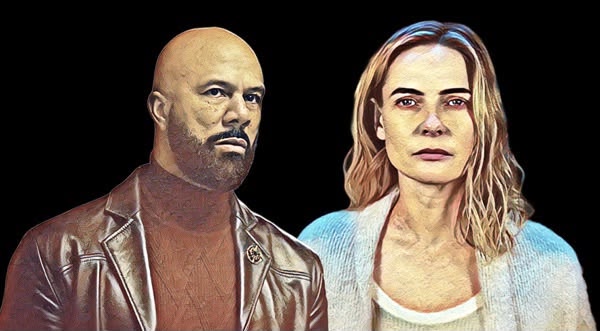
Silo needs a twist, and it needs one quickly. Not necessarily a complete explanation of the cataclysm, much less an action sequence created merely to accelerate the pace. The series needs a discovery that makes the two timelines collide and transforms the way we look at Silo 18. We need to understand why that particular silo matters, what its concrete connection is to the people we are following in the past, or what lies behind the Algorithm that we still do not know.
The thematic connection between the two periods is already clear: forgetting began as a political tool and ended up becoming a form of government. What is still missing is the dramatic connection. A revelation capable of giving Juliette a new objective, rather than merely restoring the knowledge that was taken from her.
Perhaps that is the true impasse of the third season. The more Silo shows us the world before the cataclysm, the harder it becomes to return to the dark corridors and follow yet another struggle for control of Silo 18. The past has a story moving towards the end of the world. The present still seems to be trying to decide what to do after its best story has already ended.
The series has already answered why those people live underground. Now it needs to answer something more urgent: why should we still want to remain there with them?
Descubra mais sobre
Assine para receber nossas notícias mais recentes por e-mail.


1 comentário Adicione o seu