
Warning: This article contains full spoilers for the third season of Silo and for Hugh Howey’s three novels — Wool, Shift, and Dust.
For two seasons, the central question of Silo seemed relatively simple: Is the world outside truly deadly, or are the residents being kept underground through a lie? The third season changes the focus. We now know that the area surrounding the silos is still dangerous, that dozens of identical structures exist, and that the green landscape shown inside the helmets is fake. The mystery is no longer simply about what is outside.
The real question now is something else: who built this system, who still controls it, and how far is that authority willing to go to prevent people from discovering the truth?
The answer involves an intelligence called the Algorithm, drugs capable of erasing memories, technology that is probably connected to nanorobots, and a project conceived long before Juliette was born. The third season is also telling two stories at once. In the present, Juliette is trying to recover her identity while being turned into a propaganda tool. More than 350 years earlier, Daniel Keene, Helen Drew, and Charlotte Keene are moving closer to the conspiracy that will lead to the creation of the silos.
Everything appears separate, but it is not. Juliette and Charlotte’s memory loss, the black cloud that brings down the planes, the experimental neurological treatment, the “vitamins” administered in Silo 18, and the Algorithm are all part of the same discussion: controlling a population means controlling what it knows, but also what it is capable of remembering.

Where Season 3 Begins
At the end of the second season, Juliette finally manages to leave Silo 17 and return to Silo 18. During the time she spent away, she discovered that her silo was not the only one, met Solo and the children who survived in another community, and learned that every silo has a mechanism known as the Safeguard.
The Safeguard is the system’s ultimate weapon. If a population becomes too rebellious or uncovers information considered dangerous, an external authority can release a substance through the pipes and kill every resident. Solo also explains that the pipe can be blocked, preventing the poison from spreading.
Juliette, therefore, does not return merely to stop her friends from going outside. She returns knowing that Silo 18 can be exterminated without its residents having any chance to defend themselves.
As she approaches the entrance, she displays the message: “IT IS NOT SAFE. DO NOT COME OUT.” The warning prevents the rebellion from ending with thousands of people rushing to the surface and dying. Bernard, meanwhile, is already completely destabilized by Lukas’s revelations about the Safeguard. He decides to go outside, meets Juliette in the airlock, and both of them are hit by the flames used to sterilize the chamber.
The third season jumps ahead three months. Bernard is dead, Juliette has survived, the rebellion has apparently ended, and she has been turned into the mayor. The problem is that Juliette remembers almost nothing. She does not fully recognize her friends, cannot remember her time in Silo 17, and only receives fragmented flashes of Bernard telling her that she still needs to do something. The official explanation is that she went approximately three minutes without oxygen in the chamber and suffered neurological damage. That explanation, however, is false.
Did Juliette Really Lose Her Memory?
Juliette suffered severe injuries and oxygen deprivation, but her current amnesia is not merely a consequence of the fire. Camille is administering medication that suppresses her memories under the Algorithm’s orders.
The so-called “vitamins” are delivered every day, while Camille acts as nurse, assistant, and the new mayor’s primary source of information. At the same time, Juliette is being watched inside her own apartment. The goal is not simply to prevent her from recovering the past. Camille is also trying to fill the empty spaces with a false story.
She shows Juliette footage supposedly taken from her helmet, in which the engineer appears to have remained sheltered inside a small structure before returning to Silo 18. The recording completely removes Silo 17, Solo, the children, the other silos, and the discovery of the Safeguard. Juliette is meant to believe that she went outside, found shelter, survived, and came back.
The problem is that even without her memories, she is still Juliette. Her past may be gone, but her ability to recognize logical flaws remains. She notices, for instance, that she could not have planned her return to Silo 18 because there was no way for her to know that Bernard would open the door at that exact moment.
This is a crucial detail. The drug can erase experiences, but it cannot remove her habit of dismantling mechanisms, searching for faults, and distrusting explanations that do not make sense. The Algorithm notices this resistance and orders Camille to double the dose. In the second episode, Juliette finally discovers that she is being medicated and begins hiding the pills instead of swallowing them.
The amnesia, therefore, is not merely a device used to delay answers. It creates a cruel version of the series’ central conflict. Juliette spent the first two seasons trying to uncover the silo’s erased history. Now she has to uncover her own erased history.
Does This Happen to Juliette in the Books?
No. Juliette does not lose her memory in Hugh Howey’s novels.
After returning to Silo 18, she becomes mayor, keeps her memories, and continues investigating the system. The amnesiac protagonist storyline was created for the television adaptation.
That does not mean, however, that the idea came from nowhere. Memory-erasing drugs are a central part of Shift, the second novel in the trilogy. Hugh Howey builds the entire origin of the silos around the convergence of two technologies: nanorobots capable of entering the human body and drugs developed to reduce or eliminate traumatic memories. The author’s own official material presents these two advances as the scientific foundations of the series’ universe.
In Silo 1, the workers awakened to serve their shifts receive pills that weaken their memories of their former lives. Donald Keene is called Troy and takes time to realize that his identity has been altered. He begins to recover who he really is after he stops taking the medication.
In the other silos, the drugs are used in operations known as “resets.” When a rebellion can still be contained, the system eliminates the main leaders and puts medication into the water. The surviving population forgets recent events, the causes of the rebellion, and some of the information that might trigger a new uprising.
Mission, one of the main characters in Shift, takes part in a rebellion that occurred in Silo 18 long before Juliette was born. In the end, his memory is erased, and he is reintegrated into the community as an obedient citizen. The rebellion survives only as a fragmented story, later known as the Great Uprising.
The series took this element from the books and applied it directly to Juliette. Instead of showing only an anonymous population undergoing the procedure in the past, the adaptation forces the audience to experience it through the character they know best.

What Is a “Reset”?
The second episode confirms that erasing the memory of a community is not unprecedented. According to the Algorithm, six silos have already been reset, and Silo 18 itself underwent one approximately 140 years earlier.
This most likely corresponds to the Great Uprising mentioned since the first season. The residents believe that their ancestors destroyed the historical records during that conflict. The books, however, reveal that the loss of the past was not accidental. The destruction of documents was accompanied by the chemical erasure of memory.
The series now directly connects the two. The past did not disappear merely because books, photographs, and objects were banned. It disappeared because an entire generation was conditioned to forget it.
Even more disturbing is the fact that the Algorithm begins considering a new operation of the same kind. After calculating that Juliette’s recovery could destabilize the community, it suggests that the same substances being administered to the mayor should be placed in the silo’s water supply. The plan is no longer only to control Juliette. It is to make everyone forget the rebellion, the deaths, the lies they uncovered, and probably Juliette’s return itself.
That is why the third season is essentially a race against time. Juliette needs to recover her memory before all of Silo 18 loses its own.
What Exactly Is the Algorithm?
In the series, the Algorithm appears to be an artificial intelligence or advanced computer system created to manage the silo project. It communicates through a voice, observes events through cameras, holds records of previous rebellions, and produces graphic models calculating levels of social stability.
Its criteria are not moral. It does not seem concerned with justice, freedom, or truth. Its purpose is to preserve the continuity of the system.
In the second episode, it shows Camille several projections. As long as Juliette remains controlled and performs the role of heroic mayor, the population is likely to remain relatively peaceful. If she recovers her memories and exposes what she discovered, instability rises. If she is killed, her transformation into a martyr may also trigger a new rebellion.
The preferred solution, therefore, is to keep her alive, medicated, and publicly respected. Juliette gives legitimacy to the new government, while Camille and Sims control the real decisions.
The Algorithm understands something Bernard did not always understand: open repression creates resistance. It is more efficient to allow the population to believe it has won, offer limited reforms, and place its greatest hero in the highest office, as long as she no longer has access to her own history.
Who Communicated With the Algorithm Before Camille?
An important correction is necessary here: it is not safe to claim that Bernard regularly communicated with the Algorithm.
Bernard controlled the IT Department, had access to the Legacy, and knew many of the silo’s secrets. But the second season makes clear that he was also unaware of crucial information. The discovery of the Safeguard devastates him precisely because he realizes that the system can kill the entire population without depending on him.
The voice encountered by Lukas near the underground door says that only a few people had reached that location: Salvador Quinn, Judge Mary Meadows, and George Wilkins. The system did not speak to George, but it did speak to Quinn and Meadows. Lukas is also warned that if he reveals what he has found, the Safeguard may be activated.
Afterward, Bernard chooses Sims as his new shadow and gives him access to the IT vault. Sims enters with Camille and their son, but the system orders both men to leave and allows only Camille to remain. That is the moment when she is selected as the new intermediary.
The more accurate sequence is therefore Salvador Quinn and Mary Meadows in the past, Lukas during the second season, and Camille from the end of that season onward. Bernard knew about the Legacy and the silo’s power structure, but the series has not yet proven that he was the Algorithm’s regular interlocutor.
This also changes the way we see him. Bernard spent two seasons appearing to be the man who knew everything. In reality, he was another administrator located somewhere in the middle of a far larger hierarchy. He knew enough to repress the residents, but not enough to fully understand the system he served.

Does the Algorithm Exist in the Books?
An algorithm exists in the books, but not exactly in this form.
In Shift and Dust, central power is concentrated in Silo 1. There, in rotating shifts and periods of suspended animation, live the people responsible for monitoring the other silos. These are human beings who track rebellions, communicate with IT heads, authorize resets, and decide when a community must be exterminated.
There is also a computer system that monitors population behavior and establishes a ranking among the silos. The original plan states that after approximately 500 years, only the highest-ranked silo will be allowed to leave the underground and rebuild humanity. All the others will be destroyed.
The series appears to have merged these elements. The human administration of Silo 1, the Legacy’s archive of knowledge, and the ranking program from the novels have been transformed into a single presence, with its own voice and an apparent ability to make decisions.
We still do not know whether the Algorithm is fully autonomous. It may be an independent artificial intelligence, an interface connected to Silo 1, or merely the visible layer of a hidden human authority. The adaptation has not yet answered that question.
Its behavior, however, already reproduces the basic principle of the literary system: people are not evaluated as individuals. Entire silos are treated as units within an experiment.
What Does Juliette Still Need to Tell Everyone?
Juliette has already delivered the most urgent message: do not go outside.
By returning, she prevents the residents from interpreting her survival as proof that the outside world is safe. The land surrounding the silos remains deadly, and a mass exodus would end the same way the rebellion in Silo 17 did, with thousands of bodies outside the entrance.
But that is only the beginning of what she needs to reveal.
Juliette knows that Silo 18 is not the only one. She saw dozens of craters and lived in another facility. She knows there are survivors in Silo 17, including Solo and the children. She knows the helmets display a false green landscape. She knows the communities were designed to remain isolated from one another. Most importantly, she knows the Safeguard exists.
That last point is the most urgent. Even if no one tries to leave, Silo 18 can be exterminated by an external authority. The population believes that staying inside the structure is enough to survive. Juliette discovered that the shelter itself is also a weapon.
She still needs to find the Safeguard pipe and block it, as Solo explained. She needs to locate Lukas, who knows about the Algorithm and probably understands more about the underground structure. And she needs to explain that the true conflict is not between the residents and Bernard. Bernard was merely the local representative of an organization capable of shutting down entire communities.
The flashbacks in which Bernard appears seem connected to this mission. Juliette remembers him saying that she still needs to do something, but the sentence remains incomplete.
The most likely explanation is that the instruction concerns the Safeguard, the Algorithm, or Lukas. However, the series has not yet revealed exactly what Bernard said. It is possible that he told her something after the fire that the audience has not yet seen.
Why Make Juliette Mayor?
Juliette was put in office because she had become too important to eliminate without consequences.
She returned from the surface, stopped the internal war, and appeared before everyone carrying a warning that saved thousands of lives. To the residents, she is almost a mythical figure. Killing her could immediately reignite the rebellion.
Making her mayor solves several problems. The new government can claim that it listened to popular demands, that Bernard was defeated, and that the silo has entered a period of reform. Billings begins rewriting the Pact, a Council brings together representatives from different departments, and parts of the surveillance system are supposedly dismantled.
In practice, the fundamental structures remain in place. Sims becomes judge, Camille takes control of IT, and Juliette serves as the official face of a government she does not actually lead.
This strategy is more sophisticated than Bernard’s. He ruled through fear and restricted information. Camille and the Algorithm rule through the manufacture of consent. It is not enough to order Juliette to obey. They want her to believe the story they have created for her.
Who Are the Outsiders?
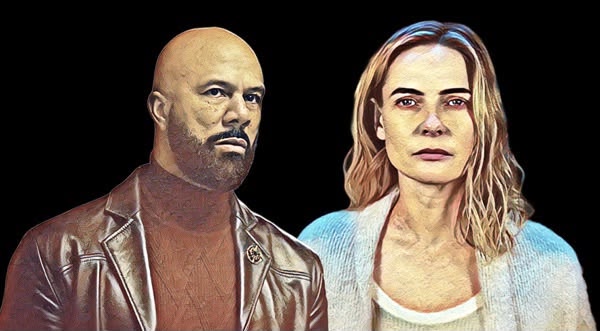
The Outsiders are the new underground group operating within Silo 18. Its members wear masks, attack facilities, and display the message: “THE DISPLAY IS A LIE.”
Patrick Kennedy and Danny are involved with the organization. Kathleen, Billings’s wife, also participates in the movement, placing the sheriff in a particularly difficult position. He is helping rewrite the silo’s laws while his own family is moving closer to people considered criminals by the new regime.
The group steals IT helmets and uses them in an attempt to awaken Juliette’s memories. Patrick quickly recognizes the symptoms of memory suppression because Sims once offered him the same drugs. This confirms that the medication was not developed specifically for the mayor. It was already part of the government’s hidden arsenal.
The Outsiders do not seem to know everything. They seek Juliette precisely because they want to understand what she saw. But they know enough to realize that the display, the helmets, and the official version of the outside have been manipulated.
The encounter also allows Juliette to hear Lukas Kyle’s name again. She does not clearly remember him, but understands that his disappearance and status as a fugitive are connected to what happened before the fire. By the end of the second episode, Juliette knows she is being drugged, knows she has been given a false narrative, and knows Lukas is important.
What About Orla’s Disappearance?
Orla Kent, the shadow of the head of Supply, discovers that materials stored since the silo’s construction are disappearing. Soon afterward, she stops answering her sister’s messages and is declared missing.
The series has not yet revealed whether she was kidnapped, killed, or is working with a secret group. We also do not know who is removing the equipment.
The storyline, however, is probably connected to preparations for a larger operation. The materials may be used by the Outsiders, by people attempting to block the Safeguard, or by the government itself if Camille is preparing a reset of Silo 18.
For now, any conclusion would be speculation. What matters is that the disappearance pulls Billings toward yet another conspiracy and shows that the apparent peace of the previous three months is completely artificial.
What Are the Flashbacks to “Before”?
The flashbacks take place more than 350 years before Juliette’s story, when the world had not yet been destroyed, and the silos were still being prepared.
Daniel Keene is a young congressman from Georgia. His sister Charlotte is a U.S. Navy pilot participating in a mission against Iran, which has been accused of carrying out a dirty-bomb attack on American soil. Before leaving, Charlotte asks her brother to obtain a position on the investigative committee led by Senator Thurman and pass the information to journalist Helen Drew.
During the operation, the fighter jets encounter an enormous cloud at high altitude. A black substance, resembling oil or mercury, enters Charlotte’s aircraft, interferes with its systems, and causes the crash. She survives, is rescued in Turkmenistan, and is taken to an extremely advanced neurological facility.
When Daniel finally visits her, Charlotte does not recognize him.
The parallel with Juliette is deliberate. Two women survive situations that should have killed them. Both wake up without their memories. Both are surrounded by people claiming to help them. And in both cases, someone begins deciding which parts of the past will be allowed to return.

Did Charlotte Lose Her Memory Because of the Cloud?
We do not know yet.
The first episode visually connects the black substance to the crash and later shows Charlotte being diagnosed with a traumatic brain injury. It would be possible to conclude that the cloud attacked her nervous system or that the crash itself caused the amnesia.
The second episode makes the situation more suspicious. Dr. Victor Crnkovich explains to Daniel that his treatment functions like a drawbridge between Charlotte and her memories. He can allow access to certain memories while keeping others isolated. In other words, he is not simply trying to cure her. He believes he can reconstruct her identity by selecting what she should and should not remember.
Helen immediately understands the danger. To her, Charlotte was not taken to that clinic by accident, and the treatment may be being used to prevent her from recovering information about the mission.
This means the cloud may have caused the crash without being directly responsible for the memory loss. Charlotte may have lost some of her memories because of the trauma, but her recovery is being deliberately manipulated.
Her situation is the reverse of Juliette’s. In the present, Camille closes access to memories with medication. In the past, Victor claims he could selectively reopen that access. The technology is presented as a medical treatment before becoming an instrument of political control.
Who Is Daniel Keene in the Books?
Daniel Keene is the television version of Donald Keene, one of the central characters in Shift.
In the books, Donald is a congressman and an architect. Senator Paul Thurman asks him to design an underground installation connected to a nuclear-waste facility. Donald believes he is designing security structures and does not initially understand that he is helping build a system intended to control the last survivors of humanity.
The series changed his name to Daniel and distributed elements of his story among several characters. Helen, Donald’s wife in the books, has become a journalist. Charlotte remains his sister but has been given a much larger role before the apocalypse. Thurman, originally a man, is now a female senator. Anna is still Thurman’s daughter, although her relationship with Daniel is still being developed. The production itself confirmed that Daniel corresponds to Donald and that changing Thurman’s gender was deliberate.
This restructuring allows the series to turn the exposition of Shift into a political thriller. Instead of Donald discovering the truth largely on his own over decades, Daniel and Helen investigate a conspiracy forming in front of them.

Is Dr. Victor Also From the Books?
The series has not officially confirmed that Victor Crnkovich is a direct adaptation of Victor, one of the architects of the plan in the novels. But the shared name, his knowledge of memory, and his proximity to people connected to Thurman hardly seem accidental.
In Shift, Victor is one of the central figures behind Operation Fifty. He believes that the development of weaponized nanorobots has made a global catastrophe inevitable and convinces the other participants that humanity must be destroyed in a controlled way before it can be rebuilt.
In the series, the doctor appears precisely as someone treating Charlotte’s memory and defending the possibility of selecting which memories will define her personality. Even if he is not exactly the same character, he probably represents the link between neurological research, memory manipulation, and the future silo system.
What Was the Black Cloud That Brought Down the Planes?
The series has not yet confirmed the substance’s name. Therefore, saying it is definitely made of nanorobots would be presenting an answer that the episodes have not yet explicitly given.
That is, however, the most likely explanation.
In the books, medical nanotechnology evolved to the point of creating microscopic, self-replicating robots. Some were designed to diagnose illness, repair tissue, and extend life. Others were turned into weapons capable of attacking people according to specific biological characteristics.
The cloud shown in the series appears to be a visual version of that technology. In high concentrations, the particles form a dark mass. When the substance enters the fighter jet, it spreads like oil and interferes with the equipment. The attack on the aircraft does not happen exactly this way in the novels, but it works as a cinematic means of presenting a threat that is mostly microscopic on the page.
The cloud may attack electronic components, human beings, or both. It may also be a test, a weapon already deployed in war, or an operation designed to provoke an American military response.
What cannot yet be stated is that it was truly an Iranian weapon. The accusation against Iran may be true, partially true, or a narrative constructed to justify measures already being planned by the American government. Charlotte’s insistence on investigating, her earlier conversation with Helen, and her immediate transfer to a controlled clinic all suggest that the official story has holes in it.
What Are the Nanorobots in the Books?
There are, essentially, “good nanos” and “bad nanos.”
The good nanos heal injuries, fight disease, and protect the body. The people responsible for the silo project use this technology to immunize certain individuals. This explains why some characters survive situations that appear impossible and why Juliette’s injuries begin improving after her time in Silo 17.
The bad nanos were turned into weapons. According to the plan revealed in Shift, the technology had spread so widely that hostile actors could launch repeated pandemics and genetically targeted attacks. Victor, Thurman, and their allies conclude that civilization will eventually destroy itself.
Their solution is monstrous: kill humanity first.
The nanos were already present in the bodies of much of the world’s population, like dormant microscopic bombs. On the chosen day, they are activated and kill almost everyone. Only people who were previously treated and those brought into the silos survive.
Hugh Howey explained that the original residents received protective nanos. The system then maintained a kind of deadly dome around the silo complex to prevent any community from escaping before the appointed time. Beyond that zone, nature recovered.
This matters because the entire planet does not remain dead for centuries. The immediate area surrounding the silos is kept artificially toxic. Farther away, there is water, vegetation, wildlife, and breathable air.
Then Why Do People Who Go Outside to Clean Die?
In the books, the cleaning is a planned execution.
The people in charge of the silo claim that harmless gas is released into the chamber before the outer door opens. In reality, the substance contains destructive nanos. The suits are also assembled with tape and materials designed to fail quickly, allowing the nanos to enter and kill the condemned person.
The visor shows a fake green landscape to convince the cleaner that the outside world is beautiful. Shocked by the image, the person cleans the camera in the hope that the residents inside will also be able to see that world. Soon afterward, the suit fails, and the cleaner dies.
Juliette survives because Walker replaces the defective tape with material that actually works. Later, in Silo 17, she comes into contact with beneficial nanos that help her body recover.
The series has already confirmed the helmet deception and the sabotage of the suits, but it has not yet stated directly that the gas, the Safeguard, and the deadly atmosphere are all connected to nanorobots. That link comes from the books and is being gradually developed by the adaptation.
Why Were the Silos Created?
In the books, the silos were not built simply to save humanity from a catastrophe. They are part of the catastrophe itself.
Thurman, Victor, Erskine, and other government figures create Operation Fifty. Fifty conventional silos are each filled with populations of roughly ten thousand people. One additional silo, Silo 1, functions as the command center.
The justification is to prevent the human species from being completely destroyed by nanotechnological warfare. But the architects of the plan do not simply want to preserve people. They want to rebuild humanity without the knowledge that allowed the development of nuclear weapons and nanorobots.
That is why the residents are isolated, reproduction is controlled, the past is forbidden, and uprisings are monitored. The project is meant to last approximately 500 years, long enough for any survivors outside to disappear and for the memory of the old world to be lost.
In the end, only one of the fifty silos is to be selected by an algorithm. Its residents will receive access to a facility called Seed, stocked with seeds, food, equipment, and selected knowledge for rebuilding civilization. Every other silo will be exterminated.
The project was never intended to save every community. It was designed as a five-century social competition to select a single population considered worthy of inheriting the planet.
Is Silo 1 the Real Enemy?
In the books, yes. Or at least it is the operational center of the system.
The other silos are monitored from there. Their IT heads believe they are protecting their communities, but they receive orders from people who view each population as part of an experiment.
Donald awakens in Silo 1 under the name Troy. When his memories return, he discovers that he helped design the facilities and that his participation was manipulated. Later, he learns that every silo except the winner will be destroyed.
He then begins trying to sabotage the project.
The series has not yet directly revealed Silo 1, although Salvador Quinn’s letter mentions the existence of 51 silos. The Algorithm may be the representative of that command center or an adaptation that will partially replace the human operators.
Why Did the Series Create the Algorithm?
Turning the system into a voice gives the story a more immediate antagonist.
In the books, the threat is divided among operators, computers, protocols, Thurman, and the structure of Operation Fifty itself. For television, the Algorithm condenses all of this into a presence that can speak to Camille, issue orders, and react to Juliette’s actions.
It also updates the discussion found in the novels. Bernard was a human dictator, subject to fear, guilt, ambition, and despair. The Algorithm displays none of those emotions. It reduces political decisions to statistical calculations.
The question is no longer only about who governs. It becomes what happens when a machine is given the objective of preserving stability and concludes that truth, freedom, and memory are mathematical threats.

What Do the Flashbacks Suggest About the End of the World?
The story set in the past suggests that the destruction of the world will not be a sudden accident. It will be the result of decisions made under the argument that something worse must be prevented.
The dirty bomb attributed to Iran creates fear and pressure for military retaliation. The cloud shows that some form of weaponized nanotechnology may already be in use. Charlotte witnesses something she was not meant to see, survives, and is placed under a treatment capable of selecting her memories. Daniel attempts to join Thurman’s committee. Helen begins to notice that the events do not fit together.
The construction of the silos will probably be publicly presented as a security measure in response to an international threat. What Daniel and Helen are likely to discover is that certain people are already planning to use that threat to reorganize all of humanity.
The parallel between Charlotte and Juliette shows that the method has not changed in 350 years. First, a person witnesses something dangerous. Then a medical or political authority takes control of her recovery. Finally, a new narrative is inserted into the space left by the removed memories.
What Happens to Juliette in the Books After This?
After becoming mayor, Juliette continues investigating the atmosphere and the way the silos function. She discovers the truth about the nanos, the cleaning, and the extermination plan.
The residents of Silo 18 begin digging a tunnel toward Silo 17. When Thurman realizes the community has become uncontrollable, he orders its destruction. The Safeguard is activated, and the silo is flooded with deadly nanos.
Only a few hundred people manage to escape through the tunnel. Lukas dies during the attack.
In Silo 1, Donald frees Charlotte and decides to destroy the command center. He cannot escape, but he causes the facility to collapse, preventing the continued extermination of the other silos.
Juliette, Solo, and the survivors discover a digging machine and the route to Seed. Unable to use all the equipment, they set out across the surface wearing modified suits. After crossing the toxic area surrounding the silos, they find a living world.
The ending reveals that humanity did not need to remain imprisoned. The prison was being maintained by the system itself.
Will the Series Follow Exactly the Same Path?
Probably not.
The first two seasons have already changed characters, relationships, and major events. The third has added Juliette’s memory loss, transformed the ranking system into a voice called the Algorithm, and completely altered Charlotte’s role before the apocalypse.
But the main elements of Shift and Dust remain present: memory drugs, resets, Silo 1, nanorobots, the Safeguard, selection among communities, and the revelation that the system intends to kill almost everyone.
The amnesia allows Juliette to remain at the center of the series while the flashbacks adapt the long history told in Shift. In the books, much of that volume takes place far away from her. On television, her struggle to recover her identity becomes the emotional bridge between past and present.
What Is Likely to Happen Next?
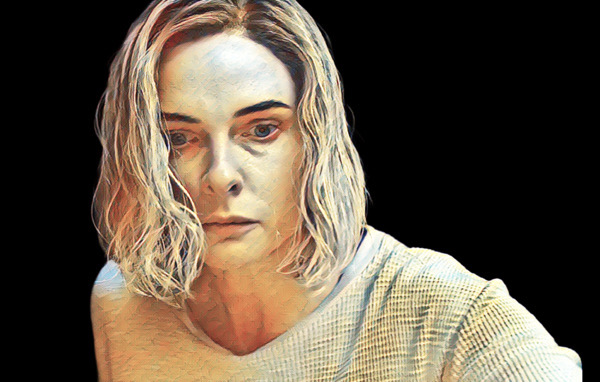
In the present, Juliette will probably stop taking the medication and gradually recover her memories of Silo 17, Solo, the children, Lukas, and the Safeguard. Her immediate objective will be to discover who sent the secret message, find Lukas, and prevent Camille from putting the drugs into the water supply.
She will also need to understand why certain materials are disappearing and what happened to Orla. The Outsiders may become allies, but their lack of information and violent methods also represent a danger.
Billings will have to choose between the office he holds and the truth Kathleen has discovered. Sims, meanwhile, still believes he has gained power, even though the Algorithm chose his wife rather than him. That difference will inevitably create conflict between them.
In the past, Daniel and Helen investigated Charlotte’s mission, the origin of the cloud, and Victor’s treatment. The pilot’s memory probably contains the first concrete evidence that the official version of the conflict with Iran is incomplete.
The two timelines are moving toward the same conclusion. Daniel and Helen will try to discover how the system was created. Juliette will try to discover how to destroy it.
Silo for Dummies: So What Is Actually Going On?
Humanity developed nanorobots capable of healing and killing. Faced with the risk that this technology would be used in wars and attacks, a group of people decided to trigger the controlled destruction of civilization.
Fifty populations were placed inside silos and monitored from a command center. For centuries, their memories, relationships, births, and beliefs were manipulated. Rebellions could end in one of two ways: a reset, through memory erasure, or extermination through the Safeguard.
At the end of the experiment, only one community would be allowed to survive.
In the series, the Algorithm is the intelligence preserving that system. Camille is its new operator. Juliette is the greatest threat because she discovered that other silos exist, that the cleaning is fraudulent, and that the community can be killed by the shelter itself.
Because killing her could trigger a rebellion, they made her mayor, erased her memories, and began manufacturing a new version of her life.
The flashbacks show the origin of that method. Charlotte witnessed a strange technology during a military mission and was then placed in the care of a doctor who believes he can choose which memories she will retain. More than three centuries later, Juliette is subjected to the perfected version of the same principle.

The black cloud is probably a manifestation of the weaponized nanorobots that cause the destruction of civilization in the books. But the series has not yet confirmed whether the attack was Iranian, American, an experiment, or an operation designed to justify the creation of the silos.
The drama of the third season, therefore, is not merely whether Juliette will recover her memories. She has to remember in time to stop everyone else from forgetting.
Because the Algorithm’s power does not exist only in the cameras, the guards, the Safeguard, or the locked doors. It lies in the ability to decide which version of the past will continue to exist.
And in Silo, a population that does not remember being deceived can remain imprisoned forever while believing it was saved.
Descubra mais sobre
Assine para receber nossas notícias mais recentes por e-mail.


1 comentário Adicione o seu