
Attention to Spoilers of Ride or Die’s First Season
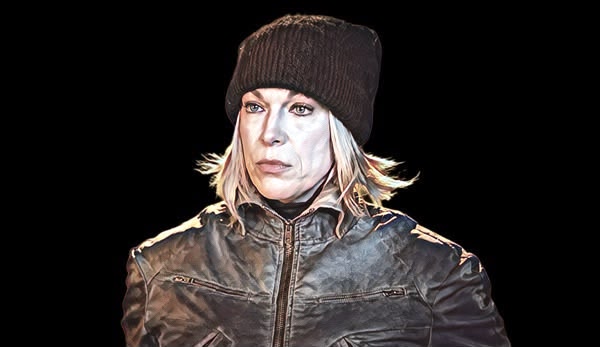
In Ride or Die, released in Brazil as Parceiras no Crime, Hannah Waddingham quickly erases any lingering memory we may still have of Rebecca Welton from Ted Lasso. Judith Burton may initially look like an ordinary middle-aged woman with a respectable job, a book club, and a friendship with Debbie, played by Octavia Spencer, that has lasted for more than two decades. The problem is that almost everything Debbie knows about her best friend’s professional life is a lie. Judith is not a forensic accountant, and Judith is not even her real name. For nearly three decades, she has been killing people professionally under the codename Whiptail.
The codename itself is too curious to ignore. Whiptail is the name given to a group of slender, long-tailed lizards known for their speed, agility, and constant alertness. Some species have an even more fascinating characteristic: there are entirely female populations capable of reproducing through parthenogenesis, without males. There is no confirmation that this biological detail inspired the creators when they chose Judith’s codename, but it is difficult not to appreciate how perfectly it fits a woman trained to survive, react quickly, and depend on no one, especially in a story whose emotional center lies in the relationship between two women.
Because Judith’s secret life is revealed very early, the real mystery of Ride or Die is never simply whether she is an assassin. The more interesting question is which woman is actually real: Judith Burton or Whiptail. At first, it seems reasonable to assume that Judith is merely the carefully constructed disguise that allows Whiptail to move through the world unnoticed. The more we learn about her past, however, the more the series reverses that logic. Perhaps Whiptail is actually the role she learned to perform so perfectly that she no longer knows how to abandon it.

When we first see Judith at work, she is extraordinarily efficient, but she is also beginning to challenge the rules of the organization she serves. After almost 29 years as an assassin, she has traded the expected discretion for increasingly theatrical executions. Her superiors notice the change and, in an especially irritating mixture of condescension and ageism, suggest that perhaps age is becoming a problem. Judith is approaching 50 and is essentially encouraged to retire, but instead of accepting the suggestion quietly, she demands another chance to prove that she can still follow orders.
This is where Ride or Die becomes more interesting than simply turning Hannah Waddingham into a highly entertaining female version of John Wick. Judith is exceptionally good at what she does, but she is beginning to realize that she has spent nearly her entire adult life obeying a structure that decided who she was supposed to be. When that same structure suddenly suggests that her usefulness has an expiration date, she is forced to confront a far more uncomfortable question: if she stops being Whiptail, who exactly is left?
Who was Judith before she became Whiptail?
Judith’s true history is gradually revealed throughout the season, and it completely changes the way we understand her. She was recruited at only 15 by the man known as The Director, played by Bill Nighy, after a childhood defined by abandonment. She had been orphaned, adopted, and later returned, believing that this sequence of rejection was simply the tragedy of her own life. By the end of the season, however, she discovers that what happened to her was not an isolated accident.
Other young recruits experienced similar patterns of adoption and rejection. The system deliberately exploited vulnerable children, breaking them emotionally before presenting the Agency as a place that could offer discipline, purpose, and belonging. The Director, therefore, becomes something far more disturbing than merely the cold leader of an organization of assassins. He did not simply discover damaged teenagers and train them. The system helped create that emotional damage and then presented itself as the solution.
Judith learned very young that relationships disappear, that people leave, and that emotional dependence can become dangerous. Whiptail was therefore not created only through physical training, weapons, and discipline. She was created through abandonment, and the identity that kept her alive was built around the belief that needing another person was a weakness.
Then Debbie entered her life and complicated everything Judith had been taught to believe.
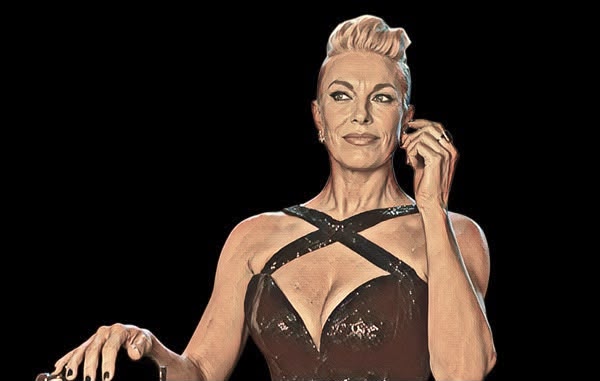
How did Judith meet Debbie, and why does their friendship change everything?
Debbie knows a completely different Judith. She knows the woman with whom she shares jokes, books, confidences, routines, and an intimacy built over more than 20 years. She knows nothing about weapons, contracts, missions, or bodies. To Debbie, Judith is a forensic accountant who travels frequently for work, and even the name she has trusted for decades is false.
The cruelest part of their story is that the friendship did not begin entirely honestly. Ana later reveals that Judith originally approached Debbie because she needed a convincing civilian cover. A married friend with children, a social life, and an entirely ordinary existence helped create exactly the kind of identity an international assassin needed to appear harmless. Ana deliberately uses that information later because she knows that nothing could hurt Debbie more than the possibility that more than two decades of friendship began as part of a professional disguise.
The problem is that something Judith never anticipated happened along the way. What began as cover became a genuine friendship, and that friendship eventually became the deepest emotional bond of her life. The love between Judith and Debbie is not romantic, but it is arguably more important than any romantic relationship either woman has in the story. Debbie became the only person around whom Judith could exist without being Whiptail.
Hannah Waddingham has described Judith as someone who became emotionally numb after spending so many years hiding everything from everyone. The book club, the conversations, and the apparently banal moments with Debbie became a form of escape because they were the only parts of her life in which nobody expected her to kill, obey, manipulate, or survive a mission. Debbie did not know Whiptail existed, which paradoxically made her the only person capable of knowing another, more vulnerable version of Judith.
That changes the way we understand the lie at the center of their friendship. Judith deceived Debbie for decades, unquestionably, but the relationship itself was not false. In fact, it may have become the only genuinely authentic part of Judith’s life.
The series is smart enough, however, not to romanticize that love completely. Judith also tries to preserve Debbie in the only way she has ever learned to preserve anything: through secrecy and control. When Debbie receives a professional opportunity that could take her away, Judith secretly interferes and deletes the message that might have changed her life. Judith convinces herself that she is protecting their relationship, but in reality, she is making a decision for Debbie because she cannot tolerate the possibility of losing her.
This contradiction is one of the most interesting things about the character. Judith genuinely loves Debbie, but she learned how relationships work inside a system built on manipulation, secrecy, and abandonment. She can face armed men without hesitation, but she has no idea how to simply admit that she is afraid of losing the person she loves most.
That love is also precisely what puts both women in danger.
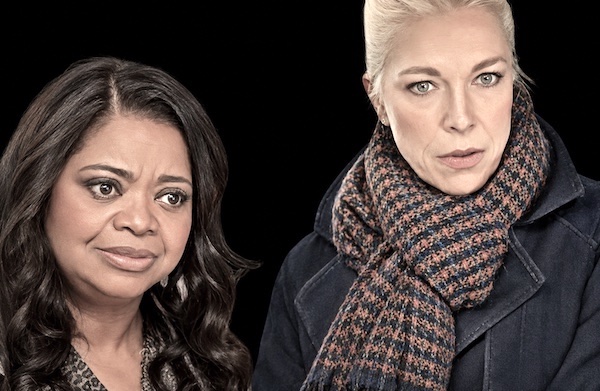
Who is Ana, or Redback, and why does she pursue Judith and Debbie?
Ana, played by Sylvia Hoeks and known by the codename Redback, is not simply another assassin sent after Judith. She is almost a mirror image of Whiptail, another woman shaped by the same system, trained to kill and taught that emotional attachments are weaknesses that can be exploited. Ana and Judith worked together and once shared a close relationship within the Agency, but everything changed when Ana realized how important Debbie had become.
From the Agency’s perspective, Debbie was no longer merely Judith’s civilian friend. She represented a vulnerability and potentially a loose end, someone who might eventually learn too much. During a mission in Turkey five years before the main events of the series, Ana concludes that Debbie has to die, forcing Judith to make the decision that ultimately creates the entire conflict of Ride or Die.
Judith chooses Debbie.
Rather than allow Ana to kill her, Judith shoots Ana, who falls into the water, and later tells the Agency that Redback is dead. Judith believes she has protected Debbie and eliminated the threat, but Ana survives. Everything that happens afterward grows out of that decision.
Ana eventually sees Judith as responsible for the suffering she endured after being abandoned and presumed dead. Her revenge is therefore far more personal than a professional assassination. She wants to destroy the exact thing Judith chose instead of her: Debbie and the relationship between them.
That is why killing Debbie eventually stops being enough. Ana realizes that she can hurt Judith far more effectively by convincing Debbie that their friendship was never real. She reveals that Judith originally approached her as part of a cover, exposes the fact that Judith interfered with an important professional opportunity, and forces Debbie to reconsider more than 20 years of memories.
Ana’s revenge works because it targets Judith’s oldest wound. She wants Whiptail to become that abandoned girl again, convinced that nobody stays and that every relationship eventually disappears.
The tragedy is that Ana and Judith were shaped by essentially the same machinery. Both were manipulated, both learned to survive by shutting down emotionally, and both were taught that vulnerability was dangerous. The crucial difference is that Judith eventually found Debbie, and that one genuine human connection changed the direction of her life.

Why does Whiptail have to kill Billy Donovan?
Billy Donovan, played by Ed Skrein, enters the story as another name on an assignment. After Judith is reprimanded for abandoning Agency protocols and practically encouraged to retire, she demands one more opportunity to prove that she can still follow orders. Her mission is to eliminate Billy discreetly during a charity gala.
Billy is connected to a criminal operation involving money laundering, while David, Debbie’s husband, is also entangled in the same network. Without realizing it, Judith and Debbie therefore arrive at the same event for completely different reasons. Debbie is attending with her politician husband, while Judith has been sent there to murder Billy.
The mission collapses almost immediately. Judith fails to complete the assassination, the gala turns into a massacre, David disappears amid the violence, and Debbie discovers that the woman she has trusted for decades is not who she claimed to be. The assignment that was supposed to prove Whiptail could still be a disciplined, obedient assassin instead begins dismantling the identity Judith has spent nearly 30 years building.
Billy remains someone she is supposed to kill, and The Director continues demanding that she finish the job. The longer Judith spends around him, however, the more difficult it becomes to see him simply as a target whose existence needs to be erased.
Billy gradually moves from target to ally, and that transformation becomes important because it forces Judith to confront something she has spent most of her life avoiding: the humanity of the people around her and, ultimately, her own.
How does Billy humanize Whiptail?
Billy’s trajectory is one of the more unexpected elements of the season because he begins as nothing more than work. He is someone Judith is supposed to kill, but circumstances turn him first into a useful source of information and later into a traveling companion as he, Judith, and Debbie try to understand the conspiracy that has placed all three of them in danger.
The three form an unlikely alliance, and Billy gradually becomes capable of seeing something Judith herself may not yet know how to articulate. He recognizes the extraordinary bond between Judith and Debbie, but he also offers Judith something different: the possibility of being with someone who knows exactly what she is and still imagines a future with her.
When Judith believes she has lost Debbie permanently and begins thinking about disappearing, she talks about escaping to Cambodia. Billy offers to go with her, and the two eventually kiss. There is not enough time for the relationship to develop into a fully realized romance, but that is precisely why the moment matters. Billy represents possibility rather than certainty.
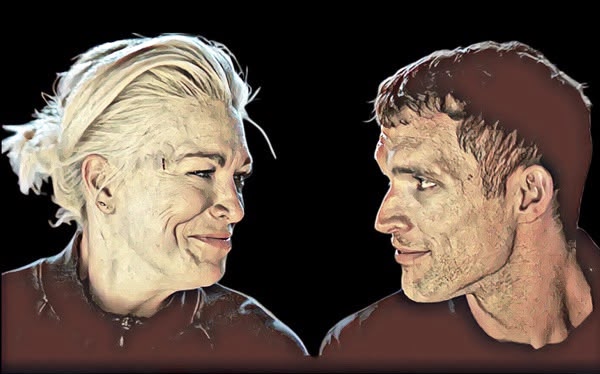
For the first time, Judith allows herself to imagine that life after Whiptail might contain something other than solitude. Billy, therefore, moves through the story from target to ally and then to a potential romantic partner, becoming the symbol of a future Judith had never seriously allowed herself to consider.
That possibility disappears when Ana kills him.
Billy’s murder in Geneva is not merely a shocking plot twist. By killing him just as Judith begins to see another possible version of her life, Ana eliminates one more person who was helping humanize Whiptail. Debbie had already shown Judith that she could be deeply loved as a friend, while Billy was beginning to show her that there might also be desire, companionship, and a future beyond the Agency.
After his death, Billy becomes something different: the memory of a life Judith almost allowed herself to choose.
Why is Debbie the most important person in Judith’s life?
This is where every important relationship in Judith’s life finally connects. The Director taught an abandoned teenager that attachments were dangerous. Ana represents the most extreme result of that philosophy, transforming affection into possession and abandonment into revenge. Billy proves that another life might still be possible.
Debbie, however, proves that Judith already had another life without realizing how much it mattered.
After discovering the truth, Debbie has every reason to walk away. Judith lied about her name, her profession, her past, and the entire structure of her life. She also manipulated decisions that belonged to Debbie alone. Once Ana reveals that the friendship itself originally began as part of a cover, Debbie is forced to ask whether anything she remembers about the woman she considered her best friend was ever genuine.
Then she discovers Judith’s hidden space.
Inside, Debbie finds the physical evidence of the life Judith claimed was merely a disguise: photographs, objects, family memories, and traces of the people she had supposedly used only to maintain a convincing cover. The room becomes proof that although their friendship may have started as a lie, the emotions it created did not remain one.
Debbie realizes that Judith may have lied about almost everything except loving her.
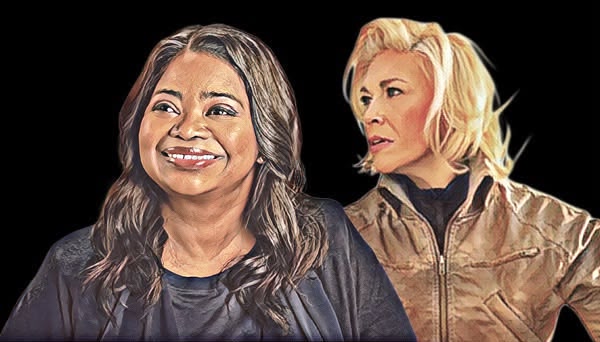
There is something especially sad about that discovery because Judith has spent her life dividing herself into compartments. One part belongs to Whiptail, another to the false identity of Judith Burton, and another to the Agency. Yet there is also a protected emotional space filled with Debbie, her family, and the ordinary life Judith could only experience from the edges.
Debbie may therefore be the one thing Judith never successfully managed to hide from herself.
Ana understands this, which is why her final attack is designed not merely to kill Judith but to recreate the emotional wound that created Whiptail in the first place. Judith is left believing that she has once again been abandoned, that nobody is coming for her, and that every relationship ultimately ends with her alone.
This time, however, Debbie comes back.
She returns after discovering the lies, after feeling betrayed, and after learning things that could easily have destroyed more than two decades of friendship. She does not return because she suddenly decides that none of those betrayals matter. She returns despite knowing that they do.
That may be the moment when Ride or Die finally explains its own title.
The English expression describes someone who remains beside another person regardless of the risk or consequences, the person who stays when things become difficult rather than disappearing. It can loosely be understood as “together until the end,” “with you no matter what,” or even “together until death.”
In action stories, the idea is almost literal: the partner who gets into the car, picks up the weapon, and stays beside you until everything is over. Ride or Die turns that familiar expression into something much more emotional by placing two middle-aged women at the center of it.
Debbie is not Judith’s ride or die because she accepts every lie without questioning it. She is furious, feels betrayed, confronts Judith, and refuses to pretend that decades of deception do not matter. What makes their bond powerful is that Debbie knows the truth and still comes back for her.
For a woman whose entire identity was built out of abandonment, that may be more radical than any conventional declaration of love.
What is Judith Burton’s real name?
One final detail perfectly captures the central mystery of the character: Judith Burton is also a false identity.
At the end of the season, after everything they have survived, she finally tells Debbie her real name. The series deliberately refuses to let the audience hear it, turning that information into something that belongs only to the two women.
The choice is especially meaningful because information has always represented power in Whiptail’s world. Her name, identities, addresses, targets, and relationships had to remain hidden because secrecy was the mechanism that kept her alive. For almost three decades, revealing who she really was meant exposing a weakness that someone else could use against her.
At the end, she voluntarily gives the most intimate piece of information she possesses to Debbie, not because Debbie needs it for a mission or because revealing it serves some strategic purpose, but simply because Judith finally trusts her.
That may ultimately be the greatest secret at the heart of Ride or Die. The series begins by asking us to discover who Whiptail is, but gradually reverses the question and asks who remains when Whiptail is no longer necessary.
Judith Burton is a false name, while Whiptail is an identity created by an organization that turned abandonment into a recruitment method. Ana represents the woman Judith might have become if she had never formed a genuine human bond, while Billy becomes the memory of another life she briefly allowed herself to imagine.
Debbie, however, is the proof that beneath all those identities, there was always someone still capable of loving and being loved. After nearly three decades of killing to survive and hiding almost everything from the only person around whom she could truly lower her guard, Judith may still be discovering who she really is, but for the first time in her life, she does not have to discover it alone.
Descubra mais sobre
Assine para receber nossas notícias mais recentes por e-mail.


1 comentário Adicione o seu