
After all these years, the time has come to say goodbye to Ser Criston Cole in House of the Dragon. Everything the series has been building toward in this third season points to the end of the Kingmaker, with the Butcher’s Ball finally ahead of us. For anyone who has read Fire & Blood, his death was never exactly a mystery. What is more interesting, now that we have reached this point, is looking back and realizing just how different the man who is about to die on screen is from the one George R.R. Martin left on the page. Not necessarily because the series changed his fate, but because it decided to explain Criston Cole.
Perhaps a little too much.

The rise of a common-born man
We have already covered the differences between Fire & Blood and House of the Dragon in earlier articles here at MiscelAna. On the page, Ser Criston is fascinating precisely because we never fully understand him and, like almost everything else in the book, his story reaches us through contradictory accounts. We do not truly know his motivations. We only know that he develops a visceral hatred of Rhaenyra, to whom he was once close, and becomes one of the Blacks’ most active enemies, responsible for several defeats and deaths on the Queen’s side.
It is worth remembering, as he himself did in episode 5 of season 3 during a conversation with Gwayne Hightower, that Criston is from Dorne, that his father was Lord Dondarrion’s steward and that he therefore came from relatively humble origins. He arrived at court without a great family name to protect him, and it was his skill alone that brought him before the Targaryens, after he caught Rhaenyra’s attention at a tournament and was chosen as the Princess’s personal sworn protector.
In a story dominated by men who inherited power, Criston earned his own. Yet he was constantly reminded of what he was not, by Greens and Blacks alike.
The seed of hatred
His relationship with Rhaenyra, merely suggested in the book, was made explicit in the series: she seduced him and they spent a night together, but when Criston asked her to leave everything behind and marry him, she refused.
By sleeping with her, he had broken his vow of chastity as a member of the Kingsguard, something that carried far more weight for him than a simple love affair precisely because he came from modest origins. Without lands or a powerful family name, his honor as a knight was practically all he possessed, which gave Rhaenyra’s rejection a double weight.
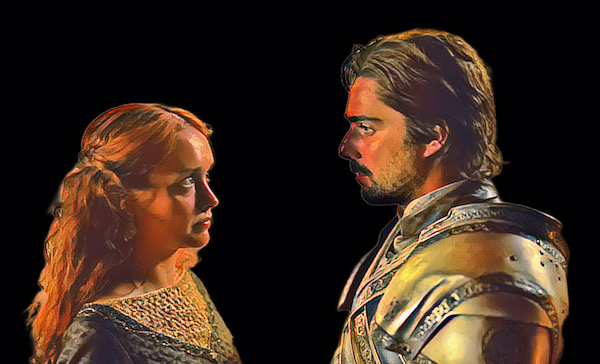

Running away with Rhaenyra would, in his mind, have given some meaning to the sacrifice he had just made. Instead, he was left with the certainty that he had broken his vows for a relationship that, to her, had no real significance.
That personal humiliation grows into political conviction when the opportunity arises to place Aegon II on the throne. Removing Rhaenyra becomes a personal form of revenge intertwined with misogyny, wounded pride, blind faith and, eventually, simple ambition. Watching her suffer and lose everything would somehow repair the injustice he believes was done to him — even though Alicent is the only person who knows his side of the story.
Indifference makes Ser Cole’s tragedy even more painful
Curiously, we watch Ser Criston nurture his resentment toward Rhaenyra for more than a decade, yet we never see her mention his name or even spare him a glance. Of all the people who cause her pain, it is almost as though Rhaenyra does not even remember that Cole exists. She had three children with Ser Harwin Strong and two more with Daemon Targaryen, and at no point does she stop to consider that a lover from a single night might still have reason to wish her harm.
Whether this is deliberate on House of the Dragon’s part is unclear, but it hardly helps the audience sympathize with a bitter and envious man who constantly speaks against a Queen who does not even seem to remember him.
Ser Criston personally trained Aegon II and Aemond to fight and beat their nephews, Lucerys and Jacaerys, a cowardly and petty attitude that was obvious, but which Viserys ignored and Alicent approved of. For fans, Ser Criston became the very image of the toxic man, without a single characteristic that might meaningfully encourage us to see him differently.

Only Alicent knew his version of events and agreed with it.
Before long, Ser Criston Cole became one of the most hated characters in the series — and his death one of the most eagerly anticipated.
Fabien Frankel even joked before the third season that the writers wanted to keep him “unlikable.” When Olivia Cooke tried to argue that the series had shown other sides of Criston, the actor teasingly pointed toward the choices made by Ryan Condal and Sara Hess, suggesting that moments capable of humanizing him did not always survive the final cut.
It is revealing that the actor himself seemed to recognize something that followed the character for three seasons: almost every time Criston had an opportunity to earn a little empathy, the story found a way to remind him — and us — why we were supposed to hate him.
The making of a villain
By positioning Ser Criston as a “villain,” the series also gradually turned him into someone capable of alienating people on the Green side. Otto Hightower, for example, lost his position as Hand to him, but made it perfectly clear that he considered Criston incompetent.
The fact remains that the series never fully conveyed the weight of Ser Criston’s reputation as a commander and dangerous adversary. He nearly succeeded in killing Rhaenyra in the second season by setting the twins Arryk and Erryk Cargyll against one another, causing one of the saga’s most lamented tragedies.
He also planned the trap that cost Rhaenys her life, but many of his other strategic victories became diluted, as did the impact of his absence from King’s Landing and his actual presence in the fighting between Greens and Blacks. The third season has begun to address some of this, but I still consider it the greatest failure in the way the character was adapted.
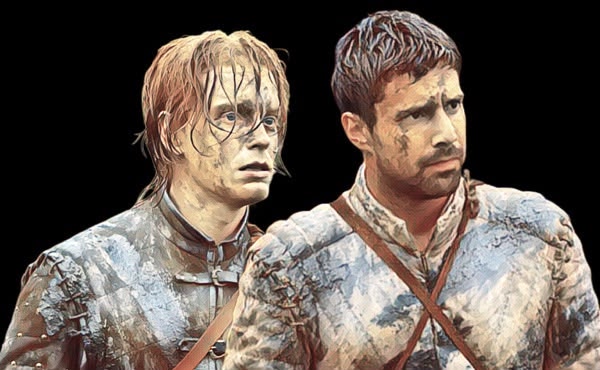
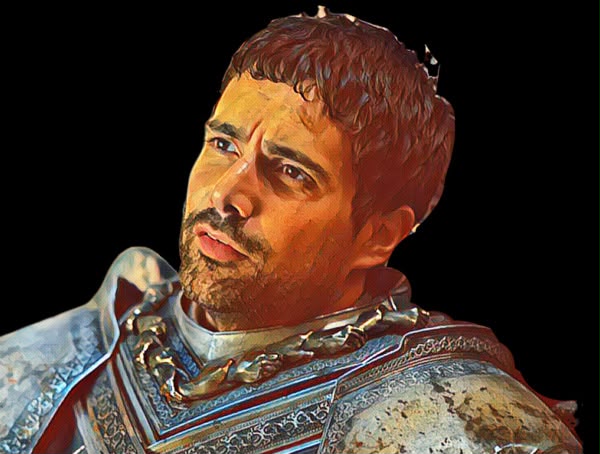
Although Frankel jokes about the audience’s dislike of Cole, the series did try to humanize him. The problem is that viewers did not buy it.
Ser Criston is the key witness to Aemond deliberately trying to kill Aegon at Rook’s Rest, and his disillusionment after witnessing both the moral and physical destruction caused by the war sends him into something resembling a depressive and suicidal spiral. He leaves King’s Landing alongside Gwayne Hightower knowing that he will probably never return to the capital alive, saying goodbye to Alicent with that certainty already in his heart.
An unlikely love story that exists only on screen
The unexplored love triangle in House of the Dragon was born back in season 1: both Rhaenyra and Alicent were drawn to Ser Criston, but the Princess effectively had “priority” because of her position.
Alicent, always obedient, was practically sold to Viserys, a man more than 30 years older who became her husband. As Queen, even though she was sexually unhappy, she had neither the freedom nor perhaps the desire to seek other men. In that sense, she shared with Criston the disgust and envy of watching Rhaenyra disregard the rules and live her life without apparently facing the same consequences.
At first, Alicent believes her friend and stepdaughter when Rhaenyra denies the rumors surrounding her virginity. She believes her so completely that, as a final attempt to learn the truth, she questions Ser Criston.
Alicent assumes he witnessed something between Rhaenyra and Daemon.
Instead, she discovers something she considers even worse: Ser Criston himself was Rhaenyra’s secret lover.
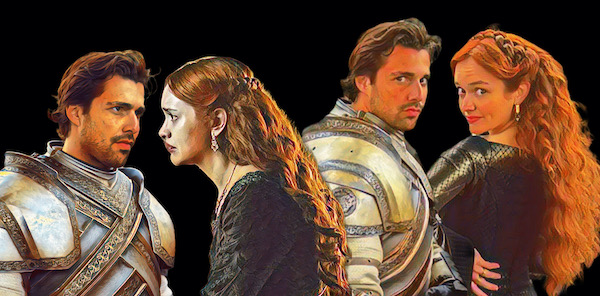
That discovery united the pair in their desire to expose Rhaenyra publicly. After Viserys’s death, Alicent and Cole eventually become lovers themselves. We do not know exactly how or when they began sleeping together, but by the time Jaehaerys, the son of Aegon and Helaena, is murdered in revenge for Lucerys, they are already a couple.
As obvious to us as it seems to be to everyone else in the realm.
In other words, Criston spent years morally condemning the woman with whom he had broken his own vows, only to become the lover of the widowed Queen himself, consolidating the hypocrisy at the heart of both characters. The knight obsessed with honor kept violating it, while the Queen who dictated morality proved equally driven by jealousy and envy.
The problem is that this contradiction was never fully developed or explored from either side.
The Criston Cole of the book is more unsettling because we cannot easily place him into a neat category, while the Criston of the series is far easier to read. Even his true reasons for supporting Aegon II remain unresolved on the page.
Some attribute his choice to ambition and to the belief that Aegon would be a king easier to control. Others see Rhaenyra’s rejection as the personal origin of his opposition. Still others credit Criston with genuine political conviction, rooted in the succession tradition that favored sons over daughters, or in his refusal to accept that Rhaenyra’s children — whom he believed to be Strong bastards — should inherit the Iron Throne.
Perhaps all of those things were true at once.
Perhaps none of them explains everything.
And it is precisely that uncertainty that makes the character in the book so much harder to decipher.
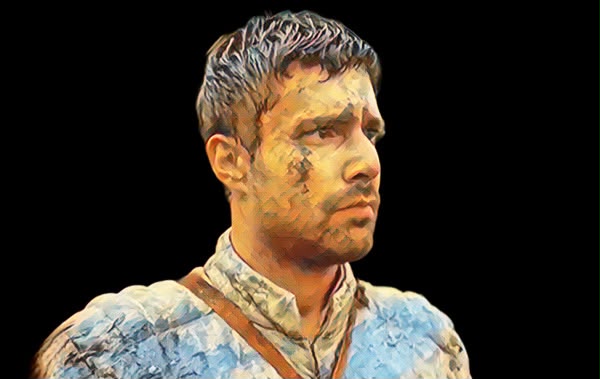
House of the Dragon diminished something fundamental: the Kingmaker
That nickname alone should tell us everything about Ser Criston Cole’s historical importance. He enters Westerosi history as the man who plays a direct role in Aegon II’s rise to the throne, becomes Lord Commander of the Kingsguard, Hand of the King and commander of the Green armies.
His name becomes permanently associated with the making of a king — and therefore with the war that ultimately destroys House Targaryen.
On screen, however, “Kingmaker” never carried the weight it should have. Politics frequently gave way to emotion instead of allowing his motivations to emerge from a more compelling combination of class, ambition, honor, misogyny, conviction and hunger for power.
It is a shame, because Criston had everything required to become one of the most complex characters in the series.
That reduction becomes even more significant when we remember that, in the book, Criston demonstrates a military judgment that the Targaryens he serves often lack. After the Blacks take King’s Landing and the Greens suffer defeats in the Riverlands, it is Criston who advises Aemond to abandon Harrenhal and march south, joining his army with the forces of Ormund Hightower and Daeron.
Aemond refuses. Instead, he chooses to use Vhagar to burn the Riverlands, leaving Criston increasingly isolated.
In other words, the man the series frequently portrayed as impulsive and hardly brilliant understood quite clearly on the page that this war could not be won with a single dragon.

What remained was a man who saw firsthand what a war fought with dragons actually means. A man who believed he understood the battlefield, only to discover that his sword is almost useless when enormous creatures can reduce men and horses to ashes within seconds.
By the third season, that realization seems to have hardened into fatalism.
Meeting death
On the eve of his farewell, we find Ser Criston trapped inside a war he no longer controls, facing the forces of the Riverlands and the Winter Wolves and fully aware that he is marching toward his own death.
Gwayne recognizes the suicidal nature of his decision and tries to dissuade him, but the alternative for Criston is once again simply to “serve,” and he no longer wants to accept that limitation. He appears to carry Alicent in his heart and still thinks of her, but he no longer seems interested in trying to survive.
The Butcher’s Ball, then, may become more than just another battle. It begins to feel almost like something Criston is actively seeking.
Frankel has described the confrontation as a more isolated and personal fight, very different from the spectacle of the season’s other major battles. It is probably the most interesting version of Criston Cole we have seen since the first season, and perhaps that is the greatest irony of his farewell.
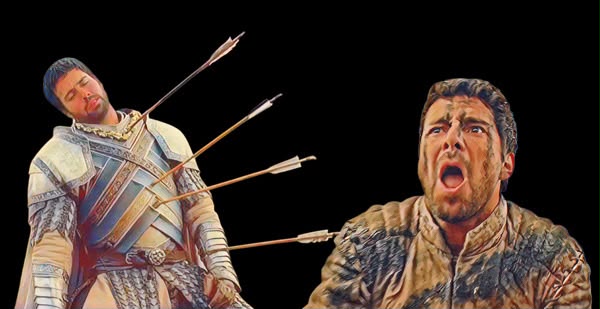
The series spent years making Criston easy to hate and is only now beginning to restore some complexity to him, when there is almost no time left to explore it.
In the book, his ending is cruel precisely because he is denied even the death he wants. At the Butcher’s Ball, surrounded and with no way out after a march during which his army has been systematically weakened, Criston first offers his surrender in exchange for the lives of his men.
The offer is refused.
Only then does he challenge the three opposing commanders to combat, in one last attempt to decide the outcome himself.
They deny him that as well.
There will be no epic duel, no heroic gesture and no final opportunity to turn his death into legend. Robb Rivers and his archers strike him down with three arrows, and his head is eventually carried on a spear.
The Kingmaker, a man who helped decide who would wear the crown, cannot even decide how he himself will die.
It is a perfect ending for the character in the book.
Whether it will be equally powerful for the character created by the series remains to be seen.
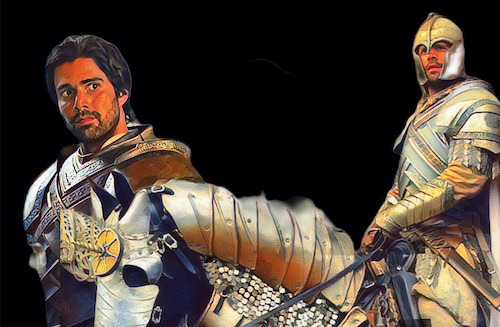
It is what it is
Fabien Frankel has done an excellent job with the material he was given, especially because Criston could easily have become a caricature.
In the end, Westerosi history remembers Criston Cole as a man who embodied some of the very best and the very worst qualities of the Kingsguard.
The series, by contrast, seems to have been far more interested in the worst.
Now that Criston Cole is about to leave House of the Dragon, I am not sure I will miss him. And for a character so important to the history of the Dance of the Dragons, that may be the harshest criticism of all.
I will miss, however, the character he could have been.
Because the man remembered forever on the page as the Kingmaker reaches his farewell on screen remembered primarily as the man everyone learned to hate.
And perhaps that is exactly where House of the Dragon both succeeded and failed: it managed to make Criston Cole unforgettably detestable, but never quite as fascinating as the enigma it found in the book.
Will Rhaenyra even remember him when she learns that he is dead?
Descubra mais sobre
Assine para receber nossas notícias mais recentes por e-mail.


1 comentário Adicione o seu