
One of the most senseless crimes of the decade is the case that became known as the Idaho Four: four college students brutally murdered in the middle of the night, inside the house where they were sleeping, with no clear reason ever established for such violence. According to investigators—and according to the confession he would later make himself—the person responsible was Bryan Kohberger, a doctoral student in criminology.
The murders of Kaylee Goncalves, Madison Mogen, Xana Kernodle and Ethan Chapin drew worldwide attention. The investigation unfolded almost in real time, generating documentaries, podcasts and countless YouTube channels devoted to analyzing every minute, every statement and seemingly every inch of the house in Moscow, Idaho.
Kohberger was identified and arrested in December 2022 and initially maintained that he would be exonerated. Then, in a reversal that shocked even those who had followed the case obsessively, he abandoned the prospect of a trial and admitted responsibility for all four murders.
He did so with the same coldness that had defined all his public appearances, answering “yes” when the judge directly asked whether he had killed each victim, but offering no explanation. He never revealed a motive, never clarified whether he knew the students and never filled in any of the enormous gaps surrounding the crime.
Now, a little more than a year after confessing, Kohberger is once again declaring himself innocent and wants to undo the agreement that resulted in four consecutive life sentences without the possibility of parole, plus another ten years for entering the house.
Because almost nothing about this story has ever made sense, perhaps this is not a completely unexpected twist. It is still a twist.
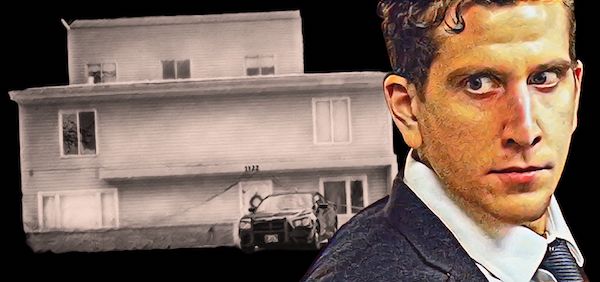
What is Bryan Kohberger claiming?
In a handwritten petition filed from Idaho’s maximum-security prison, Kohberger claims that his own lawyers convinced him to confess to crimes he did not commit.
According to him, the defense team used false promises and misleading information to pressure him into accepting the agreement that removed the death penalty from the case.
Kohberger alleges that his attorneys exaggerated or misrepresented the conditions he would face on death row and promised that a life sentence would give him better living conditions, greater freedom of movement inside the prison, access to work and more opportunities for visits.
He also claims he was told that whether he was actually guilty did not matter to the negotiation: he simply had to accept responsibility in order to avoid a possible execution.
Kohberger further accuses his lawyers of concealing or minimizing evidence that could have supported his defense. The main example he cites involves unidentified hairs reportedly found near Ethan Chapin.
Kohberger argues that this material could suggest the presence of another person and support his claim of innocence. For now, however, that is only his interpretation.
The existence of unidentified hair does not automatically erase the DNA attributed to Kohberger on the snap of a knife sheath found beside one of the victims, the footage of a vehicle resembling his near the house or the other evidence assembled by prosecutors.
The new petition also fails to offer a complete explanation of how he could be innocent.
Kohberger does not identify another killer. He does not explain where he was that night. And he does not explain why he personally admitted, before a judge, that he had murdered all four students.
His argument is essentially that the prosecution’s case was never properly tested before a jury and that he now wants the trial he voluntarily gave up.
What about the theory that he did not act alone?
From the beginning, many people have believed that Kohberger could not have carried out the murders alone.
The brutality of the attack, the short period of time in which it apparently occurred, the number of people inside the house and the existence of unidentified genetic material have fueled endless theories about a possible accomplice.
But no official investigation has concluded that a second person was involved, and Kohberger’s new petition does not provide concrete evidence of an accomplice.
The absence of a trial helped preserve those doubts. Once Kohberger confessed, prosecutors no longer needed to publicly present their full reconstruction of the crime, and the defense lost the opportunity to challenge it before a jury.
That was precisely what made the plea agreement so frustrating for some of the victims’ families and for many people who followed the case.
It guaranteed that Kohberger would die in prison, but it also allowed the motive and several crucial details from that night to remain unanswered.
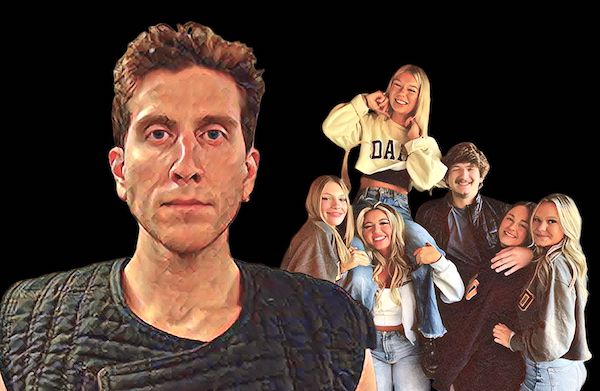
Can he simply change his mind?
No. But the law allows him to try.
Kohberger is not merely taking back his confession because he regrets the agreement. Under Idaho law, a guilty plea may be withdrawn after sentencing only to correct what is known as a manifest injustice.
That means he would have to prove something serious: that his confession was not knowing or voluntary, that he was genuinely coerced or that his legal representation was so deficient that it violated his constitutional rights.
That is a very difficult legal standard to meet.
Kohberger’s greatest obstacle is Kohberger himself.
In the agreement signed on July 2, 2025, he stated that he understood the charges, acknowledged that he was not being coerced and accepted responsibility for the five criminal counts of his own free will.
During the hearing, the judge asked the necessary questions precisely to prevent Kohberger from later claiming that he had not understood what he was doing.
Kohberger confirmed that he understood the consequences and answered yes when asked whether he had murdered each student.
Now, in order to overturn his conviction, he must convince the court that those declarations were false because his own lawyers had manipulated him.
In other words, he must explain why he lied under oath in order to prove that he should not remain imprisoned for confessing to four murders.
And he is not simply asking to be released from prison.
His first objective is to invalidate the confession and regain the right to stand trial. Even if he succeeded—which remains highly unlikely—he would almost certainly remain behind bars while the case was reopened.
To actually walk free, he would still need to be acquitted or have the charges dismissed.
There is another risk. By undoing the agreement, Kohberger could also lose what he received in exchange for his guilty plea.
The removal of the death penalty was part of that negotiation. If the confession is invalidated and the case returns to its earlier stage, prosecutors could, at least in theory, seek the death penalty again.
For now, the prison doors are nowhere near opening.
Kohberger has begun a new legal battle, placed his supposed innocence back into public discussion and restored the remote possibility of a trial.
But he still has not answered the central question: why would a man who always insisted he was innocent calmly and knowingly admit that he entered that house and murdered four young people he apparently did not even know?
Descubra mais sobre
Assine para receber nossas notícias mais recentes por e-mail.


1 comentário Adicione o seu