
The documentary about the Idaho murders arrived on Netflix just as the case entered an unexpected attempt at a legal reversal. Only two days before the production premiered, Bryan Kohberger filed a motion seeking to withdraw the guilty plea that spared him from the death penalty and return to trial. After formally admitting that he murdered four University of Idaho students, he now claims that he was pressured and misled by his own attorneys and is attempting to reclaim the position of innocence he maintained before accepting the plea agreement.
Directed by Skye Borgman and executive produced by Oscar-nominated filmmaker Joe Berlinger, one of the best-known names in true-crime documentaries, The Idaho Student Murders: A College Nightmare has one significant advantage over previous productions about the case: extensive access to the official investigation. The series brings together police body-camera footage, surveillance videos, text messages, documents, investigative records, and, most importantly, testimony from the officers who worked directly on the case. Berlinger describes it as the first production to offer a complete reconstruction with broad cooperation from law enforcement, in a clear attempt to replace online rumors, conspiracy theories, and amateur judgments with a timeline based on the evidence collected by investigators.
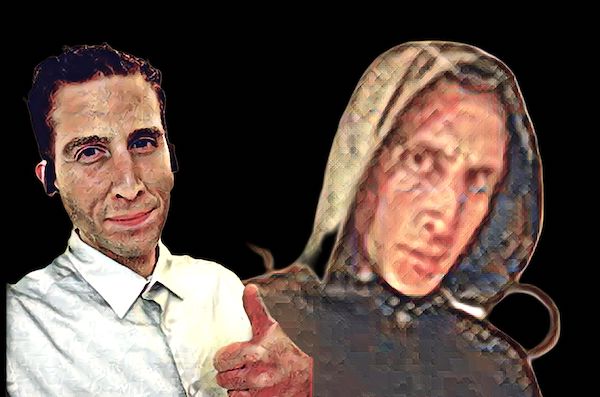
For those who, like me, closely followed almost every stage of the investigation and legal proceedings on YouTube, there is not exactly a major revelation, or even an image that creates the impression that we are finally seeing something capable of changing our understanding of the case. Much of the material had already circulated in fragments through specialized channels, streamed hearings, news reports, court documents, and lengthy analyses conducted by lawyers, journalists, and former investigators.
The documentary’s achievement, therefore, does not lie in revealing a secret piece of the puzzle but in gathering everything we know and organizing the story in a coherent and accessible way. Almost four years after Kaylee Goncalves, Madison Mogen, Xana Kernodle, and Ethan Chapin were brutally murdered inside the house where three of them lived, we still do not have the most basic answers. We do not know why that residence was chosen, whether one of the victims was the primary target, how Kohberger knew the students’ routines, or what could possibly explain such extreme violence. He confessed to the murders but never explained his motive, and prosecutors were not required to present one for the plea agreement to be accepted.
It is precisely this absence that makes the documentary so unsettling. Police found a knife sheath containing DNA, tracked a vehicle similar to Kohberger’s, analyzed his movements and phone records, and eventually reached his parents’ home in Pennsylvania, where he was arrested a little more than a month after the murders. The series clearly explains how those separate elements were connected and how an investigation initially criticized for appearing slow was, in fact, being conducted quietly by local authorities, the Idaho State Police, and the FBI.
Still, explaining how Kohberger was identified is not the same as explaining the crime. The documentary presents earlier accounts of his isolation, his interest in the minds of criminals, and difficulties in his academic life, but it avoids turning uncomfortable aspects of his personality into a convenient psychological answer. That restraint is welcome because the true-crime genre frequently mistakes unusual behavior for criminal motivation and presents speculation as though it were a diagnosis.
Another strength is the attempt to restore the victims as people rather than merely four names repeated before every new revelation about Kohberger. Kaylee was preparing to begin a new professional chapter, Madison had been her best friend since childhood, and Xana and Ethan were building a relationship surrounded by plans, friendships, and expectations. The participation of Alivea Goncalves, Kaylee’s sister, gives the series its emotional center and carries the narrative through to the statement she delivered directly to Kohberger at his sentencing hearing. Borgman’s stated intention was for viewers to finish the three episodes knowing Ethan, Xana, Kaylee, and Maddie as more than the circumstances of their deaths.
It is a necessary choice because, for months, the internet transformed the case into a collective investigation game. The two surviving roommates were accused, Kaylee’s former boyfriend was treated as a suspect, and neighbors, friends, and acquaintances had their lives examined by people who confused curiosity with the right to make accusations. The series uses the official investigation to dismantle some of those theories, although it is difficult to erase a narrative that has already developed a life of its own online.
The irony is that the documentary was released while presenting a conclusion that is no longer entirely final. Kohberger had been sentenced in July 2025 to four consecutive life sentences without the possibility of parole, as well as ten years for entering the residence. He now claims that his defense attorneys withheld evidence, exaggerated the conditions he would face on death row, and persuaded him to falsely confess. Among the elements he cites is an alleged hair found in Ethan Chapin’s hand, although court records indicate that a sample examined by an expert hired by the defense itself was consistent with Ethan’s own hair.
Withdrawing a guilty plea after sentencing would require Kohberger to demonstrate a serious injustice, such as an involuntary confession or a substantial constitutional violation. That will not be easy, especially since he signed a document accepting responsibility for the crimes and answered affirmatively when the judge asked whether he was pleading guilty, as he was, in fact, guilty. Even so, the court has already authorized the appointment of a new attorney to review his request, ensuring that the case will continue producing new chapters after everyone believed it had finally reached its conclusion.
The difference offered by The Idaho Student Murders: A College Nightmare, therefore, is not that it changes what we know, but that it changes who organizes the narrative. Online detectives, theories, and irresponsible accusations move to the periphery, while investigators, official documents, and families who experienced the tragedy take their place. Netflix does not solve the deepest mystery of the Idaho murders, but it does clearly demonstrate how Kohberger was identified, arrested, and convicted.
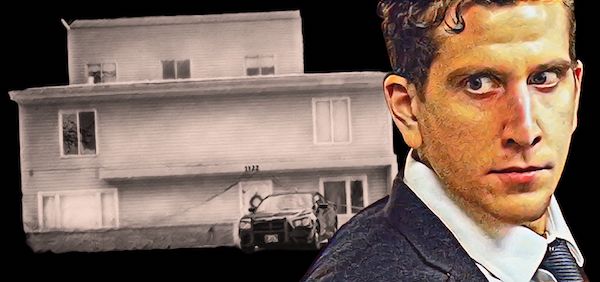
What remains is an emptiness that no amount of police footage can fill. We have a defendant who confessed and is now attempting to declare himself innocent again, a conviction obtained without a trial, and four lives ended without anyone ever explaining why. Perhaps it is precisely the absence of even a minimally rational answer that keeps the case haunting us. The investigation may be closed, the sentence may have been imposed, and Kohberger may spend the rest of his life in prison, but the story of the four Idaho students has still not found a true ending.
Descubra mais sobre
Assine para receber nossas notícias mais recentes por e-mail.

