
I’m Team Black. I’m Team Rhaenyra. And I’ll have plenty to say about what House of the Dragon is doing with her in Season 3, but that’s precisely why I have to admit something uncomfortable: right now, Aegon has the strongest character arc in the show.
From the beginning, Ryan Condal seems to have never really hidden his affection for the Greens; you only have to notice the green leather jacket he wears in interview after interview. The series also softened Rhaenyra compared to Fire & Blood, making her more relatable for a modern audience, but we’ve now reached the point in the story where that approach becomes much harder to sustain. She has finally gained what she always wanted, yet she is beginning to lose control because she cannot fully establish herself as a leader. That’s a discussion for another day.
Today, it’s about Aegon.
When we first met him, he was a deeply unpleasant prince: drunk, abusive, violent, and completely unprepared. Ignored by his father, dismissed by his mother, and placed on the Iron Throne despite receiving none of the education that should have come with it.
That remains one of the Greens’ greatest contradictions. Otto Hightower spent years plotting to crown his grandson, yet never actually raised him to rule. He never taught him, never guided him, and never built the foundations of a successful reign around him. Aegon was simply handed the crown. At first, he didn’t want it. Then he did. And he was terrible at it.
He craved admiration and respect without understanding how either was earned. He acted impulsively in council meetings, mistook authority for entitlement, and eventually tried to prove himself in battle—only to be horribly burned by his own brother.
That’s where the television series begins, telling a story the book never really does.

In Fire & Blood, Aegon largely disappears after leaving King’s Landing. Because the novel is written as a fragmented historical chronicle, we never experience his escape or whatever personal transformation might have taken place. He simply vanishes and eventually returns, consumed by pain and vengeance. House of the Dragon fills that silence.
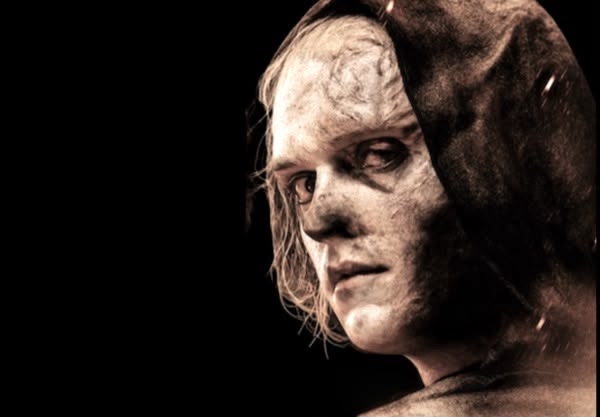
Instead of skipping over those missing chapters, it follows his fall. We watch him lose his body, his crown, his family, and ultimately his public identity. We see a king forced to hide, dependent on others simply to survive, discovering firsthand that a crown protects no one once power is gone.
Out of that journey emerges something almost impossible: A more human Aegon. Not innocent. Not redeemed. Simply… understandable.
None of this erases who he was. He remains responsible for horrific acts of abuse and violence. His suffering doesn’t cancel those crimes, just as Viserys’ neglect or Alicent’s failures as a mother cannot excuse them. But great fiction doesn’t require good people. It requires compelling ones.
And that’s where Tom Glynn-Carney deserves enormous credit. His performance humanizes Aegon without ever asking the audience to forgive him. He finds the ignored son, the rejected young man, and the broken king who has no idea who he is without a crown. His silences, his expressions, and the desperate attempts to cling to dignity after losing almost everything create a character viewers can empathize with without forgetting what he has done.
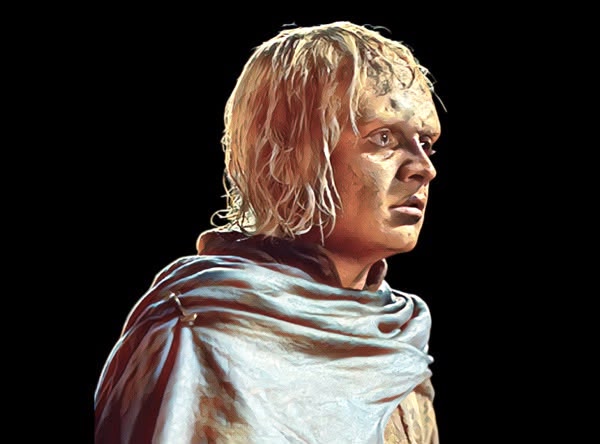
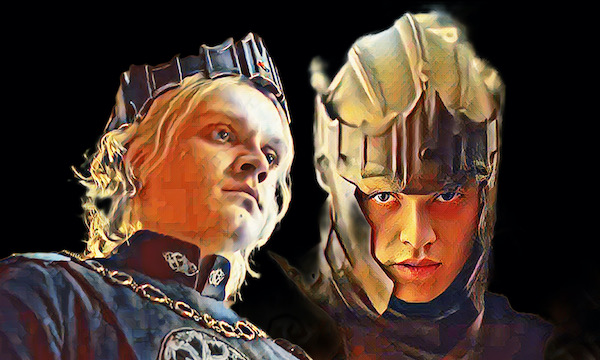
Glynn-Carney never softens Aegon’s cruelty, vanity, or cowardice. Instead, he allows fear, loneliness, and vulnerability to exist alongside them. The result is a character who remains morally indefensible but becomes dramatically fascinating.
This isn’t Jaime Lannister’s redemption arc as Aegon isn’t seeking redemption at all. He’s pursuing survival, revenge, and power. But the series turns what was essentially an off-page absence in the book into an emotional journey, and that changes everything. He stops being a plot device and becomes a fully realized character.
And it’s difficult for me to say this as someone firmly on Team Black, but at this point, Aegon seems to understand the burden of the crown more concretely than Rhaenyra does. She grew up believing the throne belonged to her—first because her father chose her, then because destiny and prophecy seemed to confirm it. She never truly had to earn it.
Aegon also inherited a crown he didn’t deserve. The difference is that now he has to fight simply to keep it. He has been betrayed, abandoned, stripped of almost everything, and forced to survive with nothing left but determination. For the first time, he has to decide whom to trust and what kind of king he actually wants to become. His leadership isn’t born from preparation—it grows out of necessity.
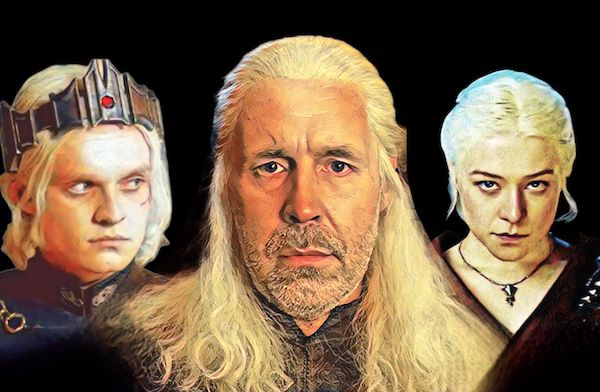
Among Viserys’ children, all deeply flawed and shaped by a war they inherited, Aegon is the only one still evolving. Aemond has already embraced destruction. Helaena remains a tragic figure, forever trapped in her visions. Alicent has lost the political sharpness that made her such a formidable player in Fire & Blood. Rhaenyra may have claimed the throne, but she still struggles to command genuine authority.
Aegon, meanwhile, is beginning to build his own. Not because he’s a better person. Not because he deserves forgiveness. But because he’s the one learning, through unimaginable suffering, what being king actually costs.
Ryan Condal transformed an absence in the book into one of the show’s richest character journeys. Pain hasn’t made Aegon virtuous, but it has given him purpose. His hatred now has an origin story. His determination has been earned. And Tom Glynn-Carney makes every step of that transformation believable.
It’s difficult to admit. But right now, among the broken remnants of Viserys’ dynasty, Aegon is the one who is truly learning how to wear the crown.
Descubra mais sobre
Assine para receber nossas notícias mais recentes por e-mail.


1 comentário Adicione o seu