
I have been writing about the new adaptation of East of Eden almost since it was first announced. I have read John Steinbeck’s novel, watched its film and television adaptations and, perhaps for that very reason, my greatest curiosity about the Netflix series has always come with a concern that has never really gone away: what will a 21st-century adaptation do with Cathy Ames?
Now there is not much longer to wait. East of Eden premieres on October 1, with seven episodes, and Netflix has finally released new official images and, more importantly, a few clues from Zoe Kazan about how she intends to approach the character played by Florence Pugh. Rather than easing my doubts, the comments did something better: they made me even more curious.
Cathy Ames is a problem for any contemporary adaptation because Steinbeck was hardly subtle when he created her. In the novel, she is one of the most extreme embodiments of evil. Manipulative, sexually predatory, cruel, incapable of empathy and fully aware of the suffering she causes, Cathy does not merely stumble morally. She often seems to deliberately seek out the most destructive path. Within the Biblical framework of East of Eden, I have always seen her as closer to Lilith than Eve: not simply the woman associated with the Fall, but the woman who refuses the place assigned to her and rejects submission.
The problem — and also the richness of the character — is that those two things are not necessarily the same. An adaptation made today cannot simply reproduce, without questioning it, the idea that a woman who rejects marriage, motherhood, domestic submission and sexual repression is therefore monstrous. Cathy lives in a period when virtually every available choice for a woman was defined by men. Seen through a contemporary lens, her rejection of that world inevitably takes on a dimension that may not have been at the center of the conversation in 1952. But reducing Cathy to that would be an enormous mistake too.
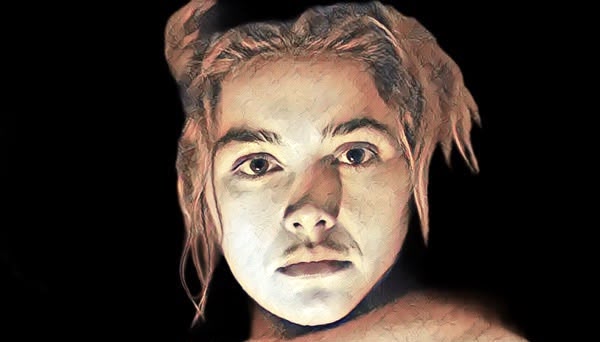
She does not simply refuse to be a wife. Cathy shoots Adam and abandons him with their newborn sons. She does not simply prefer sexual independence to the domestic life he imagined for her. At the brothel, she continues manipulating, exploiting, and destroying people. Her relationship with Faye is one of the clearest demonstrations that her cruelty does not depend solely on men trying to control her. Steinbeck may have painted her in such extreme colors that Cathy occasionally comes dangerously close to becoming a caricature of evil. But removing that dimension would destroy precisely what made Cathy Ames one of the most disturbing women in American literature.
That is why a recent comment from Zoe Kazan caught my attention. Speaking to Tudum, the writer and executive producer said she wanted to make sure Cathy was “a person and not just an archetype.” The word matters. Kazan is not talking about correcting Steinbeck or rebuilding Cathy to make her more palatable. She says her intention was to “unfold” the character, and that practically everything in the series has at least a root in the novel.
That reassures and worries me in almost equal measure. Because Cathy does need to be a person. Seven episodes allow for something cinema could not provide and something Steinbeck, interested as he was in her Biblical symbolism, did not always seem interested in doing: entering the spaces between her actions, observing her desires, intelligence, anger and relationship with a world that offers very few possibilities to a woman like her. The danger lies in the difference between understanding and excusing.
And Florence Pugh has already offered an even more provocative clue about the path she has chosen. Talking about the character, she said she becomes defensive when people tell her they have read the book and simply concluded that Cathy is a terrible person. “I can explain all the awful things that she does,” she said. For Pugh, part of an actor’s responsibility is understanding the character because the character cannot defend herself.
I confess: it is exactly the kind of sentence I wanted to hear, and also the one that makes me the most cautious. An actor has to be able to explain Cathy. Florence Pugh probably has to defend her while playing her, because no one can build a character by thinking of her only as “evil.” Acting requires finding an internal logic even for the most indefensible behavior. And Pugh has already shown, particularly in Lady Macbeth, that she understands a territory where comprehending a woman’s violence does not mean transforming that violence into innocence.
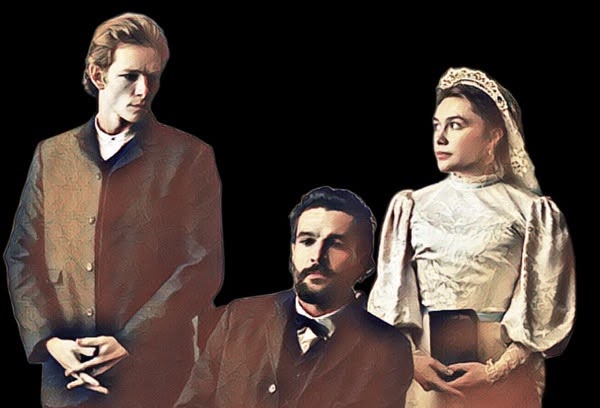
What I hope East of Eden preserves is precisely that tension. Cathy can be a woman constrained by the rules of her time and still be cruel. She can desire freedom without every choice made in the name of that freedom becoming morally defensible. She can have reasons without having excuses. She can be understandable without becoming redeemable. Perhaps that is the series’ most fascinating challenge.
Zoe Kazan is far too intelligent not to understand where she is stepping. Beyond the inevitable family connection to the material — her grandfather, Elia Kazan, directed the 1955 adaptation starring James Dean — she knows the novel deeply and has made clear that she does not intend to modernize it mechanically. The series spans decades in the lives of the Trask and Hamilton families and brings renewed attention precisely to Cathy, the character Netflix has described as its indelible antiheroine.
The first photographs of Florence Pugh do not offer an easy answer either. There is a beautiful, controlled Cathy, another almost impenetrable as someone embraces her, a woman who occupies the center of the image even when she is supposed to be emotionally connected to someone else. We still do not know whether there is vulnerability behind that gaze or simply calculation. Perhaps that ambiguity is exactly the point.
And that is where, after so many pieces about this adaptation, my expectation remains almost exactly where it began. I do not want to see Cathy Ames preserved in amber simply because that is how Steinbeck wrote her in 1952. But I also do not want to see her absolved because, in 2026, it makes us uncomfortable to admit that a woman can be cruel without her cruelty needing to be explained exclusively by gender, a desire for freedom, or the society around her.
Between Steinbeck’s almost mythological monster and a possible Cathy reinterpreted by the present lies a far more difficult character, and potentially a far better one.
Florence Pugh and Zoe Kazan seem to believe they have found her. On October 1, we will finally find out whether they have.
Descubra mais sobre
Assine para receber nossas notícias mais recentes por e-mail.
 miscelana.com
1 comentário Adicione o seu