
As published on Blog do Amaury Jr./Splash UOL
Some stories seem carefully constructed to work onstage. The problem — or, in this case, the beauty — is that a few of them happen in real life. Manuela Roçado’s story began in the highest section of the audience at Rio de Janeiro’s Theatro Municipal and, 16 years later, has reached the centre of that very same stage.
In 2010, at the age of 10, Manuela watched Don Quijote at the Municipal and was enchanted by everything: the costumes, the music, the energy of the choreography and, above all, Márcia Jaqueline and Cícero Gomes, who danced Kitri and Basilio. For a girl already studying ballet, they were not merely the stars of that performance. They represented the still-distant image of what it meant to reach Rio de Janeiro’s most important dance stage.
Sixteen years later, Manuela will no longer be sitting in the gallery. On Wednesday, 26 August, she will dance Kitri in Don Quijote, sharing the stage with Cícero Gomes himself.
The story would be moving even if it ended there. But the journey from the audience to the stage has accumulated coincidences, encounters and a succession of fulfilled dreams that make it even more special.
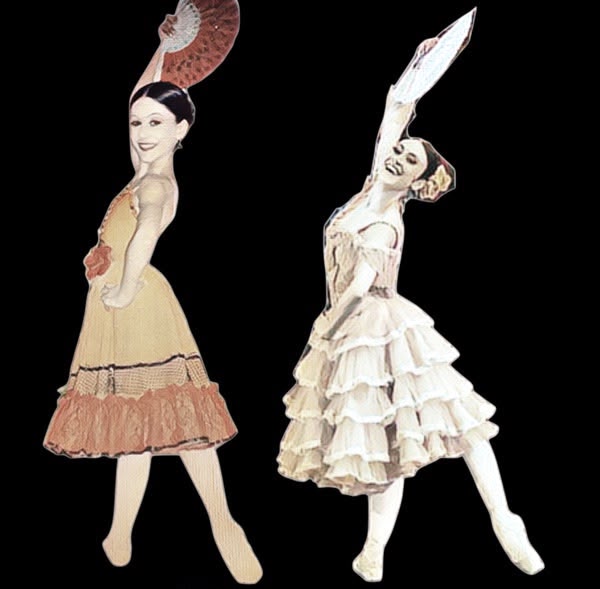
Manuela joined the Theatro Municipal Ballet in 2021. The following year, she was given her first major role with the company: Kitri, one of the most demanding, vibrant and irresistible characters in the classical repertory. Now, four years later, she returns to the role under unexpected circumstances.
Márcia Jaqueline suffered an injury during a performance this season and had to leave the production during the first act. Having recovered from the initial scare, she temporarily stepped away from the role, allowing other dancers in the company to take on the lead.
The unforeseen event ultimately revealed something important about the current strength of the Theatro Municipal Ballet. Marcela Borges stepped in without warning and carried the rest of the performance with the confidence of someone prepared for a situation no one would ever wish to face. Now, Manuela’s casting reaffirms the strength of a company distinguished not only by its soloists, but also by the technical quality and consistency of its entire corps de ballet.
This is a season in which the principals shine, but the ensemble also commands attention. There is an especially strong generation of male dancers, which becomes even more significant when we remember how many companies, for so many years, struggled to provide male dancers with opportunities and visibility. In Don Quijote, that collective energy matters: the ballet demands virtuosity, precision, stage presence and a sense of joy that cannot feel mechanical.

For Manuela, however, the full meaning of the moment only became clear during the dress rehearsal. From the wings, she looked towards the side of the gallery and recognised the exact place where she had sat in 2010. The physical distance between that seat and the stage had not changed. Everything else had.
“My God, I’m here now, sharing the same stage,” she thought. She later summed up the emotion: “From the stage, I could see where I had been sitting that day. Sixteen years later, I am here, sharing the stage as a leading dancer with one of my idols.”
Cícero Gomes already occupied an important place in her memory before becoming part of her professional journey. They first danced together when Manuela was 17, shortly before her 18th birthday, in an excerpt from Don Quijote performed outside the Municipal.
Cícero had met the young dancer through her teacher and invited her to join him at an event in Belém, Pará. The partnership worked, and he continued inviting Manuela to dance with him at festivals. At the same time, he followed her ambition to join the Theatro Municipal.
“Manuela was a teenager when I asked her teacher if I could dance with her at an event in Belém. We danced together, and it was a success. After that, I never stopped inviting her to festivals,” Cícero recalls. “During that period, she always spoke about her dream of joining the Theatro, and I always encouraged it because I was certain she would become a star.”
When Manuela finally joined the company, a new promise emerged. “Manu, I’m still going to dance with you here,” Cícero would tell her. Although they had already shared other stages, one was still missing: the Municipal.
“Then came another dream: dancing together and consolidating what we had always talked about and loved doing. But it had never happened inside the Theatro,” he explains. For Cícero, Manuela’s selection carries an additional significance: “The most important and incredible thing is that Márcia asked her to dance in her place. That makes this moment even more meaningful.”
Márcia Jaqueline also made a point of celebrating her colleague. “Manu is our new star. I love her dancing, her energy and, above all, her beautiful heart. Knowing that she will be onstage on Wednesday fills my heart with emotion. I will certainly be there, watching and applauding.”
The admiration is mutual and the responsibility enormous.
“Márcia Jaqueline is my goddess. The responsibility of replacing her is enormous, but I will do it with all the love in the world,” Manuela says.
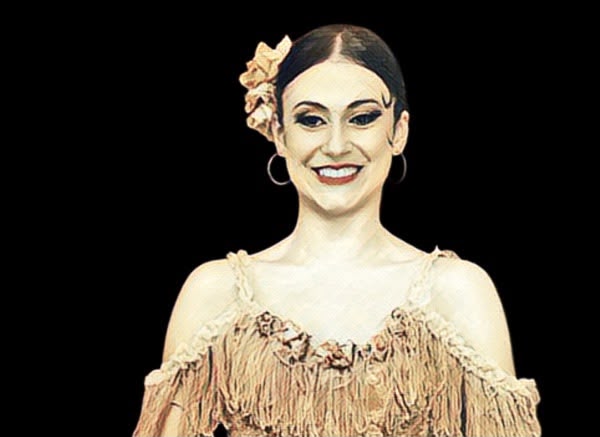
This is not merely about taking the place of a principal dancer or returning to a role that has already marked her career. There is something greater in this encounter: the girl who once looked towards the stage from the gallery can now look back at the gallery from the stage.
“It is as though the 10-year-old Manuela is finding fulfilment through the Manuela of today,” she summarises.
Perhaps that is the most beautiful part of the story. The dream did not come true by erasing the distance between spectator and leading dancer, but by covering every inch of it: ballet school, festivals, joining the company, the corps de ballet, her first major role, the wings and, finally, centre stage.
“Cícero is a very important person in my professional life. I believe in destiny,” Manuela says. In this case, it is difficult to disagree. Don Quixote has accompanied her through childhood, training and career, ultimately bringing her together with two of the dancers who first showed her how far it was possible to go. A story that began in the audience and has returned to the same theatre, now beneath the stage lights.
Descubra mais sobre
Assine para receber nossas notícias mais recentes por e-mail.

