
SPOILERS FOR THE SHARDS
After complaining that The Shards had practically forgotten there was a serial killer on the loose to turn “Murder on the Dancefloor” into one gigantic 1980s music video, I have to admit it: “Homecoming Part Two” gets the series back on track. Or at least back onto the twisted tracks that make sense within this universe.
Episodes 6 and 7 were released together and, in practice, work as two halves of the same story. Everything that seemed scattered throughout “Homecoming Part One” — Rhonda’s return, the mysterious “girl smell” she remembers from captivity, Bret’s growing obsession with Robert Mallory and Thom’s involvement with the Riders of the Afterlife — finally begins to converge.
And it converges, of course, at the most important event imaginable for a group of wealthy Los Angeles teenagers in 1981 while classmates are disappearing or turning up mutilated: the election of the Homecoming Queen. Because The Shards is still The Shards.
Rhonda survived the Trawler and is back at school, though clearly traumatized. Debbie and Susan decide to turn her into a Homecoming Queen candidate, complete with hair, makeup, and dress, in a well-intentioned — if deeply strange — attempt to give the girl some sense of belonging again.
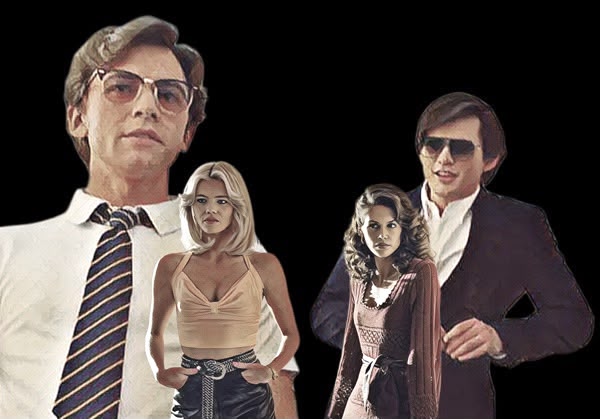
Visually, it is impossible not to think of Carrie. The outsider girl transformed by her classmates, prepared for the dance and placed at the center of that cruel teenage ritual of popularity. The reference continues at Homecoming, although The Shards completely reverses the situation: there is no bucket of pig’s blood falling from the ceiling. Susan wins the crown, decides to hand it over to Rhonda, and it is the supposed victim herself who blows the ceremony apart.
Before that, however, the episode begins constructing the night’s most important clue: Giorgio perfume. At Debbie’s house, Liz sprays the fragrance Terry gave her, and Rhonda panics. That is the smell. Or, at least, it is the smell her traumatized memory associates with her abductor.
And here The Shards plants a clue so deliberately obvious that we immediately have reason to distrust it. Because Giorgio is everywhere. Terry wears it. Liz wears it. Steven knows it. And before Homecoming, Robert gives Susan a bottle of Giorgio. Too convenient? Absolutely.
Meanwhile, Debbie continues to be the character Ryan Murphy seems most interested in humiliating. She organized Rhonda’s campaign but, when she asks Bret how many votes she received, she finds out that practically nobody voted for her. Her reaction is painful because beneath the loud, irresponsible and frequently ridiculous persona, Debbie understands perfectly how she is seen: Susan is the perfect girl; she is the funny friend, the excessive one, the disposable one.
Out of pity, Bret starts altering the count to place her among the finalists. It is a small, dishonest and, at the same time, strangely sweet gesture — exactly the kind of contradiction that works in The Shards. Bret can be cruel, paranoid, jealous and manipulative, but he is not incapable of empathy. And Igby Rigney is getting better and better at holding all those contradictions together. In the end, though, Susan wins again. Of course she does.

Robert, meanwhile, is crowned Homecoming King, much to Thom’s irritation and Bret’s astonishment. It makes very little sense that the new kid, after that very public breakdown at the party, has suddenly become the most popular boy in school. But narrative logic has never exactly been this adaptation’s top priority.
Susan does not want the crown. Tired of the obligation to be perfect — beautiful, popular, kind, winner of absolutely everything — she decides to give it to Rhonda. And for a few seconds, it looks as though we are going to get the sentimental ending Debbie and Susan had imagined.
Until Rhonda gets close. She smells the Giorgio that Robert has just given Susan. The trauma comes flooding back and, in front of everyone, Rhonda accuses Susan of abducting her. The visual reference to Carrie is completed right there, only with the roles scrambled: the marginalized girl is onstage, everyone is staring at her, and the night ends in horror. Except the person publicly destroyed is not Rhonda. It is Susan.
It is a great dramatic turn and a terrible police sequence: apparently a traumatized teenager’s public accusation is enough for Susan to be immediately handcuffed and put into a squad car. But what really matters is not whether we believe Susan is the Trawler. She is not. The question is something else: did Robert know exactly what he was doing when he gave her that perfume? Because if he knew Giorgio was the scent Rhonda associated with her abductor, then he just created the perfect trap. And there is something even more interesting: Robert also rubs Susan’s perfume onto himself. So the smell points to her, but it also continues to point toward him. The clue clarifies things and muddles them at the same time.
Finally, The Shards starts working again. But the best scene of the episode comes later. Robert goes to Bret and reveals that Susan cannot be responsible for Rhonda and Matt’s disappearances because she was with him on both nights. And the police know it because Bret reported Robert, who then spent hours being interrogated.
Robert is furious, but the confrontation between them quickly stops being only about the Trawler. He finally says out loud what the series has been circling from the beginning: Bret is obsessed with him. And Robert understands perfectly well that Susan is part of that obsession.
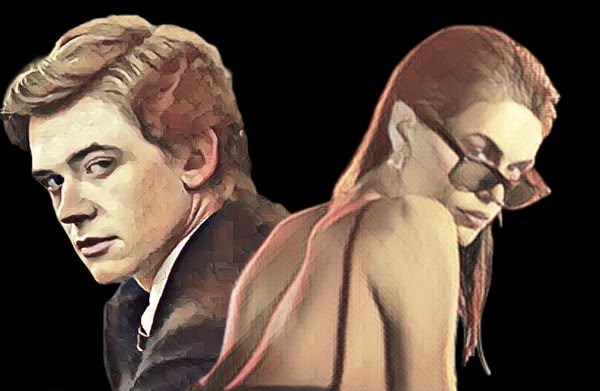
Bret hates the idea of Robert with her, but not necessarily because he wants Susan. This is where The Shards becomes far more interesting than a simple investigation into “who is the killer?” Bret watches Robert, desires Robert, fears Robert, envies Robert, and turns Robert into a character inside the story he is constantly writing in his own head.
That is why it has always been dangerous to automatically accept Bret’s certainty that Robert is the Trawler. Robert may be monstrous. He may be lying. He may even be involved in the crimes. But Bret needs him to be guilty. And that difference is essential.
The series had diluted precisely this ambiguity by turning so many episodes into exaggerated side plots. The moment it puts Bret and Robert face to face again, the homoerotic, psychological, and threatening tension that sustains the story immediately returns.
Robert leaves after threatening Bret. The school lights go out. Bret hears that sound again, the one we associate with the Trawler’s contact, and walks through the halls practically alone. Until he reaches the gym. Inside the trophy case are Matt Kellner’s head and hands. Matt did not run away. He was not hiding. He is dead. And someone decided to literally turn him into a trophy for Bret to find. The image is grotesque, but for once the grotesque has a purpose.
Because Matt’s death also changes the way we look at Bret. He had gone to see Matt’s father and, while trying to explain how close they were, accidentally said he loved him before quickly correcting himself to “he was my friend.” Now there is no possibility of getting Matt back, or of discovering what might have existed between them. More importantly: the Trawler knows where Bret is. He knows how to hurt him. And he seems to be responding directly to Bret’s investigation.
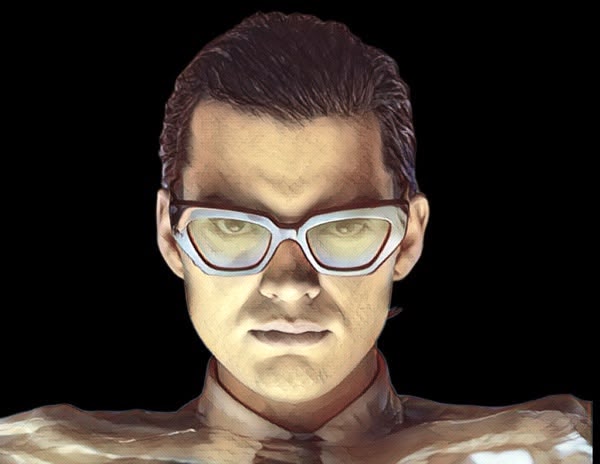
So we reach the final two episodes with the apparently obvious question — is Robert the killer? — becoming precisely the less interesting one.
Rhonda does not even exist in the novel, which means the entire perfume storyline, the accusation against Susan, and her arrest are inventions of the series. The adaptation is building its own path through the mystery. And now we still have Thom sinking deeper into the Riders of the Afterlife, Matt connected to the same cult, Robert piling up impossible coincidences, and Bret hearing from the Trawler again.
Maybe Robert is guilty. Maybe he is manipulating everyone. Maybe he is simply the perfect boy for Bret to turn into a monster. That has always been the strength of The Shards: we want to know what happened, but we are trapped inside the mind of someone whose version of events has never been entirely reliable. After a few very irritating detours, we are finally back there. And with Matt’s head sitting inside a trophy case, it could hardly have been more The Shards.
Descubra mais sobre
Assine para receber nossas notícias mais recentes por e-mail.

