
This article discusses events from Hugh Howey’s books and therefore contains major spoilers about the possible future of the series.
The final episode of Silo Season 3 has a title that, at first glance, makes very little sense. “Troy” premieres on September 4, and Apple has reduced its synopsis to a single sentence: “A leader wakes to a new world.” The problem is that after nine episodes, we have yet to meet anyone called Troy. Or perhaps we have been looking at him all season.
Anyone who has read Shift, the second book in Hugh Howey’s trilogy, knows that Troy is one of the most important pieces of the Silo puzzle. In the novel, he wakes inside Silo 1 to serve a shift overseeing the other silos. Gradually, however, he realizes that the memories he has — or, more importantly, the ones he does not — are hiding something fundamental: Troy is not who he believes he is. His real name is Donald Keene.
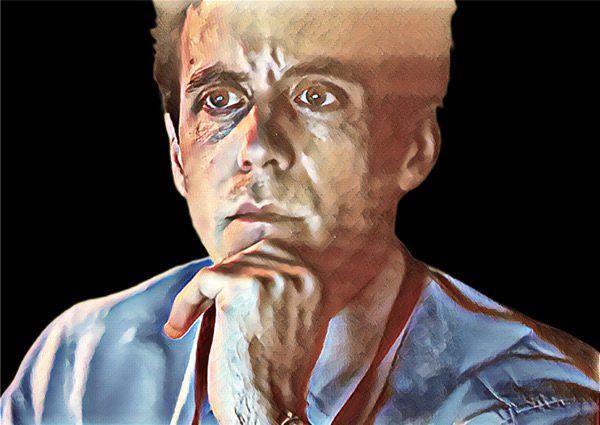
In Apple’s adaptation, Donald became Daniel Keene, played by Ashley Zukerman. And Zukerman may look instantly familiar even to viewers who cannot quite remember where they have seen him before. Before Silo, he played Nate Sofrelli in Succession, the political strategist and former flame of Shiv Roy, Sarah Snook’s character, with whom she rekindles an affair while married to Tom. He is one of those actors whose face many viewers recognize before they necessarily remember his name.
After a season spent watching Daniel grow increasingly suspicious of the project he unknowingly helped build, the question heading into the finale may not really be “Who is Troy?” It may be something far more disturbing:
What has to happen to Daniel for him to wake up believing he is Troy?
That is one of the darkest ideas in Shift. Silo 1 does not operate like the others. Its administrators are kept in suspension and periodically awakened to work, allowing the same command structure to survive for decades, even centuries. But preserving the body is not enough. A man who remembers the world before the silos may also remember who built the system, why it was created, and what he lost when the doors closed. So the person waking up inside that body has to be controlled too.
In the book, Troy lives among men who have also been separated from their former identities. Medication, isolation, cryogenic sleep, routine and surveillance all help maintain that new reality. When someone begins insisting that he has another name, another history, or another life, memory itself is treated as instability. He is removed from duty and put back to sleep. Troy eventually follows the same path when his own memories begin to return.
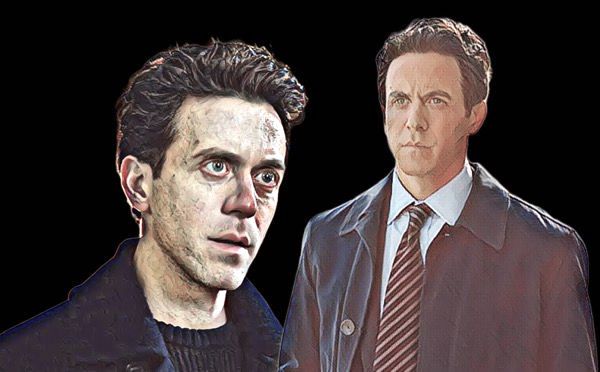
It is difficult to look at everything Season 3 has shown us about memory and not see the groundwork for exactly this. Juliette has spent much of the season trying to recover her identity after her memories were manipulated. Charlotte has been directly connected to the experiments, showing just how far that control can go. Daniel, meanwhile, ends the penultimate episode being taken to precisely the place where dangerous knowledge must be preserved — while the people carrying it must remain manageable.
The symmetry would be brutally perfect. Juliette spent the season becoming Juliette again. Daniel may end it by losing Daniel.
Related to the story: Can Daniel and Helen Still Find Each Other?
Charlotte, too, increasingly looks like more than a parallel storyline. In the books, Donald’s sister is preserved inside Silo 1 and, centuries later, secretly awakened by him. Her military experience and familiarity with drones become essential when the two begin investigating whether everything they have been told about the outside world is actually true. The series has deliberately retained those exact traits in Charlotte. That hardly feels accidental.
Episode 9 also left behind a particularly unsettling clue. Daniel tries to confirm that he is really speaking to his sister by using an inside joke. The answer is wrong. Someone may be controlling Charlotte, using her phone or simply preventing Daniel from learning where she really is.
That raises an important possibility: Charlotte may already be being prepared to remain inside Silo 1 by the time Daniel arrives. Helen represents a different kind of loss.

In the books, Donald spends decades — although for him time is fragmented by long periods of suspension — trying to discover what happened to the woman from whom he was separated when the world ended. Helen lived. She grew older, built another family and died while Donald continued to exist between awakenings and erasures. She had a life. He was denied his own.
The series has changed that story in one crucial way. Helen is pregnant and has been assigned to Silo 18. And that is where one small, apparently insignificant object begins to take on a much greater importance.
From the beginning, Silo has taught us to call objects from the past “relics,” but few have travelled through the series as persistently as the PEZ dispenser. Daniel buys it for Helen in the world before the silos. Centuries later, that same object is in George’s hands and eventually reaches Juliette.
The PEZ survives when almost everything capable of telling the truth about the old world has been banned, hidden, or destroyed. And Season 3 gave it an even more powerful function: it does not merely represent memory. It helps Juliette recover it. Something that should be meaningless becomes precisely what the system cannot fully control. The silos erase. The PEZ remembers.
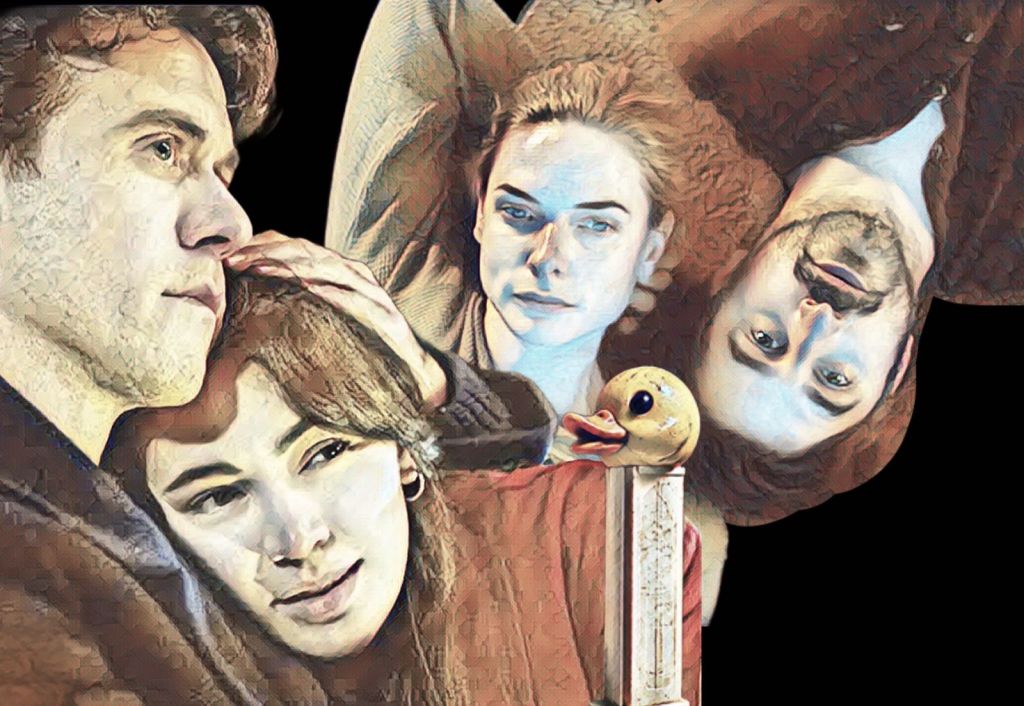
If Helen really enters Silo 18 carrying that object, the finale may finally begin to explain how something that belonged to Daniel and Helen survived for hundreds of years before reaching George and Juliette.
That does not necessarily mean George is a direct descendant of Helen — the series has not established that. But Helen’s pregnancy makes it difficult to ignore the possibility that we are not simply watching the survival of a relic, but a chain of people who, knowingly or not, preserved fragments of the world that existed before.
Daniel may not be able to carry his memories into the future. The PEZ can. There is also a particularly beautiful irony in the name Troy itself. In the books, the choice is connected to Helen. Helen of Troy. The name meant to separate Donald from his former life carries a reference to the very woman he is supposed to forget. If the series keeps that detail, Troy becomes more than a false identity. It becomes a small flaw in the system: even when Daniel no longer knows that he is Daniel, something of Helen remains. That also helps explain why the final season may still need him.
Related to this story: Can the PEZ Reveal Helen and Daniel’s Descendants?
Shift begins by presenting Donald in the past and Troy in the future almost as if they were two different men. Gradually, the stories converge. And Donald’s journey does not end when he becomes Troy. It is precisely when he begins recovering who he was that he starts to understand Silo 1 from the inside — and realizes that even the people running the system do not know the entire truth.
That is what eventually allows Donald and Juliette to enter the same story. They belong to eras separated by centuries, but the cryogenic system inside Silo 1 erases that distance. Season 3 went into the past to explain how the silos were created. Season 4 no longer needs to ask how that world came to exist. It needs to figure out how to bring it down.
Juliette understands the system from inside the silos and challenges it from the bottom up. Daniel may end up understanding the architecture behind the entire machine. Charlotte may become the bridge between them. That is why “Troy” may be a much bigger title than it first appears.
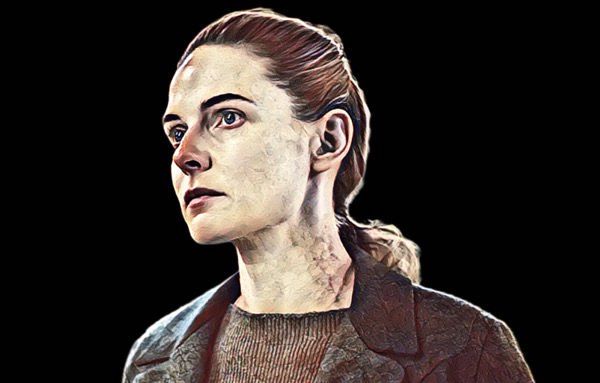
The system may be able to turn Daniel into someone else, put him to sleep, and erase the people who made him who he was. But Silo has spent three seasons returning to the same idea: memory always finds somewhere to survive.
Sometimes in a person. Sometimes in a book. Sometimes in a name. And, apparently, sometimes inside an old PEZ dispenser.
Descubra mais sobre
Assine para receber nossas notícias mais recentes por e-mail.

