
There are books that become larger than their authors ever expected, and there are others their authors write already convinced they have finally reached the place toward which everything before had been leading them. East of Eden belongs to the second category. Published on September 19, 1952, when John Steinbeck was 50, the novel we now regard as one of his essential works was written almost as a reckoning with himself. It was not simply another book. In his own words, it was “the book,” the one he had been waiting his entire life to write.
It is an extraordinary declaration from someone who had already written Of Mice and Men and The Grapes of Wrath. Steinbeck was not trying to move beyond a promising early career, but beyond a body of work that had already established him as one of the great American writers of his time. Even so, he regarded everything that had come before as a kind of preparation. When he finished East of Eden, he wrote that it was the longest and most difficult work he had ever undertaken and that he had put into it everything he had wanted to write during his life. If this book was not good, he admitted, then perhaps he had been wrong about himself all along.

Perhaps that is precisely why East of Eden contains so much. It is a family saga, a retelling of Cain and Abel, a meditation on good and evil, inheritance and choice, but it is also memory. Steinbeck had begun developing the idea years earlier and intended, in part, to tell his sons, John and Thom, who their ancestors were and what the Salinas Valley of his own childhood had been like. The Hamiltons in the novel were inspired by his maternal family; the Trasks belong to fiction and carry the more obvious biblical structure running through the story. For Steinbeck, the novel was almost two books living inside one another: “the story of my country and the story of me.”
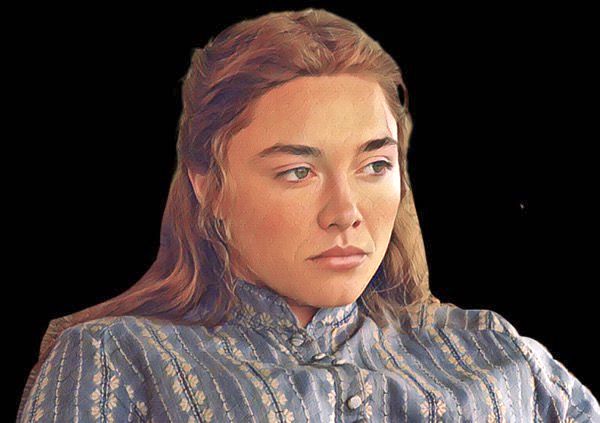
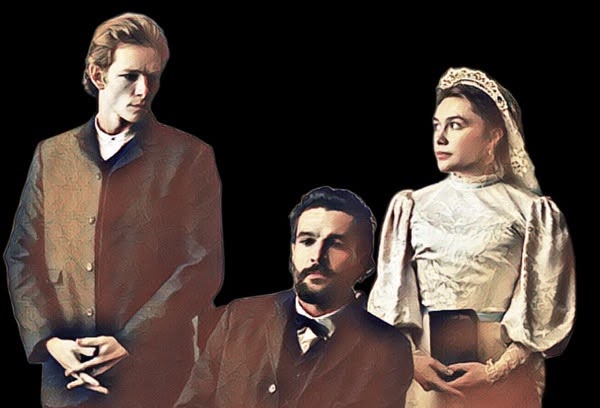
That also offers an interesting way of returning to the novel after so many adaptations, because film and television have inevitably taught us to see East of Eden largely through the Trasks. Cathy Ames is such a disturbing character that she practically hijacks any discussion of the book, while Elia Kazan’s 1955 film turned Cal Trask and James Dean into one of the defining images of American cinema. But the book Steinbeck wanted to write was much larger than any of them.
It was, in fact, larger than its own plot.
While writing it, Steinbeck worked in a large notebook he had received from his editor and friend Pascal Covici. Before beginning the novel each day, he would write a kind of letter to Covici on the left-hand page and then continue the book on the right. Those notes were eventually published posthumously in 1969 as Journal of a Novel: The East of Eden Letters, and they make clear just how much expectation Steinbeck placed on the project. What we see is not simply a writer constructing characters, but someone trying to understand what he wanted to leave his sons, what he remembered of his family, and even what he believed about human nature.
That is why it is so fascinating to return to the reception in 1952, because the canonization that now seems so natural did not happen quite that way.
Readers responded immediately. By November, only two months after publication, East of Eden had reached No. 1 on The New York Times fiction bestseller list. Steinbeck said he was receiving an enormous number of letters and was struck by the way people wrote about the story almost as though it belonged to them too.
Critics were far more complicated.
On the very day the book was published, New York Times critic Orville Prescott acknowledged the scale of Steinbeck’s ambition but attacked the novel’s structure, its melodrama and what he regarded as excessive sensationalism. Even so, he admitted that it was a serious and, overall, successful attempt to confront a major theme. Two days later, writing in The New York Times Book Review, Mark Schorer also pointed to sentimentality, melodrama and contradictions, while recognizing that Steinbeck’s narrative freedom was one of the novel’s strengths.
Others were much less generous. Anthony West, in The New Yorker, devoted much of his review to mocking Steinbeck’s prose and some of his imagery. TIME opened its review by revisiting Steinbeck’s career in almost brutal terms, dismissing earlier works with notably unflattering descriptions before accusing East of Eden of losing itself in its own excesses.
But the critical response was not uniformly negative. Kirkus saw from the beginning a novel of enormous scope and depth, highlighting precisely the question that runs through the entire work: to what extent are we determined by what we inherit, and to what extent can we choose who we will become? The Washington Post even ran a review under the headline “East of Eden Steinbeck’s Best.” So it may be unfair to repeat the simpler version that critics rejected the book and history later proved them wrong. The reaction was divided, and that is exactly what makes it interesting.
Because many of the qualities identified as flaws in 1952 are still perfectly visible. East of Eden is enormous, uneven, at times melodramatic and not remotely subtle in its biblical references. Steinbeck does not seem particularly interested in concealing what he is discussing. Cain and Abel are everywhere, as is the question that truly concerns him: we inherit a story, a family, a legacy and even a tendency toward repetition, but does that mean we are condemned to fulfill them?
That is where timshel, perhaps the most important word in the novel, enters the story: “thou mayest.” For Steinbeck, the great human possibility lies in choice. What matters is not only where we come from or what those before us have done; there remains, however difficult and imperfectly, the possibility of choosing another path.
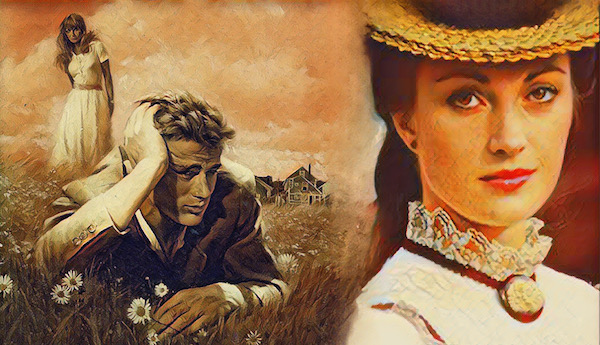
Perhaps that is why East of Eden has survived its own excesses so well. Steinbeck was not interested in writing a small, disciplined or elegant novel. He wanted to put his family and an invented family inside it, Salinas and the Bible, childhood and guilt, fathers and sons, love and rejection, memory and myth. He wanted to explain to his sons where they came from and, at the same time, ask whether anyone truly has to remain trapped by the place they came from.
There is one particularly beautiful image that helps explain all of this. Steinbeck made a wooden box for Pascal Covici to hold the manuscript. In the dedication, he imagined what he could place inside it and listed what he had: pain, excitement, good thoughts and bad ones, pleasure, despair, gratitude and love. After putting all of it inside, he concluded that the box was still not full.
Perhaps East of Eden is that too. A writer trying to place an entire life inside a book and discovering that, even after more than 600 pages, there was still room left.
Descubra mais sobre
Assine para receber nossas notícias mais recentes por e-mail.


1 comentário Adicione o seu