
Contains spoilers for the series, including the ending.
I confess that I started watching East of Eden with a very specific concern: that the attempt to understand Cathy Ames would become a need to absolve her. There is a contemporary tendency to look for a wound behind every monster, as though finding an explanation for cruelty also settled the question of responsibility. In Zoe Kazan’s Netflix adaptation, starring Florence Pugh, I found something more interesting. Cathy gains a perspective of her own, but remains a woman capable of manipulating, hurting, and using anyone who comes close to her. By the end, my relief had turned into admiration for an adaptation that allows us to accept a significant change without erasing the character’s unsettling nature.
Published in 1952, John Steinbeck’s novel introduces Cathy as a monstrous figure. Her difference emerges in childhood, before marriage and the violence she will suffer as an adult. Cruelty is part of the way the author conceives her, and reading that construction also means considering the male perspective of his time. Zoe changes precisely an incident the book uses to establish this early perversity.
In Chapter 8, Cathy is ten when her mother finds her in a sexual situation with two boys of about fourteen. They claim that she arranged the encounter, took money from both of them, and bound her own wrists. They are punished and sent to a correctional institution, while the narrator leads the reader to understand that Cathy framed them. It is important to note that the passage does not confirm that intercourse took place. What Steinbeck intends to establish is her ability to manipulate from childhood, using other people’s desire as a tool.
In the series, the meaning of that experience changes: the child is a victim of sexual violence. This is no minor alteration, nor merely a linguistic update. What the novel presents as evidence of an evil preceding experience becomes a wound that contributes to Cathy’s development. Zoe acknowledged this difference in interpretation in an interview with W: as a woman, she reads differently what Steinbeck described as a staged assault. Her adaptation intervenes in the narrator’s judgment of the character.
And, to my surprise, this change is one I can accept. A traumatic childhood experience can leave profound marks on a person’s relationship with their body, desire, trust, and control. In a psychoanalytic reading, it can also help us understand repetitions and unconscious attempts to deal with what could not be worked through. This does not mean that one event automatically explains an entire life, much less that it determines future cruelty. But it offers a possibility of understanding that the series explores powerfully, without making the harm Cathy causes disappear.
I see misogyny in the association between a woman who desires, refuses submission, and threatens the family order and a demonic figure. Recognizing that does not require treating Steinbeck as a monster or dismissing the greatness of his work. It requires remembering that classics also carry the limitations of their authors. Cathy makes me think of Lilith, the woman whose refusal to submit turns her into a threat. It is an interpretive association, but it helps us see how female defiance can take on the contours of a curse.
Zoe Kazan, granddaughter of Elia Kazan, who directed the 1955 film adaptation starring James Dean, returns to the book with a different experience of being a woman and a different set of references. Her screenplay allows us to see what it means to live in a society that considers it natural for men to decide women’s destinies. This is evident even in Adam, played by Christopher Abbott. His goodness does not place him outside the world he belongs to. He loves Cathy, wants to protect her and build a life with her, but his vision of happiness also depends on her accepting the role he has chosen.
Cathy’s refusal is not heard as a decision sufficient in itself. He insists, assumes he knows what will be best, and clings to the woman he wants to see. There is violence in this inability to listen to her, even when it comes wrapped in love and good intentions. The series allows us to recognize it without requiring us to stop seeing Cathy’s lies. She deceives Adam, manipulates Charles, and exploits both men’s desire. A woman’s suffering does not make all her actions innocent.
What interests me most is noticing how autonomy shapes her choices. Cathy cannot tolerate an authority figure above her. She does not want anyone deciding where she will live, what her relationship with her own body will be, or how she should conduct her life. Marriage, which Adam offers as a refuge, also represents a form of imprisonment. The brothel, paradoxically, offers money and the means to exercise power over her own life. Her body remains tied to male desire, but she begins negotiating the terms of that relationship.
This contradiction is far richer than turning the character into a heroine of emancipation. Cathy wants autonomy for herself, but does not demonstrate the same commitment to anyone else’s autonomy. She knows how to con people, exploit affection, and turn trust to her advantage. By making herself the brothel owner’s heir, she secures an economic position that allows her to give orders. Her aversion to authority coexists perfectly with her willingness to exercise it.
One scene left me particularly conflicted. Faced with one of the women injured by a client, Kate—the name Cathy begins using—shows a capacity for solidarity and suggests that she intends to act against the aggressor. Florence Pugh handles this opening beautifully, but I confess that the humanization here made me uneasy. How are we to understand this connection in a woman who was capable of abandoning her own children and destroying those who trusted her?
The dialogue itself, however, introduces another layer. When the woman says she has no money to pay the doctor, Kate reminds her that, while injured, she will be unable to work or bring in money. Care can encompass identification, financial interest, and a desire for control at the same time. The scene allows us to see a woman defending another woman and an owner protecting her business. We do not need to decide immediately which of those intentions prevails.
There is one device I find less successful: the repeated use of alcohol as a mechanism for revealing her cruelty. Cathy says she does not want to drink; someone insists, she drinks, and the mask falls. Through repetition, this dynamic begins to resemble a truth serum, with an almost comic effect. The warning already prepares the viewer for the transformation, making something that should disturb us predictable.
Even so, her reaction adds an important clue: the blame always belongs to whoever insisted. She warned them that she did not want to drink, so the other person must be responsible for what happens next. Often, her wishes have indeed been disregarded. The problem lies in the license she extracts from that imposition. Cathy turns a legitimate grievance into permission to do whatever she wants, as though someone else’s behavior canceled out her responsibility.
This is why I maintain my reading of Cathy as a character with a perverse psychic structure. Perversion, in the psychoanalytic perspective I am using here, is not synonymous with enjoying sex, selling one’s body, or rejecting motherhood. Nor is committing a cruel act enough to define a structure. What stands out in her is a relational logic: the other person’s desire and limits are recognized so that they can be exploited, circumvented, or subordinated to what she wants. Her apparent frankness does not absolve her. Saying what she desires does not mean accepting the consequences of what she does.
This reading needs to distinguish trauma from psychic constitution. In the Freudian and Lacanian traditions, the discussion of structures refers to early childhood relationships and the way the subject positions themselves in relation to desire, lack, and the law. There is, however, no fifth birthday that serves as a universal deadline for completing this process, nor can an incident at ten establish a structure on its own. Trauma can shape defenses, choices, and repetitions without providing a sufficient explanation for a person’s entire psychic organization. In Cathy, what supports my interpretation is the continuity of her relationship with others, not the fact that she suffered violence.
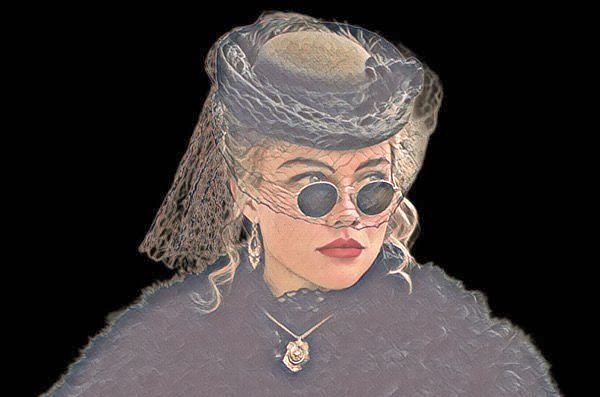
Her thefts from an early age are also part of this construction, although no isolated behavior explains the character. She can be a victim in certain situations and responsible for violence in others. The screenplay allows both things to remain true without reducing her to a single explanation. The same logic helps us understand why she did not want to go to California but stays in town after leaving her husband: perhaps her refusal had less to do with the geographical destination than with the life Adam had decided for her. In the same place, under different conditions, she finds money and power.
For me, the ending reinforces this distinction. Cathy’s torment and what we might call, in quotation marks, her “guilt” remain centered on herself. I do not read it as remorse that finally recognizes the extent of the suffering of those she harmed. What returns to hurt her is her own history, the little girl she was, what she suffered and could not work through. Even when memories of her actions run through those final moments, I see no emerging impulse toward reparation. Being overtaken by the past and suffering because of it is not the same as acquiring empathy for those she destroyed.
This is a decisive difference, because it allows the ending to be painful without turning Cathy into a redeemed woman. Florence Pugh finds a fragility that does not undo the threat. We can be moved by her pain and remain horrified by her choices. Zoe sustains this coexistence through the end, and that is what makes the change to the book so much more interesting than a simple attempt to justify the character.
The final two episodes also confront the adaptation with its most obvious family challenge. When the teenage Cal and Aron take center stage, Zoe reaches the core of the story her grandfather brought to the screen. For anyone familiar with East of Eden, the comparison begins to follow the series directly. Joseph Zada, in the role played by James Dean, is very good and enters this stretch carrying a history of the parents that the film did not develop. Repetition across the generations acquires a different weight because we have seen how their wounds were formed.
The film has enormous emotional intensity, but the series has the time and freedom to make this family’s cruelty more explicit. By the time she reaches Elia Kazan’s most celebrated territory, Zoe has already built the emotional weight of her own version. The comparison with her grandfather does not swallow up her work. On the contrary, it reveals the strength of an adaptation that expands the story and owns its interventions.
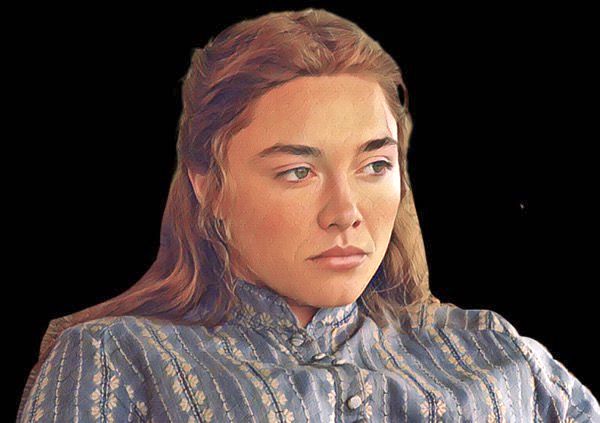
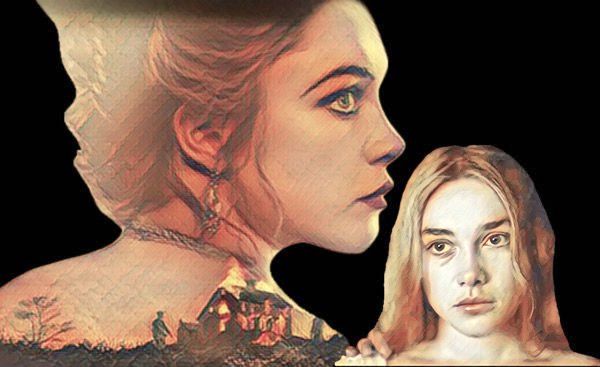
I can recognize the misogynistic perspective running through Cathy’s creation, understand her revolt against the place reserved for women, accept the change the series makes to her childhood, and continue to see a perverse logic in her. These readings do not need to cancel one another out. Zoe Kazan deserves congratulations for finding room for all of them, with Florence Pugh giving presence to what remains irreconcilable. Understanding Cathy does not require absolving her, and suffering with her does not oblige us to forget those who suffered because of her.
Descubra mais sobre
Assine para receber nossas notícias mais recentes por e-mail.


I entirely agree with you and have been looking for an article like yours as I thought it was the only one 😊 however i haven’t watched the show yet and came to these conclusions by reading the book as I felt it was already there. And I have read interviews of Zoe Kazan where she seemed to say that she didn’t invent anything that wasn’t there already. Now I am reading Steinbeck’s letters ti his editor and they are confirming this vision of Cathy, I know that Zoe used those letters a lot when writing Cathy’s character for her show. It could well be because as women we don’t read novels the same way and see things differently. Most people see Cathy as a pure monster because it is what is said at the beginning of chapter 8 and their vision of her and her actions are interpreted through this prejudiced lens, including seeing things that are not in the novel, like saying that she accused the boys of staging a rape when the whole time she doesn’t say a word and her mother is the one enraged and drawing conclusions. Nothing in the chapter says that she wasn’t actually about to be raped by those boys. Everyone, the town and the readers make up their own story with their belief system. The towns people that girls are always the victim and the readers that Cathy is always a monster
CurtirCurtir
Thank you so much for such a thoughtful comment! You raise some very interesting points, especially about how Cathy is perceived through the eyes of others and how much that shapes our judgment of her.
Interestingly, after watching the series, I actually reconsidered some of my own conclusions. I now think it’s entirely possible that Cathy developed a defensive armor as a way of surviving a world that had already judged her. That doesn’t necessarily excuse all her actions, but it certainly makes her more complex and perhaps more tragic than I initially believed.
And that’s what I find so fascinating about *East of Eden*: the possibility of revisiting characters we thought we understood and discovering that there may be another side to their story. Thank you for adding such an interesting perspective to the discussion!
CurtirCurtir