
Warning: This article contains spoilers for the fourth episode of Slow Horses Season 6.
J.K. Coe had every reason to inspire our rejection. He was antisocial, frighteningly cold and capable of taking a life without showing remorse. When he arrived at Slough House, hidden beneath his hoodie and isolated from the world by his headphones, he seemed uninterested in joining the team or forming any kind of bond with the people around him. And yet the strangest Slow Horse in the group was eventually embraced by the others — and, almost without our noticing, by us as well.
Perhaps because Coe was almost always right. He immediately recognized that Roddy Ho’s virtual girlfriend was a bot. A few minutes of observation were enough for him to dismantle Shirley with a psychological assessment as accurate as it was cruel. When Lamb introduced his supposed “five Fs,” Coe was the one who pointed out, without hesitation, that there were only four. He could remain silent for almost an entire episode, but when he finally decided to speak, it was usually to show that he had noticed before everyone else what nobody else had managed to see.
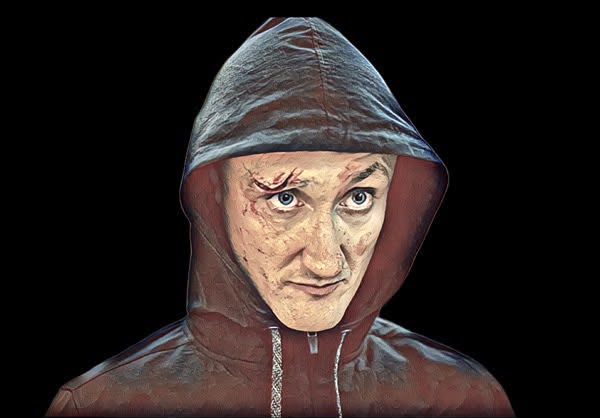
That ability was inseparable from his trauma. Before arriving at Slough House, Coe was an intelligent and socially awkward MI5 behavioral analyst who was still capable of functioning in the world. His kidnapping and torture transformed him. Trauma did not clinically turn him into a psychopath — that would be a simplistic and dangerous association — but it left him emotionally numb, hypervigilant and disconnected from the conventions that regulate human relationships. The term “functional psychopath,” used to describe him, works better as a narrative portrait than as a diagnosis: Coe continued to operate after something essential inside him appeared to have been destroyed.
This season, he admits to River that he discovered pleasure in killing. The confession should eliminate any remaining possibility of empathy. With Coe, the opposite happens. Not because the series tries to absolve him, but because Tom Brooke allows us to perceive the difference between sadistic pleasure and the sense of control experienced by someone from whom all control was once brutally taken. Coe does not kill out of personal hatred. Violence seems to silence the noise of his trauma for a few moments and restore order to a world that has become permanently threatening.
It is disturbing, undoubtedly. But Slow Horses has always known how to make its most difficult characters reveal their humanity precisely where none seemed to remain.
More on J.K. Coe: J.K. Coe – The Lethal Silence of Slough House
What happens next?: Who Could Die in Season 6? (Spoilers)
Another Slough House mystery: Is Sid Baker Diana Taverner’s Niece?
The outsider embraced by Slough House
Coe’s integration into the group never occurred through grand displays of affection. At Slough House, nobody hugs anyone without first checking for a concealed weapon. Belonging reveals itself through insults, shared assignments and trust granted almost unwillingly. Lamb quickly recognizes that Coe is useful. River learns to tolerate his silence and trust his instincts. Shirley finds in him someone capable of recognizing her pain without turning it into a spectacle.
After Marcus’s death, Coe is the one who manages to reach Shirley. He does not offer conventional comfort because he probably does not know how. Instead, he speaks the language they both understand: violence, guilt and survival. For a woman surrounded by people trying to prevent her from falling apart, Coe may have been the only one who understood that part of her had already collapsed. He did not try to fix her. He simply remained there.

That is how the man who once dismissed Slough House as a unit without purpose eventually finds something resembling a family within it. Coe remains distant, remains strange and never becomes gentle. He simply begins to show up. He saves people, drives through gunfire, identifies danger and appears whenever his presence is needed. The bond exists in actions he would never know how to translate into words.
In Episode 4, when Jim and Jane resume their pursuit of Sid and River, Coe recognizes the danger before the others. He does not run or attempt to use his colleagues as protection. He waits for Jim in the bathroom and confronts him with the same coldness with which he has always faced danger. The two men immediately recognize each other as professionals of violence. There is no hatred between them, only the certainty that one will have to kill the other.
In the novel Joe Country, Coe manages to slit his opponent’s throat before dying from his own stab wounds. The series is even crueller. Jim survives, while River finds Coe slumped against the wall, still wearing his hoodie and headphones. The adaptation denies him his final victory and preserves only what he had achieved without ever admitting it: his loyalty to the other Slow Horses.
Coe does not choose that fight because he wants to die. Nor does he sacrifice himself in the conventional sense, through a carefully announced heroic gesture. He simply does what he has always done best: recognizes the threat, calculates the possibilities and acts. Except that this time, he loses.
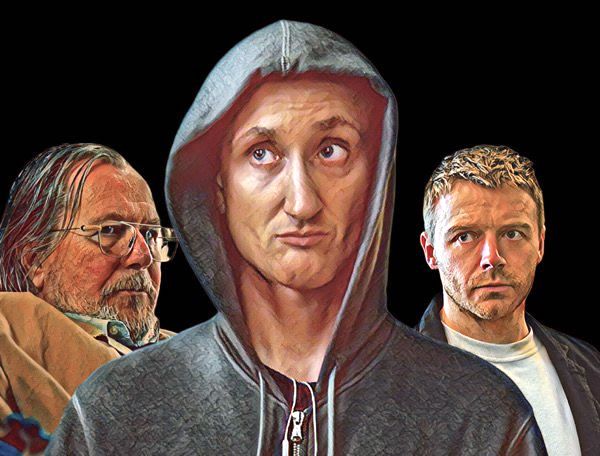
The character we were not supposed to love
Why does his death leave us grieving a character who, in theory, should have inspired revulsion? Because Slow Horses has never required its misfits to be morally exemplary before allowing them to earn our affection. They are addicts, arrogant, traumatized, dishonest, incompetent and, at times, dangerous. What unites them is not virtue but abandonment. They were all discarded by an institution that exploits their abilities while they remain useful and erases them as soon as they become inconvenient.
Coe may have been the most extreme product of that system. MI5 used his intelligence, allowed him to be destroyed and then sent him to a department designed to keep undesirable people out of sight. At Slough House, paradoxically, he found the only place where he was not required to pretend to be normal. Nobody there was normal. Lamb did not ask him to be likable, River did not expect tenderness and Shirley did not demand that he conceal the darkest parts of himself.
That is how the antisocial outsider began to belong. Not because he learned to say that he cared, but because he began to act like someone who did.

J.K. Coe’s farewell
Tom Brooke built that transformation almost entirely through silence. A look, a dry response, the discreet pleasure of correcting someone and the willingness to enter a fight he might not win were enough to make Coe indispensable. He appeared rarely, spoke even less and still seemed to occupy an increasingly important place within Slough House.
Brooke has explained that he approached Coe’s journey as a gradual opening. With each season, the man who had been sealed off by trauma began to interact a little more with the people around him. That is precisely what makes his death so cruel: Coe dies just as he finally appears willing to return to the world. His seemingly mundane, almost cordial conversation with Jim before the fight does not merely reveal the coldness of two professional killers. It is also one of the rare moments in which Coe displays curiosity about another human being — even if that man is about to kill him.
Brooke believes Coe would have approved of his own death, although he would probably have been disappointed that he failed to eliminate his opponent. Perhaps he would also have regretted not having more time with Shirley, a relationship that had begun to suggest something beyond mutual recognition between two damaged people. She had lost Marcus and found in Coe someone who neither tried to cure her pain nor feared her anger. Now she has also lost the only man who appeared to understand her without requiring an explanation.
His death will affect all of them, even if Slow Horses rarely allows its characters elaborate farewell ceremonies. River will carry the image of finding Coe too late. Shirley will have to confront yet another absence. Lamb will probably respond as he always does when someone hurts one of his Slow Horses: he will conceal his affection beneath insults and transform his grief into revenge. Coe never asked to be loved by that team, but his absence will reveal how deeply he had already become part of it.
That may be the most painful irony of his farewell. The character introduced as a man incapable of forming attachments dies while trying to protect the people to whom he had become attached. He does not announce his sacrifice, say goodbye, or receive a sentimental final scene. He simply notices the danger, waits for it, and does what he knows how to do. In that fight, however, the series denies him even the efficiency that had always defined his existence.
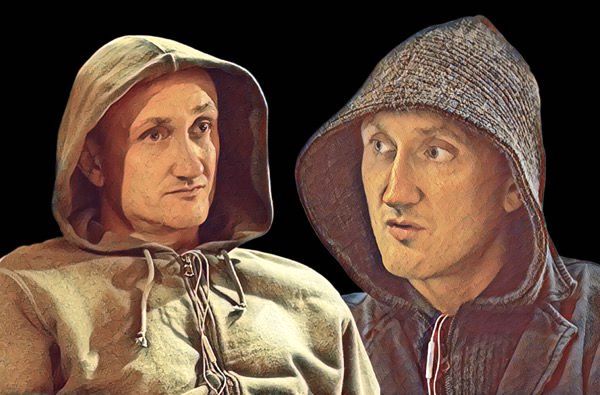
When River finds him against the wall, still wearing his hoodie and headphones, Coe appears to have returned to the position in which we first met him: isolated, inaccessible and sealed inside himself. Now we know that the image is deceptive. He was no longer alone. Without speeches and almost without demonstrating affection, that strange, antisocial and frightening Slow Horse had found a family — and allowed it to embrace him.
There is another reason not to treat Coe’s death as an isolated shock. He may not be the only — or the final — victim this season. Season 6 combines Joe Country and Slough House, two of Mick Herron’s most lethal novels, although the adaptation has already changed several characters and circumstances. If the series preserves even some of the deaths and attacks from the books, Slough House has not finished losing its own. Coe may have been only the first truly painful blow.
J.K. Coe survived torture, abandonment by MI5 and his own difficulty remaining part of the world. He seemed indestructible because part of him had already died once before. His farewell hurts precisely because it comes just as we were beginning to realize that another part of him was, very slowly, returning to life.
Descubra mais sobre
Assine para receber nossas notícias mais recentes por e-mail.

