
Contains spoilers for Slow Horses Season 6, through Episode 4.
In Slow Horses, very few things are exactly what they seem, especially when Diana Taverner (Kristin Scott Thomas) is involved. The current head of MI5 is one of the show’s most intelligent, ambitious, and ruthless characters, capable of manipulating colleagues, superiors, and subordinates without displaying the slightest embarrassment. But one relationship has remained curiously unexplained since the first season: her connection to Sidonie Baker (Olivia Cooke). And after the events of Season 6’s fourth episode, that relationship has taken on a much more sinister dimension. Is Sid simply one of Diana’s trusted agents, or is there a family connection that both women would rather keep hidden?
To understand the question, we need to return to the beginning of the series, when Sid and River Cartwright (Jack Lowden) shared an office at Slough House. Officially, both were failed agents, condemned to work in the department run by Jackson Lamb (Gary Oldman), where MI5 deposits professionals it wishes to punish or simply forget. River had been blamed for a disastrous training exercise, while the reasons for Sid’s transfer were considerably less clear. Unlike her colleague, however, she seemed far more competent, confident, and unconcerned about her future in that miserable place.
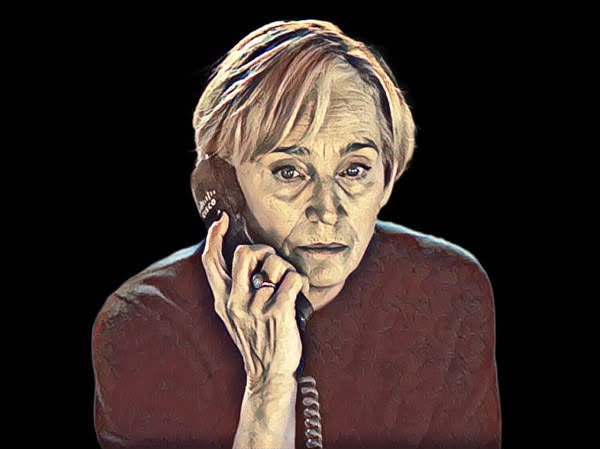
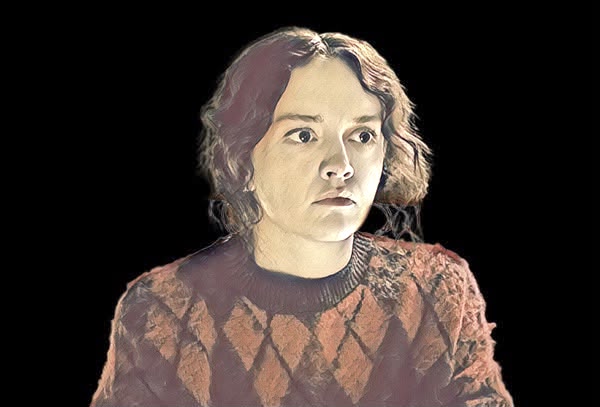
It didn’t take long to discover that Sid wasn’t there by accident. She had been planted at Slough House to watch River, following orders from Diana Taverner, who had her own reasons for taking an interest in the activities of David Cartwright’s grandson. David, after all, was one of the most important figures in the history of British intelligence. And this is precisely where the relationship between the two women begins to raise questions. Sid answered directly to one of MI5’s most powerful figures and appeared to enjoy a degree of access and familiarity that didn’t entirely correspond to her official position.
But there is another, even more intriguing possibility, especially when we consider the rivalry and mutual distrust between Diana Taverner and Jackson Lamb. If Sid really is Diana’s niece, it would mean that Taverner managed to plant a member of her own family inside Lamb’s team without him apparently recognizing the connection. And we are talking about one of the most experienced and intelligent agents in MI5 history, a man who has spent decades identifying lies, manipulating adversaries, and uncovering secrets that were supposed to remain buried. Successfully placing someone she trusted completely inside Slough House, right under Lamb’s nose, would represent an extraordinary personal and professional victory for Diana.
While we still don’t know exactly how much Lamb knows about this situation, there is a clue from the very first season that might help explain the true nature of Sid and Diana’s relationship. On Sid’s phone, Taverner was identified as “Aunt Zadie.” It could simply have been a codename, a convenient way of disguising her superior’s identity if someone examined the phone. Such a precaution would be perfectly consistent with the work of a spy. But Slow Horses is a series in which seemingly insignificant details frequently acquire importance much later, and the word “aunt” leaves open a particularly interesting possibility: what if their relationship wasn’t strictly professional?
One of the most intriguing clues from the first season concerns the way Diana was identified among Sid’s contacts, under the nickname “Aunt Zadie.” It could simply have been a codename, a convenient way of disguising her superior’s identity if someone examined the phone. Such a precaution would be perfectly consistent with the work of a spy. But Slow Horses is a series in which seemingly insignificant details frequently acquire importance much later, and the word “aunt” leaves open a particularly interesting possibility: what if their relationship wasn’t strictly professional?

The theory becomes even more intriguing when we remember the way Sid treated River. She loved teasing him, particularly about his privileged position as David Cartwright’s grandson, a man whose name still carried enormous weight within MI5. In her eyes, River was something of an intelligence-world nepo baby, someone who could repeatedly fail without ever completely losing the protection afforded by his family name. But if Sid herself enjoyed a privileged family connection within the service, her teasing would acquire a delicious irony. She would be doing exactly what she criticized in River, except that she was considerably better at concealing her advantages.
What happened afterward also deserves another look. In the first season, Sid was shot in the head during an operation, and everyone, including River, came to believe she had died. Her records disappeared, and her existence was virtually erased from MI5’s systems. For an organization specializing in concealing inconvenient truths, none of this is particularly surprising. But Season 6 reveals that Sid survived and continued to be involved in clandestine activities, while Diana knew about her situation. Her supposed death was, in practice, the beginning of another life, constructed far away from her former colleagues.
Her reunion with River brought back something that had already stood out during the first season: the chemistry between them. Sid remains provocative, intelligent, and in certain respects more experienced than he is, but her behavior now also reveals a vulnerability that previously seemed nonexistent. River, meanwhile, continues to alternate between irritation and admiration for a woman who never stops challenging him. Their dynamic works because there is affection beneath the constant teasing, even if neither seems particularly interested in admitting it.
But it is Sid’s trust in Diana that transforms the story. When the Russian assassins begin targeting agents connected to Slough House, Sid believes Taverner will be able to help them. That confidence doesn’t seem to come exclusively from respect for the chain of command or from a professional relationship built over many years. There is an almost daughterly familiarity in the way Sid turns to her, as though Diana were the one person capable of resolving any situation, however desperate.
And then comes the betrayal. Facing the consequences of a clandestine operation in Kazan, Russia, Diana negotiates a solution with the Russians that she considers convenient for her own political survival. In exchange for their promise to stop the attacks, she agrees to hand over Sid Baker. The young woman who worked for her, trusted her, and might have been considerably more than a subordinate becomes expendable. By the end of Episode 4, when Sid falls into the assassins’ hands, the full implications of that decision become devastating.
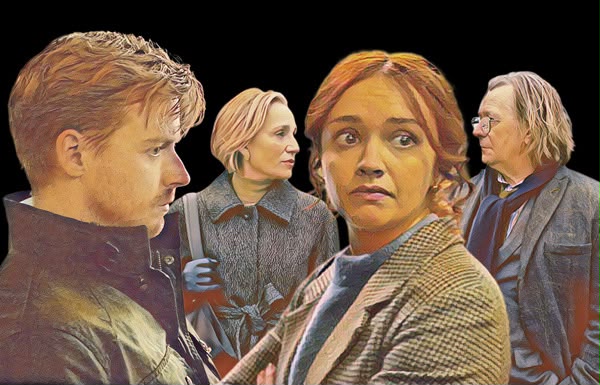
The irony is even crueler when we compare Diana with Jackson Lamb. The man is rude, offensive, seemingly lazy, and determined to treat his subordinates as hopeless failures. Yet whenever one of them is in danger, he displays a protective ferocity that contradicts his habitual indifference. Lamb may spend the entire day insulting his slow horses, but he is willing to challenge MI5, old enemies, and even his superiors to prevent them from being killed. Diana, on the other hand, carefully cultivates an image of efficiency, sophistication, and professionalism. Yet when forced to choose between a loyal agent and the preservation of her own power, she has no hesitation in sacrificing the former.
Of course, none of this proves that Sid really is Diana’s niece. The nickname on the phone may be nothing more than a cover, and their mutual familiarity may be the result of years spent working together on secret operations. Nor should we forget that, in the world of Slow Horses, personal relationships are frequently exploited by those in positions of authority. Diana doesn’t need to be related to Sid to take advantage of her loyalty, and perhaps that is the most disturbing explanation of all.
Even so, the possibility of a family connection adds an especially cruel dimension to the story. If they are aunt and niece, Diana’s decision becomes more than another example of institutional betrayal: it approaches a form of familial abandonment. And even if they share no blood relationship whatsoever, the intimacy suggested between them makes the choice morally appalling. Sid believed she knew Diana well enough to trust her with her life. She has discovered, in the worst possible way, that the trust wasn’t mutual.

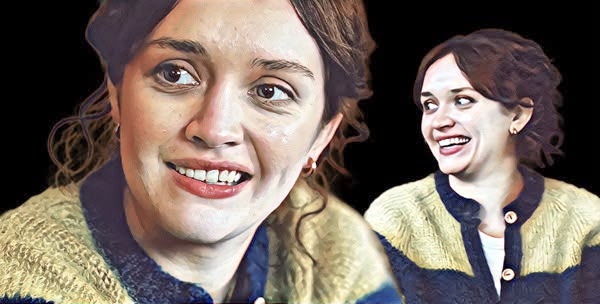
Perhaps the most important question is no longer whether Diana Taverner really is Sid Baker’s aunt, although I still very much want to know the answer. The question is what this relationship reveals about the two women. Sid, so quick to recognize River Cartwright’s privileges, may have made the mistake of believing that her own proximity to power would also guarantee protection. Diana, meanwhile, has just demonstrated that in her world neither loyalty nor affection is enough to prevent betrayal.
And it is impossible not to think that the real difference between Diana Taverner and Jackson Lamb lies precisely there. Lamb does everything he can to convince his agents that he couldn’t care less about them, but his actions consistently prove otherwise. Diana makes her subordinates believe they can rely on her, right up until the moment they are no longer useful. If Sid really is her niece, the revelation could make that distinction even more monstrous. If she isn’t, what has already happened is cruel enough.
Descubra mais sobre
Assine para receber nossas notícias mais recentes por e-mail.


1 comentário Adicione o seu