
To understand why a simple reference to Berlin carries so much weight in the meeting between Jackson Lamb and Frank Harkness in the sixth season of Slow Horses, it helps to remember who Lamb was before he became the badly dressed, rude, drunk, flatulent and verbally aggressive man who runs Slough House. Behind that deliberately repulsive appearance is one of the best spies of his generation, an agent who worked undercover in Germany during the Cold War and whose intelligence remains, season after season, the main reason his so-called “slow horses” are still alive.
When Lamb finally returned to England, he could theoretically have taken a prestigious position within MI5. He did exactly the opposite. He asked for Slough House, the purgatory where the Service sends agents who have made mistakes, annoyed someone powerful or are simply being encouraged to resign. Lamb likes to pretend that he, too, is merely waiting for retirement, with no interest in work, career or heroism. Five seasons have proved otherwise. How many times would the world have exploded, literally or otherwise, if the man who seems unwilling even to get out of his chair had not been paying attention?
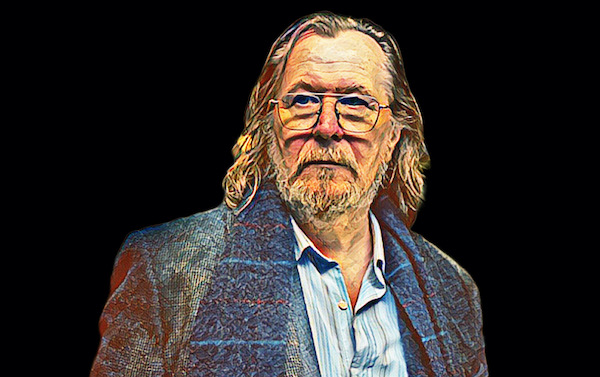
That contradiction is essential to Jackson Lamb. He is cruel to his team, knows every one of their weaknesses and never misses an opportunity to humiliate them, but he is also fiercely protective of them. Affection rarely looks like affection with Lamb. It looks like reasoning. He sees danger before everyone else, understands who is lying, identifies who is about to be sacrificed and, whenever someone threatens one of his people, starts working with a speed that completely contradicts his apparent apathy.
We also know very little about his private life, because Lamb turns almost every attempt at emotional closeness into an attack. But the few pieces the series has revealed matter. We know that his relationship with David Cartwright, River’s grandfather, is deeply poisoned by the past. River grew up seeing David as a legend of the Service; Lamb knows the other side of that legend.
David was not the First Desk. That official role belonged to Charles Partner, Catherine Standish’s boss and a man she idolised because he had supported her during the years when she was struggling with alcoholism. The problem was that Partner was also a traitor, secretly feeding British intelligence to the Russians. David Cartwright, one of the most powerful men inside the Service, knew it, and so did Lamb.
And Lamb had very personal reasons to hate that betrayal. He realised that Partner was passing information to the Russians after mentioning, in conversation, that one of his sources inside the Stasi was a woman. The information leaked. Unable to identify which woman was working for the British, the East Germans killed three possible suspects. It is one of those small stories Slow Horses seems to drop in the middle of another plot, but which explains a great deal about the man we see decades later.
You might like this: Why Does Jackson Lamb Always Save Catherine Standish?
Also here: Jackson Lamb: The Man Who Saw Too Much
Partner remained in place while MI5 fed him false information. Until David Cartwright decided that he had to die and gave Lamb the job. Lamb killed Partner at home and staged the scene to look like suicide. Catherine spent years believing that her former boss had taken his own life, only much later discovering that the man now running her team had been his killer.
That matters because Lamb obeyed David, but never seems to have treated the decision as truly his own. There is resentment there. David used an agent who had already paid a brutal price for the intelligence game to clean up yet another problem created inside the Service itself. When the job was done, Lamb effectively told David that it also marked the end of his life as a field agent.

That is the context that gives Lamb’s relationship with River another dimension. Lamb looks at the younger Cartwright and sees talent, recklessness and, inevitably, the grandson of the man who helped shape some of the darkest chapters of his life. That is why his relationship with River has always been so ambivalent. He mocks the young man’s privilege, despises his early reverence for his grandfather and, at the same time, has become a kind of father figure he would never admit to being. River is a Cartwright, but he does not necessarily have to become David. And then Frank Harkness enters the picture.
Harkness emerged as one of the most disturbing figures in Slow Horses. A former CIA operative, mercenary, and psychopath, he spent years impregnating different women and raising his own sons as a kind of private paramilitary force. They were not sons in any emotional sense. They were assets. Men trained to kill, obey, and serve their father’s interests. River discovered that he was one of them.
His mother, Isobel Cartwright, had become involved with Harkness when she was young, and David knew exactly who he was. More than that: when he wanted to recover his daughter and grandson, he used government resources. Sam Chapman delivered money, weapons and secret MI5 identities in order to negotiate their release. Decades later, that decision came back to haunt all of them. Harkness was still alive, his men were still killing, and those identities supplied by the Service ultimately became part of the problem.
For Lamb, this is yet another piece of the same picture of David Cartwright. The great MI5 man, revered by River, did not hesitate to manipulate operations, people and public resources when he needed to solve his own problems. He may have done it to save his daughter and grandson, which humanises the decision, but it does not erase its consequences. Lamb knows better than most that decisions made by powerful men are usually paid for by someone else.
That is why the best scene of the sixth season so far is the meeting between Lamb and Harkness. Gary Oldman and Hugo Weaving turn a conversation into a duel in which no line feels casual. Harkness does not need to point a gun at Lamb to threaten him. All he needs to do is show what he knows.
When he mentions that he managed to find Lamb in Berlin, back when he was still operating under another identity, he is no longer merely saying, “I’m good at what I do.” He is entering territory the series has only just taught us is deeply personal.
Last season, Lamb told a story about a British agent captured by the Stasi. The man had supposedly been tortured for days because his interrogators wanted the name of someone he did not know. They burned the soles of his feet. Then they brought in the German woman he was involved with, pregnant, and killed her in front of him. Lamb told the story as though it had happened to someone else, and later assured Catherine that he had invented it.
The final episode deliberately showed us the scars on his feet.
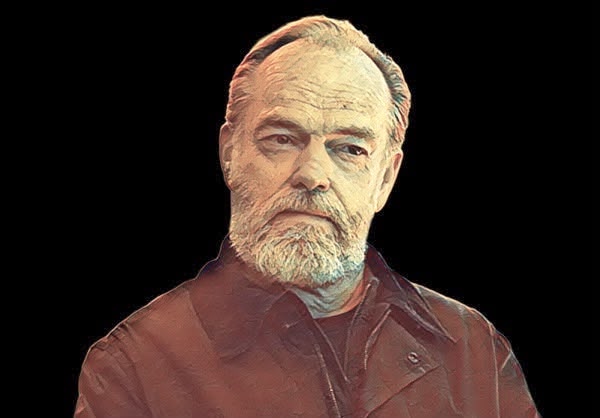
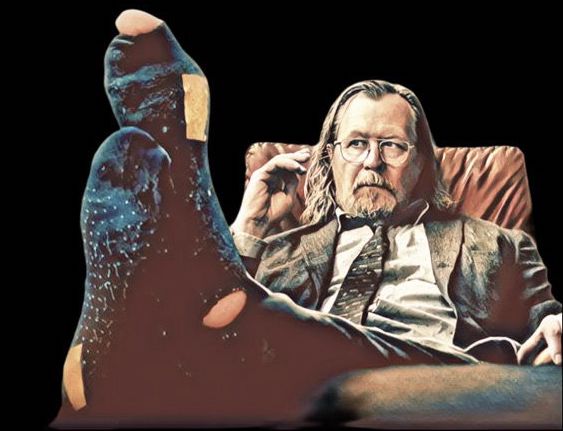
So perhaps not every detail of that story is necessarily true, but the torture certainly was not invented. And there is something especially revealing in Lamb’s conclusion: he says he did not keep quiet because he was heroic or exceptionally resistant. He did not break because he simply did not know the answer. It is exactly the kind of corrosion of heroic mythology that defines the character.
Diana Taverner knows that Lamb was tortured and did not give up secrets. Now we discover that Harkness knows where he was, what identity he was using, and, apparently, managed to track him during that period.
That is not a small piece of information.
It still does not mean that Harkness took part in Lamb’s torture, knew his girlfriend or was even directly involved in that episode. It would be premature to turn proximity between these facts into a revelation the series has not made. But it would also be strange to dismiss the reference as mere dialogue decoration.
The books add another layer that makes it even more interesting. The Secret Hours returns to Berlin, this time in 1994, after the fall of the Wall, and presents Lamb under the working name Brinsley Miles. During that period, David Cartwright sends a young agent to investigate him and ends up compromising an operation by allowing information to reach Charles Partner. Later, he uses what he knows about Lamb to force him to eliminate Partner.
It is not exactly the same story as the Stasi torture, which obviously must have taken place before the end of East Germany. These are different moments and they should not be merged. But together they reveal something much larger: Berlin is not simply one episode in Lamb’s life. It is the place where several of the betrayals that shaped Jackson Lamb seem to have happened.
And now Harkness enters that past.



Perhaps that is the most important part of the conversation between the two men. Until now, we mainly saw Frank through River: the monstrous father who sees his own children as tools. Then we began to see him through David: the man dangerous enough to make an MI5 legend steal government resources to get his daughter away from him.
Now we need to start seeing him through Lamb.
How much does Harkness know? Did he know who Lamb was in Germany? Did he know his contacts? Did he know that he had been captured? Did he play any part in the chain of information that allowed that to happen? Or did he only discover all of this later and is now using that knowledge because he knows exactly where to strike a man who usually seems impossible to intimidate?
For now, none of those questions has an answer.
But something has changed. Frank Harkness is no longer merely River’s psychopathic father. He now occupies a place in the history that existed before River, before Slough House and perhaps even before the man we came to know as Jackson Lamb.
That probably will not become the central storyline of this season, especially because Slow Horses usually prefers to leave parts of the past only partially illuminated. But it changes the landscape. Every new piece explains a little better why Lamb ended up in that filthy office, surrounded by agents nobody else wanted, pretending that nothing matters.
Perhaps because, at some point, too many things did.
And, above all, because he learned very early what happens when the Service decides that someone can be sacrificed.
Descubra mais sobre
Assine para receber nossas notícias mais recentes por e-mail.

