
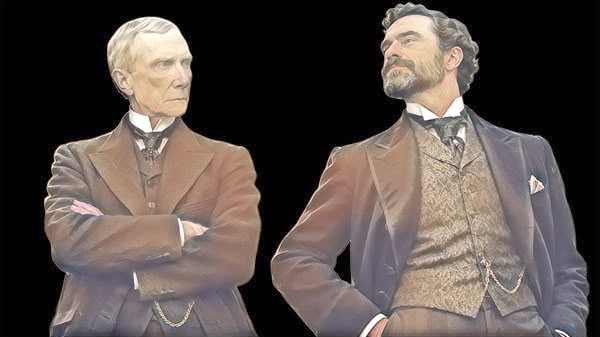
George Russell (Morgan Spector) has faced plenty of adversaries on The Gilded Age, but Season 4 introduces a businessman who may be even more dangerous. John D. Rockefeller, played by Neal Huff, is not just another millionaire looking to increase his fortune. He is one of the men who transformed the American economy and, in doing so, helped shape modern capitalism. His arrival on the series brings George face-to-face with a kind of power he has never had to confront before.
What makes this particularly interesting is that Rockefeller was a real historical figure, while George Russell is a creation of Julian Fellowes. And although George was inspired by railroad magnates such as Jay Gould, his confrontation with the founder of Standard Oil allows the series to explore one of the most significant economic battles in nineteenth-century America.
But who was Rockefeller? And why could a man who made his fortune in oil threaten someone who built his empire on railroad tracks?
The Man Who Understood the Power of Oil
John Davison Rockefeller was born in 1839 in Richford, New York, and did not inherit one of America’s great fortunes. He began working as a teenager, as an assistant bookkeeper, and quickly demonstrated an extraordinary talent for numbers, financial organization, and business. In 1870, he founded Standard Oil, which would become one of the most powerful companies in history.
Rockefeller understood that oil was not simply a passing business opportunity. At the time, kerosene refined from petroleum was essential for lighting, and American industrialization was steadily increasing the demand for petroleum products. He had no intention of merely participating in this market. He wanted to organize it and, above all, control it.
His strategy involved buying competing refineries, reducing costs, integrating different stages of the business, and negotiating commercial advantages. Companies unwilling to accept his acquisition offers could find themselves facing ruthless competition, including price wars they could barely afford to sustain.
By the 1880s, Standard Oil controlled approximately 90 percent of American oil refining. Rockefeller had built an empire whose strength came not only from producing more, but from determining the conditions under which other businessmen could continue operating.
And this is where George Russell enters the picture.
You might want to read this: Could the Morris Family’s Revenge Explain the Attempt on George Russell’s Life?
The Railroad Problem
To reach consumers, oil had to be transported. Railroads were among the most important ways to move enormous quantities of merchandise across the United States.
George Russell built his fortune in precisely that industry. His power came from the infrastructure connecting cities, industries, and consumers. Businessmen depend on his railroad lines to transport their products, while he depends on their freight to keep his operations profitable.
Rockefeller understood this relationship and discovered how to turn it to his advantage.
Because Standard Oil shipped enormous volumes of petroleum, it could negotiate substantial discounts with railroad companies. Under certain agreements, it even secured advantages related to the transportation of competitors’ shipments. This allowed Rockefeller to reduce his own costs while making it increasingly difficult for other refineries to survive.
The more oil he controlled, the greater his negotiating power became. And the better his transportation terms, the harder it was for anyone else to compete.
For a railroad magnate like George, this concentration of power represented a very real threat. After all, what would happen if one of his largest customers demanded rates that made his railroad less profitable?
Or, even worse, simply decided to take his freight elsewhere?
Rockefeller Had Already Defeated a Railroad
History provides an example that almost seems tailor-made for Julian Fellowes.
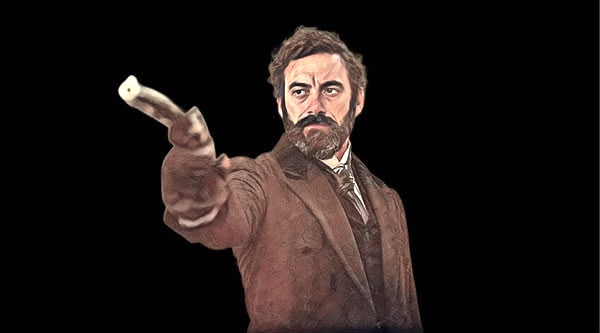
In 1877, Rockefeller entered into a confrontation with the Pennsylvania Railroad, one of the most important railroad companies in the United States. The dispute involved control of oil transportation and the railroad’s attempt to expand its involvement in the petroleum industry.
Rockefeller responded by putting Standard Oil’s economic power to work. He lowered prices, expanded his own transportation resources, and diverted shipments away from the railroad, weakening its commercial position.
The result was a defeat for the Pennsylvania Railroad, which eventually sold oil transportation and distribution assets to Standard Oil.
The episode demonstrated that railroads, despite their enormous importance, could no longer impose their terms unilaterally on major producers.
And Rockefeller went further. He invested in pipelines, creating alternatives to railroad transportation. If the tracks became too expensive or inconvenient, there were other ways to move petroleum.
For George Russell, this may be the most frightening aspect of their rivalry. Rockefeller is not simply negotiating a better freight rate. His business model could undermine the economic power George has spent his entire life building.
You might like to read: Who is Simon, and why he may return in season 4
Two Men Who Refuse to Lose
There is an obvious similarity between George and Rockefeller. Both believe in their ability to organize, control, and expand their businesses, even when doing so means crushing their competitors.
Since the first season, George has demonstrated that his personal generosity should never be confused with corporate kindness. He loves his family, protects his children, and often seems far more reasonable than Bertha when it comes to domestic matters. But he is also perfectly capable of ruining his adversaries when his interests are threatened.
Rockefeller was no different in his determination, although his public life presented some striking contrasts. A devout Baptist who valued personal discipline and religion, he cultivated an image of austerity far removed from the luxury displayed by the families attending the lavish balls of The Gilded Age.
He would also become one of the greatest philanthropists in American history, donating enormous sums to education, science, and medicine.
This combination of religious devotion, philanthropy, and aggressive business practices makes him a particularly fascinating character. Rockefeller could genuinely believe that his actions contributed to economic progress, while smaller businessmen accused Standard Oil of destroying their opportunities.
It is a contradiction George Russell would undoubtedly understand.
The Threat from Washington
Their business rivalry unfolds at a time when the American government is beginning to confront the growing concentration of economic power.
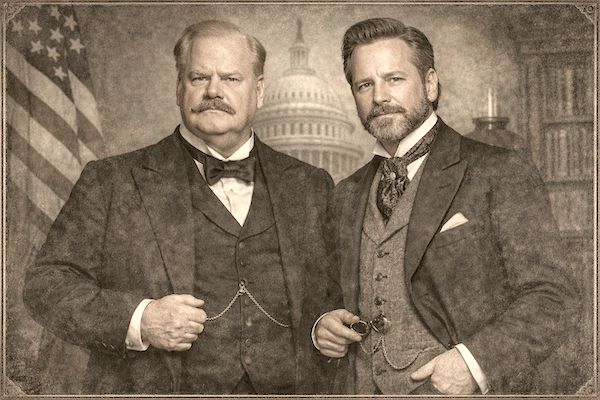
Season 4 also introduces Grover Cleveland, the president of the United States, played by Jim Gaffigan. In 1887, his administration would sign the Interstate Commerce Act into law, establishing a new framework for federal railroad regulation.
The legislation sought to combat practices considered abusive, including discriminatory freight rates, and represented an important change in the relationship between the federal government and major corporations.
Rockefeller and George might find themselves on opposite sides of a commercial negotiation, but they also share an interest in preventing excessive government interference in their businesses.
The series therefore has a particularly interesting opportunity: to portray two giants of capitalism who may be adversaries in one situation and allies in another.
Could George Russell Lose His Empire?
What distinguishes Rockefeller from the businessmen George has previously confronted is the sheer scale of his power. Standard Oil did not depend on a single railroad, a single city, or a limited group of investors. Its operations already extended across different regions and sectors of the economy.
George, meanwhile, is going through a period of extraordinary vulnerability. He has survived an assassination attempt, his marriage to Bertha is in trouble, and he is showing signs of physical and emotional exhaustion. The man who once seemed to control everything is beginning to discover that his fortune cannot provide the security he imagined.
And this is precisely when Rockefeller enters his life.
We do not yet know whether Julian Fellowes intends to turn this rivalry into a financial defeat for George or use it to explore the limits of his ambition. But history has already demonstrated that Rockefeller was perfectly capable of bringing major railroad companies to their knees.
There is also an irony here that fits The Gilded Age beautifully. While Bertha has spent years fighting for acceptance into New York’s aristocratic circles, George has been building the fortune that made her social ascent possible. Now, just as their position in society seems firmly established, he must confront a man for whom real power does not depend on invitations to balls or Mrs. Astor’s approval.
Rockefeller does not need society’s acceptance. He needs society to depend on him.
And perhaps that is exactly what George Russell is about to discover.
Descubra mais sobre
Assine para receber nossas notícias mais recentes por e-mail.

