
After previous visits to Brazil, Wolf Alice will finally make their Rio de Janeiro debut in a show alongside Lykke Li, expanding a relationship that has quietly grown between the British band and Brazilian audiences over the last decade. The performance takes place during the group’s run through C6 Fest and ends up bringing together two projects that, each in their own way, built careers shaped by melancholy, vulnerability, and emotional intensity without turning fragility into empty aesthetics.
Few British bands that emerged in the 2010s have aged as well as Wolf Alice. Perhaps because, from the very beginning, they never seemed particularly interested in following what indie rock of that generation expected from them. While many groups orbited around an excessively polished, nostalgic sound designed for algorithms and playlists, Wolf Alice built songs that felt emotionally unstable on purpose, shifting between delicacy, noise, desire, emotional violence, and vulnerability within the same track.
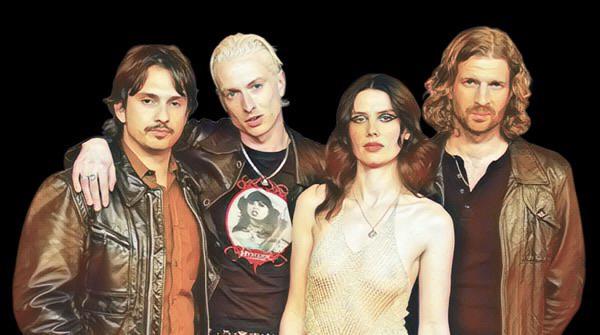
That helped turn the band into something rare in contemporary rock: a group capable of sounding massive without losing its strangeness.
Wolf Alice was formed in London in 2010, initially as an acoustic folk project created by Ellie Rowsell and Joff Oddie. The arrival of bassist Theo Ellis and drummer Joel Amey completely transformed the band’s direction, pushing them toward shoegaze, grunge, noise rock, dream pop, and a far more emotionally dense version of British indie than what dominated the scene at the time.
The origin of the name “Wolf Alice” says a great deal about that identity. The name comes from a short story by writer Angela Carter, the British author known for reimagining fairy tales through dark, feminist, and psychological lenses. In “Wolf-Alice,” Carter creates a character raised by wolves who exists somewhere between human and animal, civilization and instinct, never fully belonging to either world. It is not difficult to understand why Ellie Rowsell connected with that image. There is something profoundly displaced in the band’s music, as if it were constantly trying to translate contradictory emotions at once.
And that is especially visible in Ellie herself. From the beginning, she never performed the classic persona of the untouchable or hyper-controlled rock frontwoman. Quite the opposite. Her songwriting has always seemed interested in exposing cracks, anxiety, obsession, insecurity, desire, and social discomfort without romanticizing those emotions. Many Wolf Alice songs sound like someone trying to survive the emotional overload of contemporary life in real time.
Their debut album, My Love Is Cool (2015), already made that clear. “Bros,” one of the most important songs in the band’s career, transformed female friendship and teenage nostalgia into something melancholic and almost ghostly, while tracks like “Moaning Lisa Smile” embraced a grunge aggression reminiscent of the 1990s without feeling like simple revivalism.
But it was with Visions of a Life (2017) that Wolf Alice truly found its artistic identity. The album is emotionally chaotic and stylistically unpredictable, moving from explosive noise to delicate ballads with almost no warning. Instead of searching for absolute sonic coherence, the band embraced confusion and instability. And perhaps that is exactly why the record worked so well. Wolf Alice understood early on something many bands avoid admitting: growing up is an emotionally disorganized experience.
With Blue Weekend (2021), they reached a new level. The album expanded the band’s cinematic side without losing intimacy or weight, transforming paranoia, love, obsession, fame, and emotional exhaustion into enormous sonic landscapes. “The Last Man on Earth” became one of the defining songs of that post-pandemic moment because it captured something very specific about ego, fragility, and social performance. It was a song about men, fame, and emptiness, but also about the universal need to appear larger than one actually feels.

Throughout their career, Wolf Alice has developed a strong relationship with Brazilian audiences, even if their visits have been less frequent than many fans would like. The band first came to the country in 2016 for Lollapalooza Brazil, during their international breakthrough following My Love Is Cool. They returned in 2018 for shows tied to the Visions of a Life cycle and came back again in 2022 during the Blue Weekend tour. But Rio had remained absent from that trajectory until now.
Perhaps there is something symbolic about that. Wolf Alice has always seemed like a band difficult to fully fit into any specific scene. Too indie for the mainstream, too emotional for more cynical rock circles, too heavy for traditional alternative pop, too vulnerable for the ironic distance that dominated part of British music throughout the 2010s.
And perhaps that is exactly why they remain relevant while so many bands from the same generation disappeared quickly. Wolf Alice never depended solely on trends. There is emotional truth at the center of what they do. And that is usually what lasts.
Descubra mais sobre
Assine para receber nossas notícias mais recentes por e-mail.

