
Few television series have ended while provoking such sharply divided reactions as Euphoria. Some viewers are treating the finale as a tragic masterpiece, while others view it as confirmation of the problems that have been growing throughout the past few seasons. Interestingly, I believe both readings can be true simultaneously.
The first thing that needs to be said is that Euphoria had not been the same show for a long time. What began as an adaptation of the Israeli series created by Ron Leshem gradually transformed into something very different. By the second season—and especially now in the third—what we are watching is essentially a Sam Levinson work, for better and for worse.
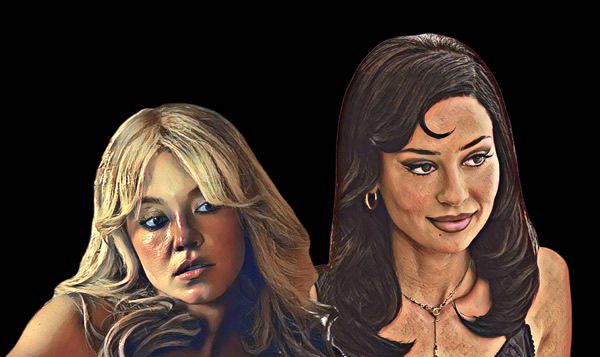

Visually, it is difficult to deny the ambition of the result. The cinematography is stunning, Hans Zimmer’s score gives the story an almost operatic scale, and many sequences possess a level of craftsmanship and grandeur more commonly associated with cinema than television. Some moments rank among the most impressive visual achievements produced for a television series in recent years.
At the same time, it is impossible to ignore that Levinson continues to carry some of the issues that have followed him throughout his career. His gaze toward women remains deeply shaped by the male gaze. The constant sexualization, the exploitation of female suffering, and the insistence on certain images do not feel accidental but deliberate. Levinson has never appeared interested in apologizing for that. If anything, he seems convinced that he is simply showing the world as it is, however uncomfortable that may make viewers.
The problem is that there is a difference between depicting exploitation and appearing fascinated by it.
Even so, the aspect of Euphoria that interests me most has never been that debate, but rather the way the series approached addiction through Rue Bennett. That is precisely why I find the ending far more complex than much of the online conversation suggests.
Rue did not die of an overdose. Rue was murdered.
The distinction matters.
Alamo knew exactly who she was and was fully aware of her history with addiction. He understood her vulnerabilities when he left the bottle of pills within her reach. We know Rue didn’t know that Alamo knew she had become a threat to his operation. When he handed her a substance that he knew could kill her, he was not simply distributing drugs or helping her with her pain. He was weaponizing her addiction against her. This was near evil.
For that reason, while the mechanism of her death is technically an overdose, the series frames the act as a deliberate killing.
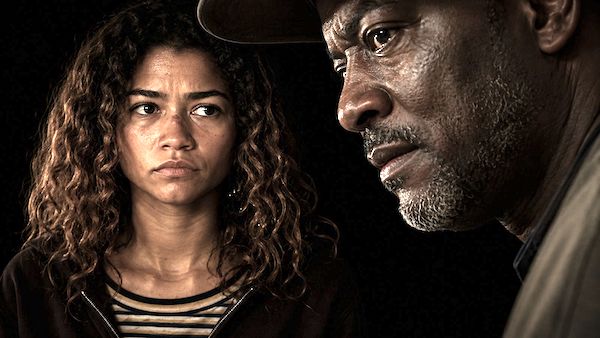
It is a brutal ending, but one that remains consistent with what Euphoria has always shown. From the very first episode, Rue has been surrounded by dangerous people, drug dealers, guns, debt, and violence. For years, the series allowed audiences to treat those elements almost as background scenery. This season, Levinson finally demands that they be taken seriously.
Addiction does not simply destroy the addict. It places them in the orbit of people willing to exploit their vulnerabilities to the fullest extent possible.
In that sense, Rue’s death functions as a necessary cautionary tale. Not because she deserved that fate, but because the series never pretended recovery was guaranteed. From the beginning, we knew Rue was living on the edge of an abyss. The achievement of Levinson—and especially Zendaya—is that they made audiences love her, resent her, pity her, and root for her even when she had stopped believing in herself.
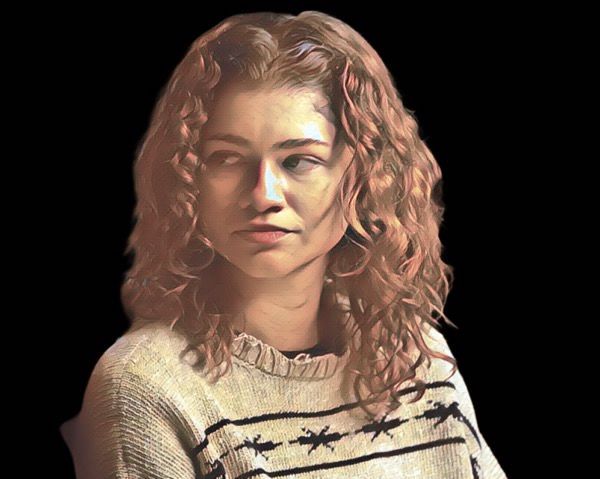
Zendaya delivers yet another extraordinary performance. Rue was never written to be inspirational. She lies, manipulates, hurts people, and makes terrible decisions. Yet she remains profoundly human. It is one of the most complex portrayals of addiction television has produced in recent memory.
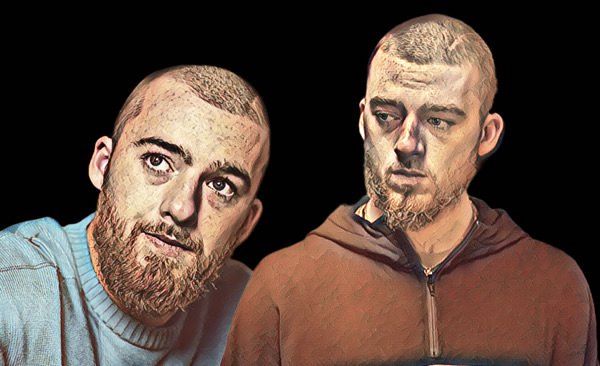
The finale also works as an indirect tribute to Angus Cloud, who played Fezco and whose absence hangs over the entire season. The brief acknowledgment of the actor was among the episode’s most moving moments and a reminder of how much the series has changed since its early years.
But perhaps the most interesting discussion revolves around Alamo.
Much has been said about Quentin Tarantino following the series finale. The influences are certainly there: the duels, the monologues, the stylized violence, the near-mythic structure of revenge. Yet I see another influence that deserves just as much attention: Martin Scorsese.
Echoes of Taxi Driver, Mean Streets, Goodfellas, and several other Scorsese films appear throughout the season. The problem is that Levinson remains far from being either Tarantino or Scorsese.
Tarantino is fundamentally a master of dialogue. He can turn an ordinary conversation into something electrifying. His writing possesses rhythm, irony, musicality, and precision. Levinson, by contrast, is considerably stronger at creating images than crafting unforgettable dialogue.
Scorsese also films violence, but there is almost always a deeper exploration of guilt, power, masculinity, religion, or self-destruction beneath every act of brutality. In Euphoria, the image often arrives before the idea.
That does not make the series empty; it simply means it is sometimes less profound than it believes itself to be. Still, Alamo is an extremely effective villain. Not because he is a criminal mastermind or a cartoon psychopath, but because he perfectly understands money, violence, manipulation, and power while understanding absolutely nothing about human attachment.
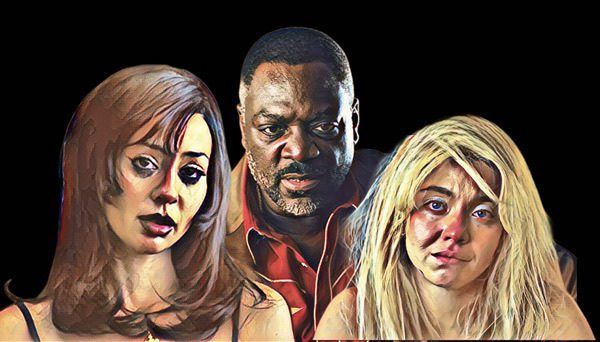
Throughout the season, Alamo appears to be winning. He outmaneuvers the police. Eliminates threats. Expands his business. Controls the people around him. Even in the final duel, he cheats. He establishes rules he never intended to follow. Had Bishop not removed the bullets from his gun, Ali would almost certainly have died. And that betrayal is far more interesting than it initially appears.
Bishop does not experience a sudden moral awakening. He does not wake up one day and decide to become a hero. Throughout the season, he spends time around Rue, Maddy, and others. He watches Alamo become increasingly cruel, and sees real people reduced to disposable pieces in someone else’s power game.
I suspect Rue plays a significant role in that transformation. Not because there is any romance between them, but because Bishop knew her and that she was not just another addict or employee. She was a lost young woman trying to survive. When Alamo decides to kill her, Bishop knows exactly who is dying. The same is true of Maddy.
His relationship with her is never fully explained, but there is clearly affection, concern, and empathy. Unlike Alamo, who sees her as property, Bishop sees her as a person.
That is why his betrayal works so well dramatically. He is not choosing between crime and morality. He is choosing between a man who destroys everything around him and people for whom he has developed genuine empathy.
The result is an ending that exists somewhere between tragedy and catharsis. Rue dies. Ali loses his symbolic daughter, but Alamo falls. Those responsible for so much destruction are defeated.
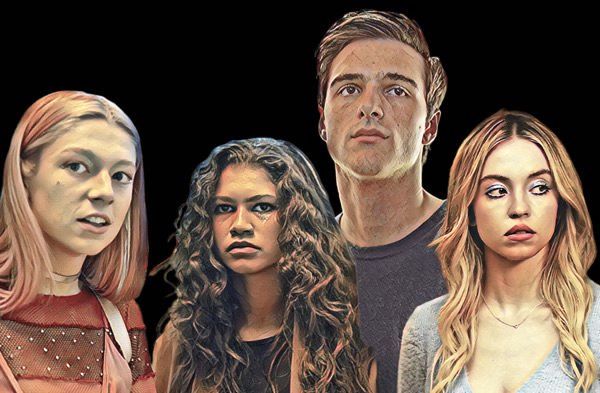
Maddy survives and is free of her debt to Alamo, Lexi is set to build a career in Hollywood, and Jules finds stability, albeit through a questionable relationship. Cassie, however controversial her fate may be, receives an opportunity to rebuild her life sans Nate, now that he is dead. None of this is exactly happy, but neither is it the absolute nihilism that some critics are describing.
Perhaps that contradiction is what makes the ending so fascinating. Levinson refuses to offer hope to everyone, but he also refuses to create a universe completely devoid of justice.
What remains unresolved is almost as interesting as what is concluded. Does Bishop take over the business? Does he walk away? Does he remain close to Maddy? Do Maddy and Cassie finally break apart, or will their toxic bond continue to define them? What happens to this group once trauma is no longer the center of their lives?
The series never answers. Perhaps because, after three seasons, the only certainty is that Euphoria was never truly interested in answers. It was always interested in scars.
Descubra mais sobre
Assine para receber nossas notícias mais recentes por e-mail.
 miscelana.com
Great review, totally agree, it wat a powerful, cruel and morally ambiguous ending.
CurtirCurtido por 1 pessoa