
Amid Soviet espionage, political paranoia, and the race for space dominance, Star City finds room for something unexpectedly intimate: a profoundly tragic love story. Set in the universe of For All Mankind, the new Apple TV series returns to the alternate reality in which the Soviet Union won the race to put a man on the Moon, but chooses to look beyond the technological spectacle and dive into the private lives shattered by a system built on constant surveillance.
It is within this context that Valya and Tania, played by Adam Nagaitis and Ruby Ashbourne-Serkis, emerge. The couple quickly becomes the emotional heart of the series, not simply because of the romance itself, but because of the way Star City portrays the impossibility of that love ever fully existing within an authoritarian regime. They genuinely love each other, yet they are surrounded by secrets, silence, and fear.
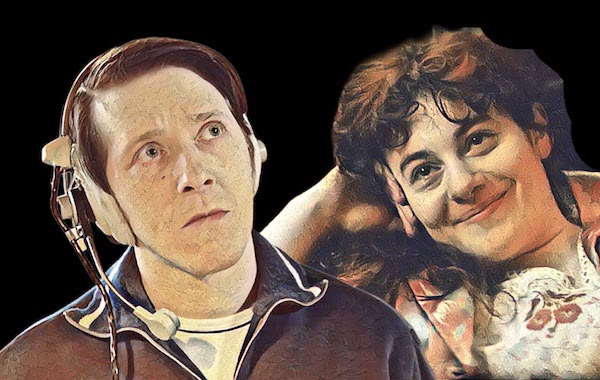
There is also an especially interesting layer for viewers familiar with For All Mankind. The original series had already revealed part of the historical impact of Valya’s actions, but without necessarily humanizing who he was or what emotional motivations lay behind his choices. Star City does exactly that: it transforms a character previously associated with political and historical consequences into someone deeply human, passionately in love, and desperately trying to survive emotionally within that system.
Known for his work in productions such as The Terror and Chernobyl, Adam Nagaitis portrays Valya as a man permanently divided between duty, survival, and love. Ruby Ashbourne-Serkis, meanwhile, builds Tania as someone driven much more by her heart than by logic, despite fully understanding the devastating risks involved. The result is a relationship in which every intimate gesture feels dangerous, because even loving someone becomes a threat in that universe.
During a conversation with Blog do Amaury Jr., via MiscelAna, the actors spoke about the fragile trust between the characters, the oppressive atmosphere of the Soviet Union portrayed in the series, and the constant sense that both were living a love story inside an emotional prison. They also discussed the inevitability of heartbreak in such circumstances, the secrets that drive them apart, and the fact that Star City understands something profoundly human about relationships under authoritarian regimes: love never stops existing, but surviving it may become impossible.
I’ve watched through episode five, and I’m desperate to know what happens next, although I suspect a happy ending isn’t exactly on the horizon. There’s something very paradoxical about this couple: everything revolves around trust, and yet they live surrounded by secrets. They seem to trust each other despite hiding so much. How would you describe their relationship?
Ruby Ashbourne-Serkis: Absolutely. As you said, it begins with a genuine, almost innocent love. There’s a purity to their relationship that cuts through all the lies and manipulation elsewhere in the series. Even with secrets, I never felt their relationship was built on malice or manipulation. As the story progresses, the secrets naturally begin to pull them apart, but I never felt the love itself was truly at risk of disappearing.
Adam Nagaitis: And we had the advantage of showing how they first met and fell in love, even if that only appears through little moments, photographs, and memories. There’s joy there. There’s freedom. Even if it’s temporary, almost imaginary freedom, it’s still freedom. But by the time we meet them in the series, all of that has changed. They are being watched constantly. Their commitment to one another comes from that reality. The secrets don’t exist because they want to deceive each other. They exist because both of them are trying to protect one another. At its core, this is a love story inside a prison. And there’s something even crueler: they live in a system where nobody can trust anyone.
Ruby Ashbourne-Serkis: Exactly. You couldn’t trust your neighbors. Anyone could report you. You had to learn how to communicate without actually saying what you meant. People had to find indirect ways of existing because there was this constant fear of being overheard. That completely affects how they relate to one another.
Adam Nagaitis: And that makes the story almost universal. Recently, I heard accounts from people who lived through similar situations in contemporary authoritarian regimes, including defectors from North Korea and stories of couples separated by political borders. You realize how dangerous falling in love becomes under those systems. There’s almost an inevitability to broken hearts. Falling in love under authoritarianism always carries risks. It’s oppressive because the system doesn’t allow emotional freedom. It doesn’t allow personal freedom. People stop being seen as individuals.

And there’s something especially painful because both characters ultimately put love above duty. Would you do the same in real life?
Ruby Ashbourne-Serkis: I think I would. I relate to Tania in that respect because I’m very much someone led by my heart. I often completely ignore what my head is telling me. And I think that’s exactly what she does. There’s something inevitable about that love.
Adam Nagaitis: I would choose love too. Always. Duty for what? To serve people who treat individuals like pieces on a board? If you don’t love people, then what’s the point of any of this? Of course, it’s easy to say that from the outside. When you’re actually living through it, when fear is real, when there’s a gun pointed at someone, everything changes. But that’s what the series captures so beautifully: the weight of those choices.
I was struck by how Valya manages to keep functioning, traveling between Earth and the Moon, doing his job, while carrying all that emotional pressure.
Adam Nagaitis: It becomes a survival mechanism. He compartmentalizes everything. I think a lot of people do that all the time without even realizing it.
What broke my heart the most was realizing they never had enough time to truly tell each other the whole truth. The love is there, but so are these small lies constantly.
Adam Nagaitis: But I think, in some way, they know. When you deeply love someone, there’s a connection that goes beyond what has actually been said. You think, “If something happens to me, does this person know who I really am? Do they understand?” And that’s one of the most beautiful aspects of the writing. The series never offers a perfect goodbye. It never delivers complete closure. In real life, relationships often end without that ideal moment of explanation, too.
Ruby Ashbourne-Serkis: But it makes the audience want to scream at the screen: “Just tell them! Just tell the truth!”
Adam Nagaitis: Of course. But they simply can’t. And that’s precisely what makes it so painful. I often asked the creators, “Why doesn’t he just do this?” And the answer was always the same: “Because someone living under that system would never do that.”
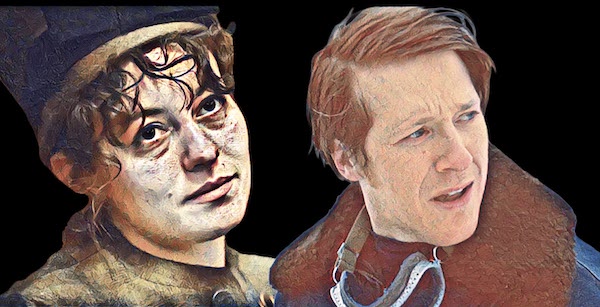
Spoiler moment: I genuinely got scared when he was almost arrested.
Adam Nagaitis: So did I. And there’s something terrible about that moment because you realize they’re not even allowed a normal breakup. They can’t have a scene. They can’t say goodbye publicly. They can’t confess anything in front of others. Not even their love truly belongs to them.
What do you personally take away from this experience?
Ruby Ashbourne-Serkis: For me, Tania’s courage. She discovers that the reality she had been living in was built on secrets and lies, and yet she still has to find the strength to continue existing on her own. There’s tremendous bravery in that.
Adam Nagaitis: For me, it’s something connected to Valya’s ending. Without giving away spoilers, there’s a very beautiful idea there: it’s never too late to find some human meaning in things. Even in the last seconds of life, there is still room for humanity, redemption, and love. When I read that, I thought, “Well done, Matt and Ben. That’s truly beautiful.”
Thank you so much. I’m already preparing my tears for the finale.
Ruby Ashbourne-Serkis: (Laughs.)
Adam Nagaitis: Thank you. It was wonderful talking to you.
Descubra mais sobre
Assine para receber nossas notícias mais recentes por e-mail.


1 comentário Adicione o seu