
At the launch of Star City, when I spoke with Adam Nagaitis and Ruby Ashbourne Serkis, who play Valya and Tanya Mironov, one answer immediately caught my attention. I asked whether, if they found themselves in the same situation as their characters, they would make the same choice. Both answered yes. They would choose love. At the time, the series was only just beginning, but their response ultimately revealed exactly what Star City wanted to say. This was never simply a story about rockets, espionage, or the rivalry between the United States and the Soviet Union. It was about people trying to preserve their humanity within a system designed to erase individuality.
Throughout eight episodes, we followed scientists, cosmonauts, and KGB officers forced to hide their desires, sacrifice relationships, and turn their deepest emotions into state secrets. By the finale, nearly every major character reaches the same impossible crossroads: obey the regime or remain faithful to the people they love. That is what makes “The Wolves” such a powerful conclusion. The Space Race remains central to the story, but it is no longer its emotional core.

Among the season’s many tragic journeys, Valya Mironov’s is perhaps the most heartbreaking. A Soviet hero and one of the program’s most respected and accomplished cosmonauts, Valya is ultimately betrayed by both his closest friend and his wife, who concealed their affair from him because, while he was being blackmailed by the CIA, he had chosen to become a spy to protect Tanya. His sense of honor is ultimately overcome by the love he feels for her, and at least one fellow cosmonaut loses his life because of the choices he was forced to make.
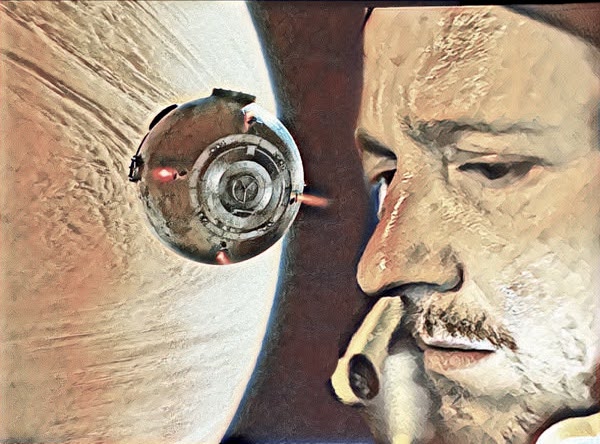
Once Irina uncovers the truth, Valya’s fate becomes inevitable. In fact, I discussed exactly that possibility with Adam Nagaitis during our interview, and he never tried to dismiss it. The series all but announces his destiny from the very beginning, yet somehow manages to postpone the tragedy long enough to make us believe there might still be another way. When the fire is extinguished, and Venera survives, hope returns briefly. Perhaps all three cosmonauts really will make it home. Then comes the sacrifice. Valya volunteers to board the capsule bound for Venus, knowing he will never return, to correct the spacecraft’s trajectory. He dies as the first human being ever to reach another planet, but also as a man who understands there is no future left for him on Earth. Scientific triumph and personal tragedy become one and the same, elevated by Adam Nagaitis’ remarkably restrained and deeply moving performance.
I have to admit that the sequence left me devastated. Not simply because Valya dies, but because he and Tanya never have the chance to reclaim the life that was stolen from them. Throughout the season, both become victims of a system that transforms every personal choice into a political crime. In the end, Valya dies believing Tanya may never fully understand why he made his decision. Tanya, meanwhile, survives in Paris without ever learning that the man she loved gave his life trying to save his friends and allow her to begin again.

At the same time, Star City builds a second love story that is just as devastating. Sasha and Anastasia begin as a marriage arranged by the state and ultimately make the very choice the regime spent years trying to prevent. Anastasia abandons her mission to save her husband. Sasha helps Lakshmi reach safety across the Finnish border, only to turn back after seeing Anastasia taken into custody. Freedom itself loses its meaning when the person who gives meaning to that freedom remains on the other side. It is a desperate, romantic, and entirely believable decision—one that feels completely earned.
Perhaps that is where the season finds its greatest strength. There are several love stories in Star City, but none of them exist simply to provide romance. Tanya and Valya embody a love that was interrupted before it could fully exist. Sasha and Anastasia discover genuine love only after the state has attempted to turn their marriage into propaganda. The Chief Designer and his wife represent decades of silence, sacrifice, and emotional distance. Even Sergei—whom For All Mankind fans already know through his future relationship with Margo Madison—begins his journey by choosing people before institutions. That cannot be a coincidence. Every one of these characters is eventually forced to decide between serving the system and preserving what still makes them human.
That reading perfectly echoed what Adam Nagaitis and Ruby Ashbourne Serkis told me. Neither spoke primarily about politics. Instead, they spoke about emotional survival. Ruby described Tanya as someone desperately searching for freedom, connection, and self-expression within an environment that suppresses every sign of individuality. Adam explained that Valya never considered himself a dissident because the Soviet system was the only reality he had ever known. His struggle was never about rejecting his country. It was about protecting the people he loved without abandoning his dream of exploring space.

The finale also completes another of the season’s strongest arcs: that of the Chief Designer. For much of the series, he sacrifices individuals in the service of the Soviet space program. In the final episode, everything changes. For the first time, he places his “Eagles” above the state, risks his own freedom to save them, and accepts being branded a traitor by the regime to which he devoted his entire life. It is a quiet transformation, but perhaps the season’s most significant one.
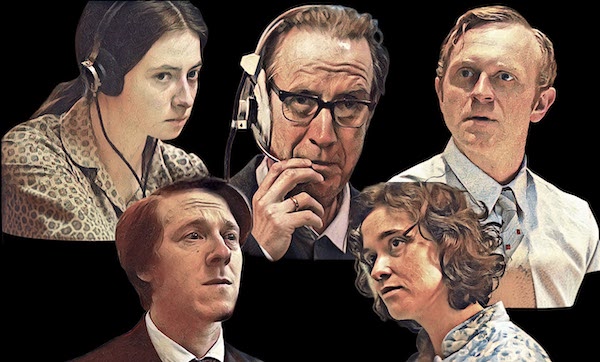
Meanwhile, Irina moves in exactly the opposite direction. Watching Agnes O’Casey portray an idealistic young Irina while already knowing the formidable woman she will eventually become in For All Mankind is almost chilling. Her growing alliance with Lyudmila Raskova never feels like a simple ideological conversion. Instead, the series suggests something far more complex, where admiration, ambition, and the instinct to survive gradually become inseparable. Yet many questions remain unanswered. Why does Tanya become such an obsession for Irina? What really happened in Irina’s past? Who is the father of her daughter? Clearly, the series is saving those answers for the future.
And that may be Star City‘s greatest accomplishment. Rather than simply concluding its own story, it reshapes the entire For All Mankind universe. We now know who Arseni Vetrov really was, how Anastasia became the first woman on the Moon, how Sergei and Irina began their journeys, and that the Soviet mission to Venus truly happened—only to be erased from official history. At the same time, the spin-off leaves countless new possibilities behind: Tanya living under surveillance in Paris, Sergei imprisoned, Sasha and Anastasia facing an uncertain future, the Chief Designer reduced to a prisoner of the regime he helped build, and Irina moving ever closer to becoming the woman audiences already know.
If Star City returns for a second season—and I sincerely hope it does—it will likely become far more than a story about space exploration. Many of the Soviet Union’s greatest heroes now face prison, interrogation, or exile to Siberia: brilliant engineers, celebrated cosmonauts, and even the man responsible for keeping the Soviet space program alive. There is an entire new chapter waiting to unfold.
Ultimately, Star City does not end its first season celebrating who traveled the farthest. Its greatest achievement is not Venus itself. It is evident that, even within a system designed to transform human beings into instruments of the state, there were still men and women capable of choosing love, friendship, loyalty, and hope. Perhaps that is why Valya’s death hurts so much. We do not simply lose a cosmonaut. We lose a man who, when finally forced to choose between survival and remaining faithful to the people he loved, decided that his final journey would also become his final act of freedom.
Descubra mais sobre
Assine para receber nossas notícias mais recentes por e-mail.
 miscelana.com