
One of the most fascinating aspects of Star City and For All Mankind is how much of their fiction is rooted in real space history. Starting with Star City itself. That’s right: it wasn’t invented by Apple’s writers. The city existed in the Soviet Union, survived the end of the Cold War, and remains active in Russia to this day.
In the new For All Mankind spinoff, Apple imagines an alternate reality in which the Soviet Union won the space race and follows the story from the other side, inside the Soviet space program. Yet the setting chosen for the series existed long before any screenwriter dreamed it up.
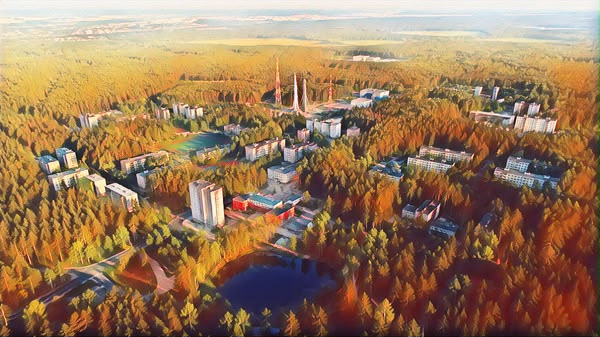
Officially known as the Yuri Gagarin Cosmonaut Training Center, Star City was established in 1960 in a forested area about 25 miles from Moscow, in what is now the Moscow Oblast. In Russian, it is called Zvyozdny Gorodok, or simply “Star City.” The complex was created at the height of the Cold War, when the Soviet Union and the United States were engaged in a technological, military, and ideological rivalry that extended all the way into space.
For decades, Star City was one of the Soviet Union’s so-called closed cities. It barely appeared on maps and was protected by strict security measures. Access was limited, and for most Soviet citizens, what happened there was almost as mysterious as the space missions themselves. The site functioned as a small, isolated community built to house cosmonauts, scientists, military personnel and their families.
Today, Star City is home to roughly 6,000 people. During the Soviet era, the population fluctuated, but thousands passed through the city over the decades, including engineers, support crews, pilots, and family members of the cosmonauts. Daily life revolved around the space program, and nearly every aspect of the community was tied to the state.
It was there that Yuri Gagarin trained before making his historic flight in 1961, becoming the first human in space. Valentina Tereshkova, the first woman in space, and Alexei Leonov, who performed the first spacewalk in history, also trained there, along with virtually every major figure in the Soviet space program.
The atmosphere depicted in Star City is not entirely fictional. The series presents an environment shaped by constant surveillance, political pressure, and state secrets. And much of that reflects reality. Cosmonauts were celebrated as national heroes and symbols of Soviet pride, but they also lived under intense scrutiny. The Soviet Union viewed its space achievements as both propaganda and proof of superiority over the West.
In For All Mankind, the Soviets had already reached the Moon first. Now, the new Apple series uses that alternate history to explore the human consequences of that victory. Rather than focusing solely on technological achievements, it examines the relationships, sacrifices, and tensions experienced by the people behind the uniforms.
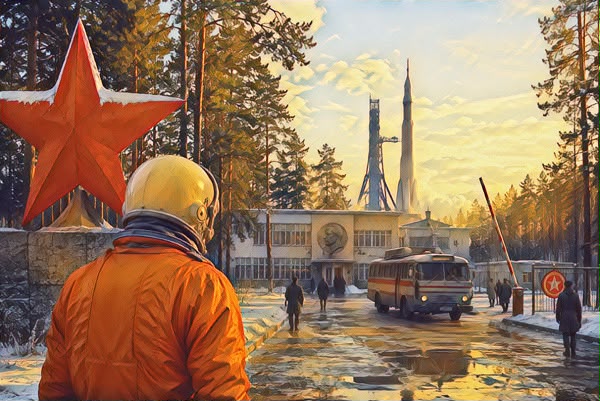
That choice becomes even more interesting when viewed against the backdrop of real history. During the Cold War, Star City was a world unto itself. There were schools, apartment buildings, sports facilities, and state-of-the-art flight simulators, but everything existed within an atmosphere of secrecy and discipline. The city existed to serve the Soviet space program, and its residents understood they were part of something larger than themselves.
After the collapse of the Soviet Union in 1991, Star City became part of the Russian Federation and continued serving the same purpose. More remarkably, former rivals eventually trained side by side there. For years, NASA astronauts spent time in Star City preparing for joint missions aboard the International Space Station, transforming one of the Cold War’s most powerful symbols into an unlikely example of international cooperation.
Perhaps that is the greatest irony of all. As fantastic as the premise of Star City may seem, the City of the Stars was never fiction. It was always real. And it still exists today, hidden among the forests outside Moscow, a living reminder of a time when humanity’s future was being fought over among the stars.
Descubra mais sobre
Assine para receber nossas notícias mais recentes por e-mail.

