
I am still watching Cape Fear, but I have to admit it: I am forcing myself.
Not because it is a bad series. Quite the opposite. The cast is extraordinary, the performances are excellent, the production is sophisticated, and the cinematography has a personality rarely found in television today. Javier Bardem has created a Max Cady who is magnetic, repulsive, and unpredictable. Amy Adams turns Anna Bowden into a woman who seems permanently on the verge of collapse. Patrick Wilson is perfect as Tom, a man whose appearance of normality gradually disintegrates as his secrets come to light.
Even so, watching Cape Fear has not exactly been a pleasure.
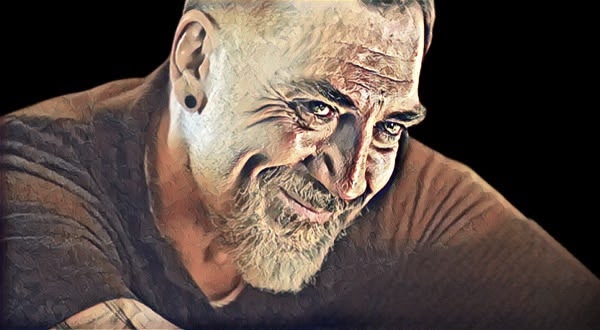
The series is based on John D. MacDonald’s novel The Executioners, which previously inspired the 1962 and 1991 films, but it would be a mistake to treat it merely as an extended version of the familiar story. Max Cady remains, as does the idea of a man who leaves prison determined to destroy the family of the people he holds responsible for his conviction. Almost everything else has been rebuilt into a much more intricate, sexual, domestic, and deliberately unpleasant narrative.
Anna and Tom Bowden are now lawyers. She defended Cady; he worked for the prosecution. The two eventually married after the trial and built an apparently perfect family, but Max’s release does not create cracks in their marriage. It merely illuminates the ones that were always there.
That is what separates the series from the films. Cady is not simply invading a healthy family to destroy it. He is entering a house that was already built on lies, silences, and carefully edited versions of the past.
The seventh episode pushed that idea to its limit.
The major revelation is that Max Cady claims to be Natalie’s biological father. For years, Anna maintained that her daughter’s father was Paul, the man she was engaged to before leaving him and marrying Tom. Now we discover that she became involved with Cady during the trial and that Natalie may have been conceived during that relationship. Max’s mother mistakes the young woman for Anna and speaks about their affair; shortly afterward, Cady tells Natalie directly that he is her father. The series presents the moment as a revelation, although a DNA test could, naturally, provide another twist.
Anna therefore had a daughter with Cady and, later, a son, Zack, with Tom.
That alone would already be disturbing enough, but Cape Fear has no interest in the concept of “enough.” Nevaeh, the young woman who approached both Bowden children, secretly lived inside the walls of their house and drugged Zack until he called Max his father, is also Cady’s daughter. Natalie and Nevaeh are therefore half-sisters, after already having had a sexual relationship without knowing they were related.
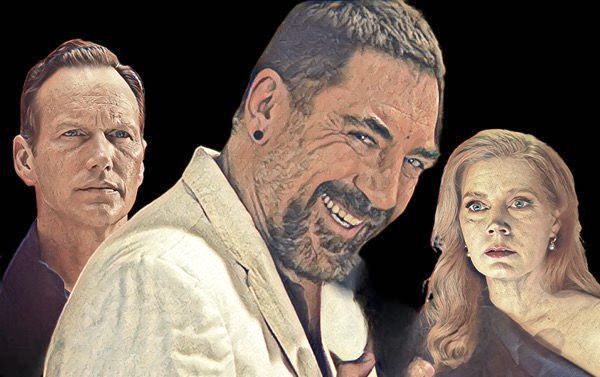
What could have remained a story of criminal revenge turns into a grotesque family web. Cady is not standing outside trying to get in. Biologically, psychologically, and sexually, he is already inside that family.
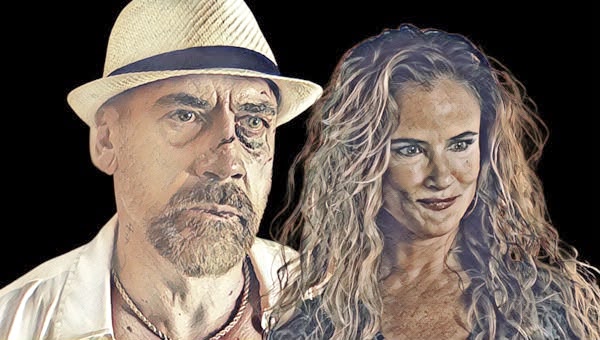
Even Juliette Lewis’s presence contributes to this perversion. In Martin Scorsese’s 1991 film, she played Danielle Bowden, the teenager pursued and manipulated by Robert De Niro’s Max Cady. She now returns as Crystal, Cady’s sister and one of the few people capable of provoking genuine fear, vulnerability, and rage in Bardem’s character. She is not playing the same person, but the casting creates a disturbing reversal: the former victim symbolically returns as a member of the monster’s family.
Crystal also leads us into Max’s childhood. The episode reveals that his father, played by Ron Perlman, kept him inside a cage, called him a mongrel, forced him to behave like a dog, and beat him when he failed to speak English. He is a man who still dominates his wife, who appears to have dementia, and who, even in old age, can reduce the terrifying Max Cady to the frightened child he once was.
The revelation does not absolve Cady. Trauma is not a free pass for murder, abuse, manipulation, and violence. But it does offer an origin for his obsession with control, submission, fatherhood, and belonging. Max was treated like an animal, and now he turns everyone around him into creatures conditioned to obey him.
It is no coincidence that he drugs Zack and convinces him to call him his father. He later takes Natalie to the Cape Fear River and performs a kind of baptism, recreating a ritual his own father forced upon him as a child, even though he did not know how to swim. Max does not simply want to kill Tom and Anna. He wants to rewrite the identities of their children.
What makes it even more disturbing is that Cady is not the only person shaped by a monstrous family.

Anna’s father also returns in this episode. The series has not yet explained exactly what he did in the past, but his daughter’s revulsion suggests something far more serious than his vague admission that he “was not the best father.” Anna spent years keeping him away from her home and her children. When she needs him to plant drugs in Cady’s house, he turns his assistance into a negotiation: he agrees to participate in the crime provided that he receives monthly dinners and access to his grandchildren.
It is a different kind of monstrosity, but a recognizable one. He uses his daughter’s vulnerability to purchase a position inside the family. Even his attempt to act as a grandfather is contaminated by blackmail.
Perhaps that familiarity with violence helps explain the connection between Anna and Max. She may not have been drawn to Cady despite his darkness. She may have recognized something she had known since childhood. Not because they were morally equivalent, but because relationships built on domination, fear, and secrecy were emotionally familiar to her.
Tom also carries a hidden family history. His older brother did not die in a car accident, as he told his son. He died by suicide, and Tom found the body when he was still a teenager. So far, nothing indicates that Tom literally killed his brother. The secret lies in the concealment of the true cause of death and in the guilt he still appears to carry. When Zack begins showing signs of psychological distress, Tom cannot speak about his own trauma. He prefers to lie, control the situation, and even stop therapy when the discussion moves too close to the past.
Every character seems to reproduce, in some form, the violence they received.
Cady’s father turned him into an animal. Cady turns his own children and the Bowden children into instruments. Anna’s father attempts to negotiate his return to the family. Anna lies about her daughter’s paternity and turns to the father she rejected when she needs someone to commit a crime. Tom conceals his brother’s suicide, cannot deal with his son’s depression, and, under pressure from Cady, allows a violence he always believed he controlled to emerge.
There is no real innocence in that universe. But there is also almost no relief.
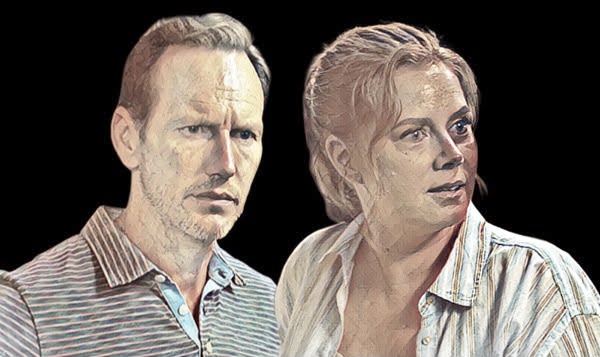
The cinematography reinforces that sensation. In the latest episode, the image is overexposed, milky, blurred, and feverish. At times, faces seem to lose their outlines, and the excess of light does not clarify what we are seeing but makes it more unstable. It is not an accidental flaw. Cinematographers Eben Bolter and Celiana Cárdenas developed a visual language based on heat, humidity, voyeurism, long lenses, unbalanced angles, and distortions designed to reproduce the characters’ disorientation. In the previous episode, Cárdenas even changed lenses and aspect ratios to represent the family’s hallucinogenic experience.
Now, with Zack intoxicated, Natalie drugged, Cady’s mother trapped inside fragmented memories, and Max confronting his own childhood, the image itself appears contaminated by memory. Everything is overexposed and, at the same time, hidden. It is as though we are looking at a traumatic recollection that cannot remain in focus.
It is an interesting, coherent, and technically admirable choice. It is also exhausting.
That is the paradox of Cape Fear. I recognize the extraordinary work of Bardem, Adams, and Wilson. I think the use of Juliette Lewis is brilliant. I admire the courage not to simply remake the story told by Robert De Niro and Nick Nolte. I see a series with direction, cinematography, music, and performances far above average.
But admiring a production is not the same as wanting to remain inside it.
The narrative accumulates accidental incest, drugs, murder, self-harm, suicide, child abuse, domestic violence, sexual manipulation, emotional blackmail, concealed paternity, and people living inside walls. With every episode, another trauma appears, another secret relationship is exposed, or another monstrous family member emerges. At a certain point, complexity begins to approach excess.
The problem is not simply that everyone is morally compromised. Great television series are often built around terrible people. The problem is that Cape Fear seldom offers an emotional resting place. No relationship has been contaminated, no genuinely safe space, and no person has managed to remain outside Cady’s machinery.
Even the pleasure of suspense is replaced by something else. I do not finish each episode eager to discover what will happen next. I finish trying to process what I have just watched and gathering the willingness to return the following week.
Perhaps that is precisely the intention. Cape Fear wants to disturb us. It wants viewers to feel that something is wrong even during apparently peaceful scenes. It wants to destroy the comfortable distance between the monster and the normal family, because there is no normal family in this story. There are only people trying to conceal how they were hurt and how they went on to hurt others.
It works so well that, at this point, continuing to watch the series also requires a conscious effort. I am still watching because the cast is excellent. After all, I want to understand how far this story intends to go, and some of its choices are genuinely fascinating. But I no longer know whether I am emotionally invested or simply committed to finishing it.
And perhaps that is the most honest assessment I can make of Cape Fear: it is a very good series that I cannot honestly say I enjoy watching.
Descubra mais sobre
Assine para receber nossas notícias mais recentes por e-mail.

